


October 17th in the Time Tunnel:
Happy Birthday to those who have passed on and to those great wrestlers still with us:
In Memoriam:
Hot Gilliam 1902
Con Bruno 1916
Billy Hines 1934
Black Cat 1954
Steve McMichael 1957
Happy Birthday:
(none)
RIP Memorial: We stop & remember those who have passed on this day and gave themselves to the business for us, the fans. We salute you and thank you.
Ron DuPree 10-17-1975 at the age of 35

Frank Dalton 10-17-1995 at the age of 54

Leo Nomellini 10-17-2000 at the age of 76
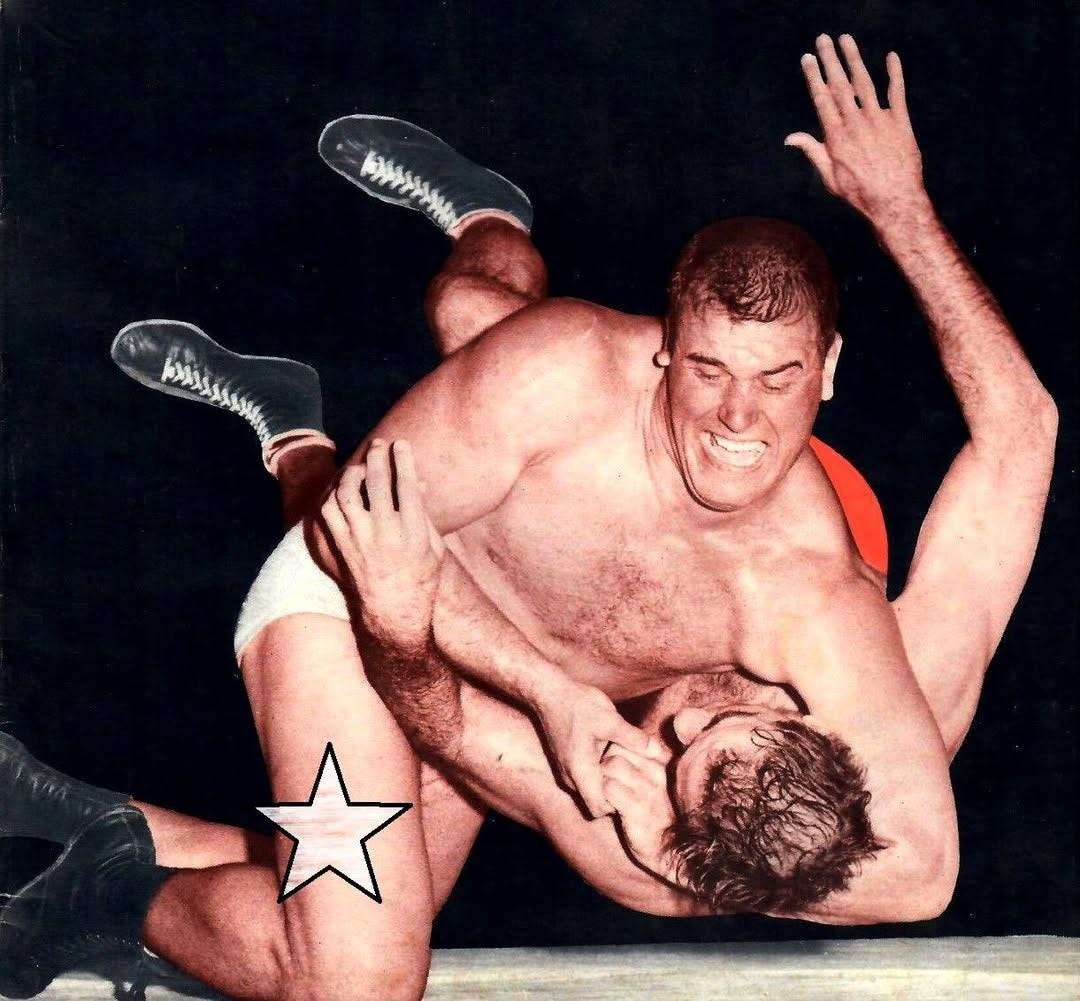
Mike Fever 10-17-2009 at the age of 53
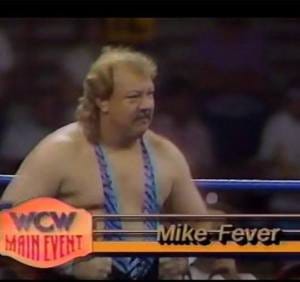
Dr. Ken Ramey 10-17-2014 at the age of 83

The Life and Career of Ron DuPree
Ron Dupree, born Russell Groves in the United States (exact date and location unspecified in records), was a flamboyant and innovative professional wrestler active during the 1960s and early 1970s. Known for his bleached blonde hair, outrageous heel persona, and exceptional talent as a tailor who crafted custom ring gear for himself and other wrestlers—including a famous Janis Joplin-inspired robe—he left an indelible mark on the industry despite a relatively short career.
Groves entered the wrestling world around 1960 under the tutelage of promoter Tony Santos in the Northeast, debuting as the “Golden Boy” Ron Dupree. His flamboyant style quickly established him as a villainous draw, characterized by showmanship and a penchant for stirring controversy. He soon formed a tag team partnership with a younger wrestler named Chuck Harris (who adopted the name Paul Dupree), portraying them as kayfabe brothers in a biker-themed gimmick. Initially billed as the Hell’s Angels, the duo’s antics were legendary: they burned an American flag on live television in one territory, leading to the loss of their promotion’s broadcast license, and were even rumored to have once arrived at a hotel with a leashed baby white tiger. The team evolved into the Comancheros, amplifying their “masterful dickishness” with provocative behaviors that turned even established heels into fan favorites by comparison. Under this guise, they terrorized promotions across the Northeast, Arizona, and the Gulf States, drawing massive heat from crowds.

Pictured: Ron DuPree and Chris Colt
Dupree and his partner achieved significant success in several National Wrestling Alliance (NWA) territories:
NWA World Tag Team Championship (Detroit version): Won multiple times with Paul Dupree (at least three reigns documented in 1967–1968).
Gulf Coast Wrestling Tag Team Championship: Captured twice as the Hell’s Angels in early 1975, defeating teams like Mike Boyette & Bearcat Brown (January 12) and Bob Kelly & Bobby Fields (March 10).
Their Gulf Coast run in 1974–1975 was particularly notable, reuniting after a brief feud and dominating the tag division. Dupree’s in-ring style blended technical prowess with theatrical flair, making him a versatile performer who could excel as both a singles competitor and team player. Outside the ring, Dupree’s tailoring skills were a hidden gem. As a master craftsman, he designed elaborate outfits that enhanced wrestlers’ personas, showcasing his artistic side amid the gritty world of territorial wrestling.
Behind the biker facade, Dupree’s partnership with Paul Dupree (real name Charles Fay Harris, better known as Chris Colt) extended beyond the squared circle; the two were romantic partners, making them one of the earliest openly gay couples in pro wrestling history—though this was kept private during their era due to societal constraints. Their relationship added depth to their on-screen chemistry, influencing the tag team’s enduring appeal.
On October 17, 1975, during a wrestling event in Tacoma, Washington, Dupree—then in his early 40s and working as a ring announcer—introduced the opening match between Ripper Collins and Paddy Ryan. Moments after climbing out of the ring, he collapsed from a sudden heart attack. Medics pronounced him dead at the scene. In a show of respect, the wrestlers canceled the event and offered refunds to attendees. His partner, Chris Colt, was present and continued wrestling for years afterward, honoring their shared legacy. Ron Dupree’s life encapsulated the raw, rebellious spirit of 1960s–1970s wrestling: a blend of athleticism, artistry, and unapologetic provocation. Though his career was cut short, his influence on tag team storytelling and custom gear design endures in wrestling lore.
60 Year Flashback
10-17-1965: Pedro Morales defeated Crazy Luke Graham (ch) for the WWA World Heavyweight Title at the Grand Olympic Auditorium in Los Angeles, California
After losing the title in July of 1965, Morales didn’t stay out of the spotlight. He challenged Graham for the WWA Brass Knuckles Championship in August 1965, defeating him in a brutal three-fall chain match to claim that secondary title. The two continued to clash in tag team and multi-man matches throughout the summer and fall, often involving partners like Luis Hernandez or Alberto Torres for Morales, and various heels for Graham. Morales racked up wins against other opponents like The Butcher, Gorilla Monsoon, and The Assassins, building momentum as a resilient hero. Graham, meanwhile, defended the world title successfully, including a disqualification win over Toyonobori on September 8. Their rivalry exemplified the classic good-vs-evil dynamic of 1960s wrestling, with Graham’s “crazy” antics contrasting Morales’ straightforward, powerhouse approach.
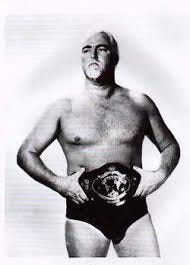
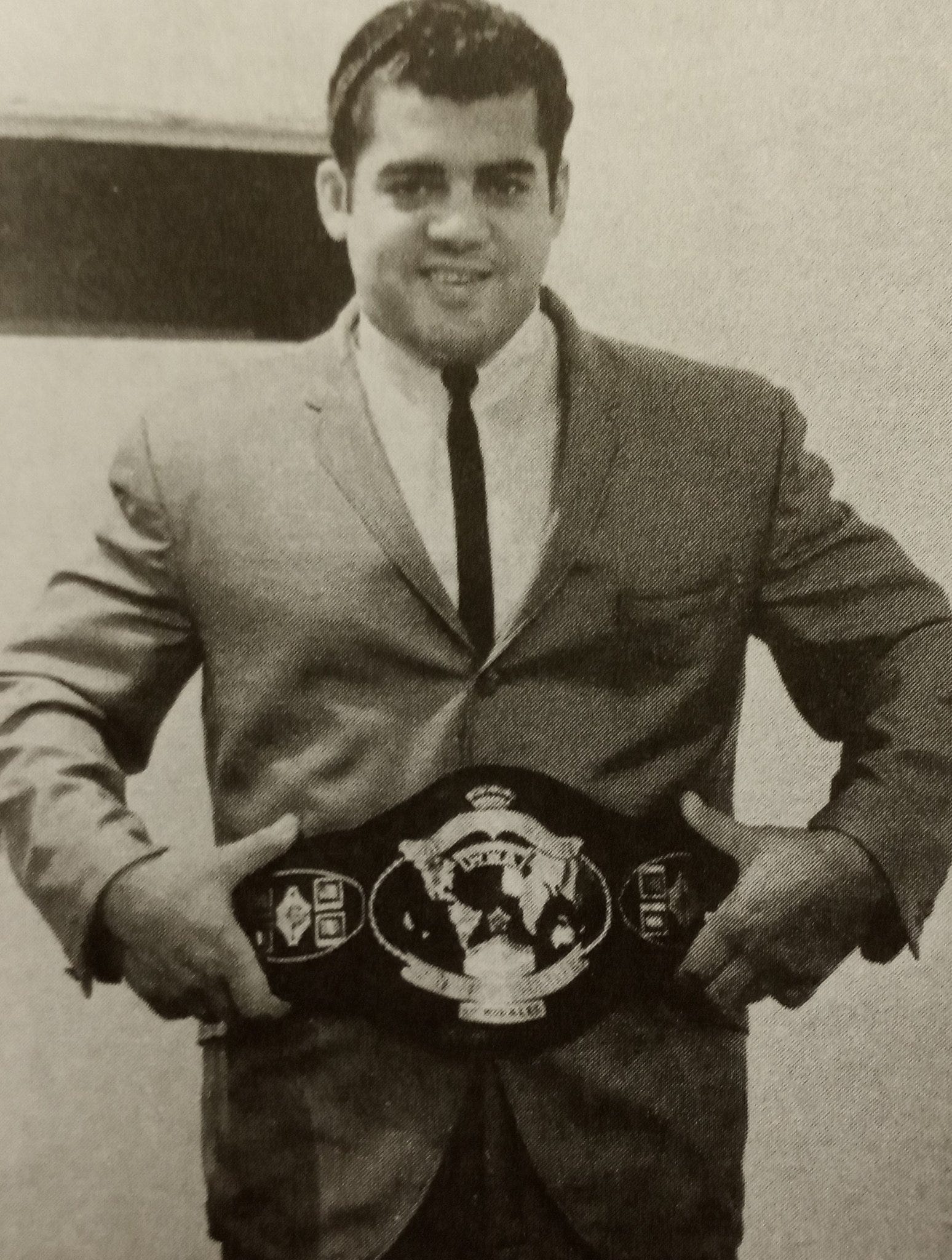
The WWA World Heavyweight Championship itself had a storied history, established in 1961 as the top prize for the Los Angeles territory. In 1965, it was briefly embroiled in a controversy when the Japanese Wrestling Association (JWA) recognized a separate lineage after Toyonobori defeated The Destroyer in late 1964 (a change WWA ignored). Graham unified the titles by defeating Toyonobori on September 20, 1965, solidifying his reign before facing Morales again.
The match took place at the Olympic Auditorium in Los Angeles, California—a iconic 10,000-seat venue that was WWA’s home base and frequently hosted sold-out shows. The event drew a sellout crowd of 10,400 fans, reflecting the popularity of WWA during this period. It was promoted as a major card, with the world title match as the main event.
The title match was a best-of-three-falls contest, the standard format for major championship bouts at the time. Morales lost the first fall to Graham but rebounded strongly in the second, reportedly putting Graham away in a decisive manner—possibly via a pin or submission that ended the match without needing a third fall (accounts suggest Graham may have been unable to continue due to the intensity, though specifics like moves used are not well-documented in surviving reports). This victory marked Morales’ second reign with the title, lasting 292 days.
Following the win, Morales defended the title against Graham in at least two rematches, including a decisive 2-1 falls victory on November 14, 1965, in Los Angeles (attendance 9,573). He went on to feud with other challengers like Buddy Austin (to whom he lost the belt on August 5, 1966) and continued success in tag team wrestling. Morales left WWA in 1968 for the World Wide Wrestling Federation (WWWF, now WWE), where he became a legend, winning the WWWF World Heavyweight Championship in 1971 and becoming the first Triple Crown Champion. He passed away on February 12, 2019.
Graham continued as a top heel, later forming the Graham Brothers tag team and working in various promotions until the 1980s. He died on June 23, 2006. This 1965 title change is remembered as a key moment in Morales’ early career, highlighting his resilience and helping establish him as one of wrestling’s first Hispanic superstars.
50 Year Flashback
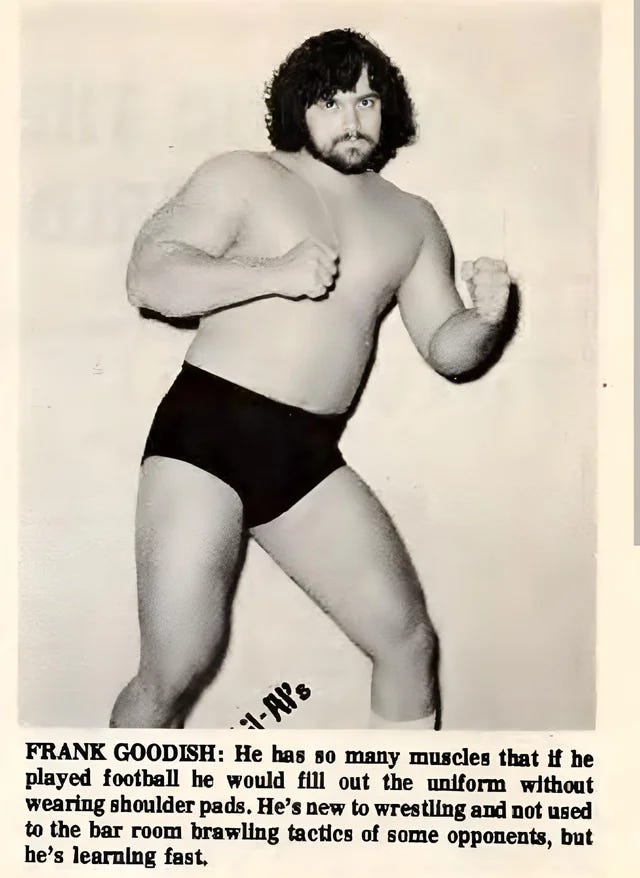
10-17-1975: Frank Goodish defeated Ray Candy (ch) for the NWA Western States Heavyweight Championship at the Fair Park Coliseum in Lubbock, Texas
The NWA Western States Heavyweight Championship was a regional title promoted by NWA Big Time Wrestling (also known as NWA Western States), primarily around the West Texas loop in Amarillo, Lubbock, Odessa, Abilene and El Paso functioning as the primary weekly towns. The title was recognized under the National Wrestling Alliance (NWA) umbrella and often featured local stars, touring wrestlers, and Funk family members. It was vacated or changed hands frequently due to injuries, departures, or disputes, reflecting the territorial era’s booking style.
In 1975, The Western States Title changed hands a few times, mostly to provide stability between the Funk brothers and getting over new stars coming into the area:
Terry Funk (12th reign): Won on April 4, 1975, in San Angelo, TX; vacated in April 1975 when Funk left for Florida.
Bobby Jaggers (new to the territory, introduced with a program with Scott Casey): Won on June 11, 1975, in Lubbock, TX (defeated Nick Kozak in a 4-man tournament final).
Ray Candy (new to the territory introduced with a program with Jaggers and tag matches with the babyface Funks): Won on July 30, 1975, in Lubbock, TX (defeated Bobby Jaggers).
Frank Goodish (new to the territory after being NWA US Tag Champions with Stan Hansen in McGuirk’s Oklahoma Territory for some of 1974 & most of 1975) (later Bruiser Brody): Won on October 17, 1975, in Lubbock, TX (defeated Ray Candy).
This marked Goodish’s first singles championship in his young career, just over a year after his debut, and came during his initial stint in the West Texas territory. Candy had held the title for about two and a half months after winning it from Bobby Jaggers. Goodish’s victory positioned him as a rising star, leading to further title wins that year, including the NWA Florida Heavyweight Title from Rocky Johnson on December 31, 1975. Wrestlers were often sent to Amarillo to learn to work better and stiffer, then frequently that led to usually going to Florida if you had some real potential for growth to continue your development under Eddie Graham and his bookers or you were sent to the Kansas City Territory under Bob Geigel and Harley Race, which meant you need a lot more seasoning in working an established territory. Case in point, Goodish went to Florida after his West Texas run and Candy was sent to Kansas City.
Thank You for Reading
I’m Tony Richards, Pro Wrestling Historian, Author and Storyteller. I share pro wrestling historical items in each issue of the Time Tunnel Pro Wrestling History Newsletter. Thanks for reading! If you enjoy my information on select events, matches and insights, please share it with folks you think might like to be a subscriber!
Remember, paid subscribers get access to exclusive and special content such as some special issues including a multi-part deep dives on wrestling territories, wrestler bios and championship title histories, special audio and video interviews on territory pro wrestling and more available in the Pro Wrestling Time Tunnel for Premium Subscribers.