



October 15th in the Time Tunnel:
Happy Birthday to those who have passed on and to those great wrestlers still with us:
In Memoriam:
Karl Von Stroheim 1928
Kay Noble 1940
Al Greene 1955
Randy Fargo 1946
Jeff Gaylord 1955
Happy Birthday:
Joey Abs (54)
RIP Memorial: We stop & remember those who have passed on this day and gave themselves to the business for us, the fans. We salute you and thank you.
Ada Ash 10-15-2003 at the age of 78

Joey Maggs 10-15-2006 at the age of 36
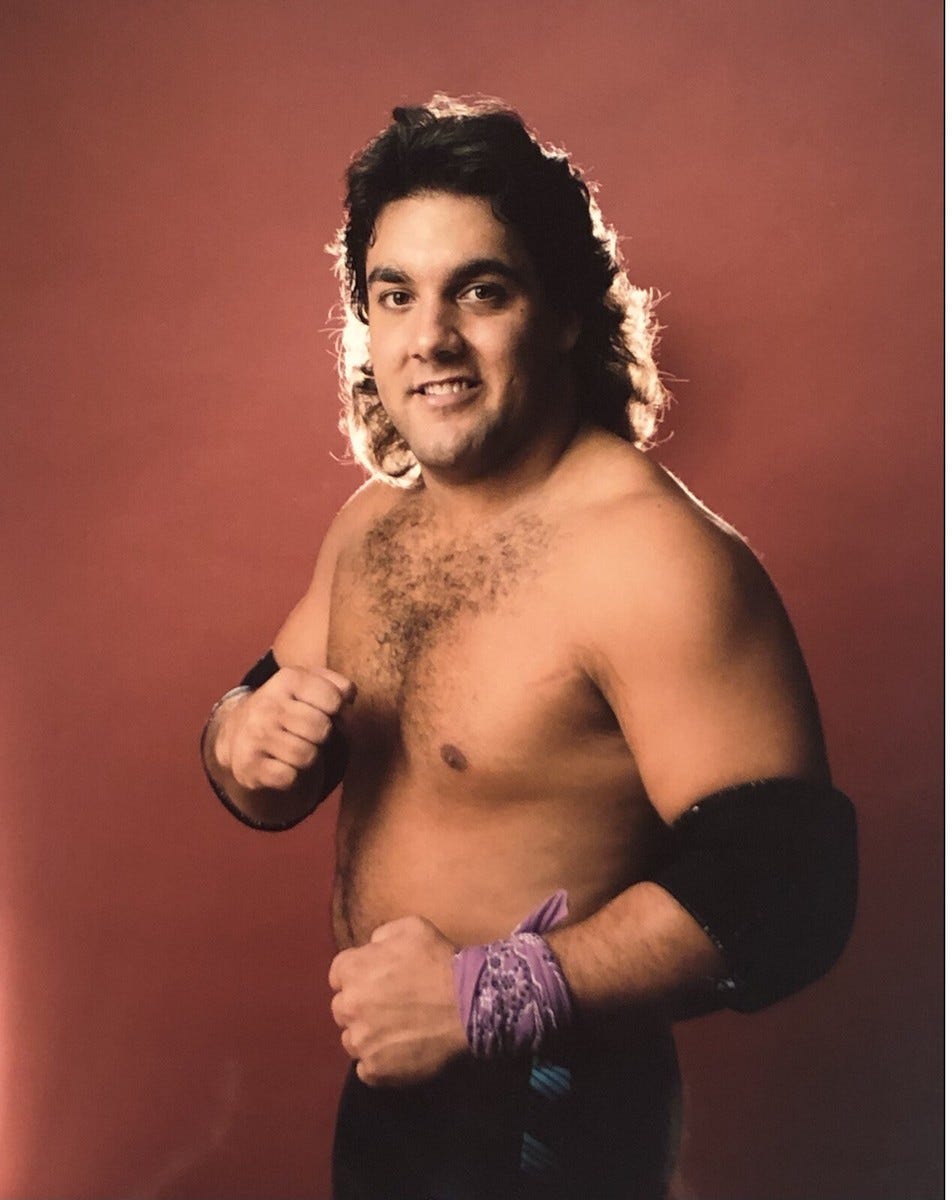
40 Year Flashback
10-15-1985: Dusty Rhodes is stripped of the World TV Title for not defending the championship within 30 days due to an ankle injury sustained at the Omni on September 28th by Ric Flair, Ole & Arn Anderson
There was a long storyline revolving around the TV Title in 1985 between Dusty and Tully Blanchard, with the belt changing hands multiple times. Rhodes, a charismatic babyface and multiple-time world champion contender, was a key figure in JCP, known for his promos and feuds with heels like the Four Horsemen. The title was renamed the NWA World Television Championship during Rhodes’ first reign in 1985 to elevate its status.
On March 16, 1985: Rhodes captured the title from Tully Blanchard at a live event in Greensboro, North Carolina. This marked his first reign, lasting 43 days, and coincided with the title’s official renaming to emphasize its “world” status.
Blanchard regained the title on April 28, 1985, in Charlotte, North Carolina. The feud continued, culminating in Rhodes defeating Blanchard again on July 6, 1985, at The Great American Bash in Charlotte. Rhodes also won the services of Blanchard’s prized valet, Baby Doll (Nickla Roberts) for 30 days. This second reign lasted 105 days and featured several defenses, highlighting the back-and-forth nature of their rivalry throughout the year.

On September 28, 1985, at the Omni in Atlanta, Georgia, Rhodes was involved in a famous angle where his leg was “broken” (in kayfabe, or storyline terms) by Ric Flair, Ole Anderson, and Arn Anderson. This attack was part of the emerging storyline, where the heels targeted Rhodes to sideline him. The injury prevented Rhodes from defending the title as required by NWA rules, which typically mandated defenses within a certain timeframe to keep the championship active. Rhodes was officially stripped of the NWA World Television Championship on October 19, 1985, (airing on Crockett Television) due to his inability to defend it following the injury.
The title remained vacant until January 4, 1986, when Arn Anderson won it by defeating Wahoo McDaniel in a tournament final at a live event in Greensboro, North Carolina. This began Anderson’s first reign, which lasted 248 days. Rhodes would later reclaim the title for a third time on September 9, 1986, by defeating Anderson in Columbia, South Carolina, continuing his storied career in the NWA.
The Life and Career of Ada Ash
Ada Ash was an American professional wrestler active primarily during the 1930s and 1940s, emerging from the carnival wrestling circuit—a common entry point for many early female grapplers. Specific details about her birth date, place of origin, and childhood are scarce in historical records, as much of women’s wrestling from this era was under documented and often sensationalized for publicity. However, she is frequently described as a pioneering figure in transitioning from carnival sideshows to more formal professional rings, showcasing both wrestling prowess and feats of strength that aligned with the “strongwoman” archetype popular in vaudeville and early sports entertainment.
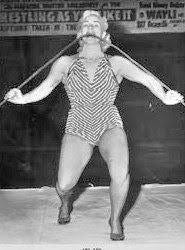
Ash began her career in the carnival wrestling scene, where women performers often competed in mixed matches or exhibition bouts to draw crowds. This gritty environment served as both training ground and revenue source for aspiring wrestlers during the Great Depression era. She was trained by several ring veterans, most notably her husband, Al Szasz, a well-known wrestler in the San Francisco Bay Area during the 1930s. Szasz’s influence likely honed her technical skills and introduced her to the professional circuit beyond carnivals. By the mid-1930s, Ash had graduated to auditorium shows, wrestling alongside contemporaries like Connie Landis, Kay O’Connor, and Lillian Bitters—many of whom also started in carnivals.
Her strongwoman persona was not mere hype; Ash was renowned for her physical power, which she demonstrated in matches and publicity stunts. A surviving 1966 photo captures her backstage with fellow wrestler Ramona TeSelle, smiling confidently and embodying the era’s blend of toughness and charisma. She was often billed as one of the “toughest women in the square circle,” a nod to her ability to handle both female opponents and occasional male challengers.
Ada Ash and Al Szasz married in the early 1930s, forming one of wrestling’s early power couples. Known collectively as “Mr. and Mrs. Muscle” around the circuit, they were a dynamic duo: Szasz trained Ash, sharpening her technique, while she brought raw power to complement his precision. Their partnership extended beyond the ring—they traveled together on bookings, shared training regimens, and navigated the grueling carnival-to-arena pipeline as a team. This marital synergy was rare for the time, helping both sustain long careers amid the physical toll and societal barriers for women.
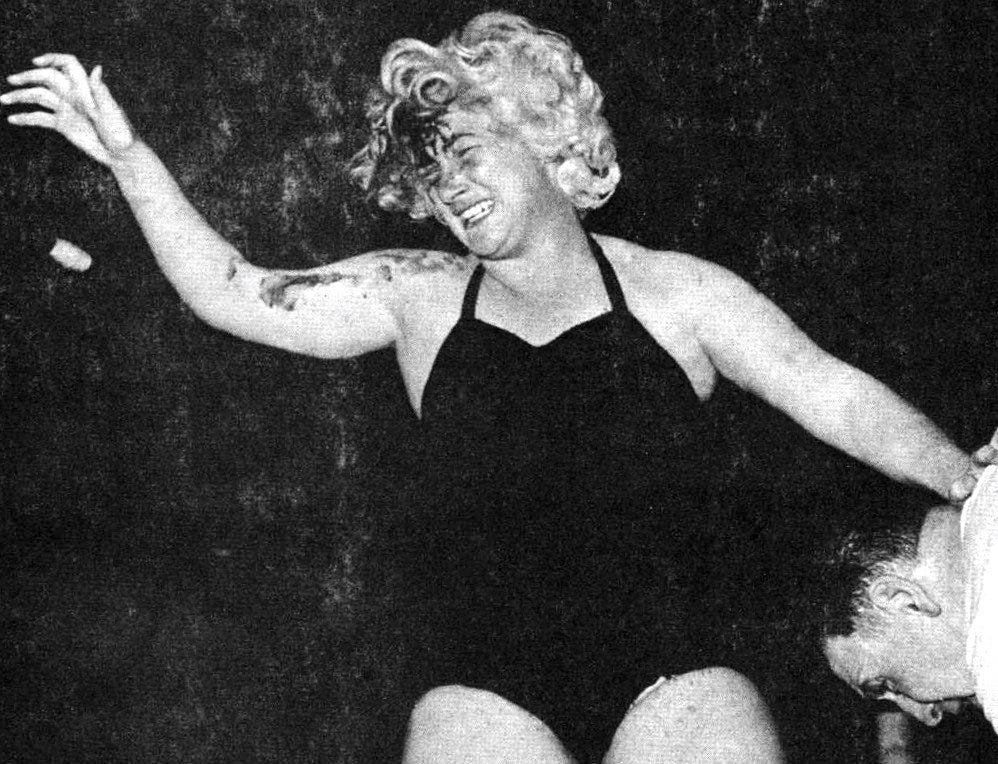
Ada and Al wrote three books dedicated to judo and self-defense and taking the wrestling and coaching training by her husband, she successfully participated in female wrestling competitions. As a matter of fact, at her time women wrestling was being gradually transformed from competitive (even not always real) action to the specific type of entertaining show that now is known as “professional wrestling”, the profitable branch of the show industry. In one of her wrestling matches against another famous female wrestler Nell Stewart (who was much younger than Ada), Ada accidentally fell out of the ring to the floor in a bad position and damaged her spine and she was disabled during almost two years.
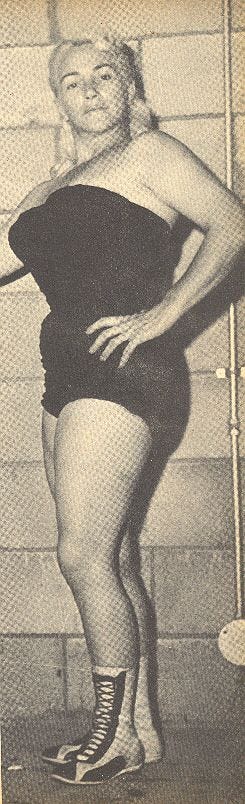
She became a fan favorite in the Midwest and West Coast territories, particularly Ohio, where she was celebrated as a local star for her aggressive style and strength-based maneuvers. In the 1930s, she started in traveling carnivals, Ash performed in “freak show” wrestling matches that emphasized spectacle. By the decade’s end, she was a regular on auditorium cards, contributing to the growing legitimacy of women’s wrestling amid the rise of stars like Mildred Burke.
In the 1940s and 1950s, she performed as a strongwoman, Ash incorporated power displays into her act, such as rope climbs (captured in a classic publicity photo where she grabs a rope with her teeth) and alligator wrestling exhibitions—a bizarre but attention-grabbing sideshow element documented in 1950s newspaper clippings. These stunts helped promote her as a versatile performer capable of drawing diverse crowds.

Ash was part of the wave that professionalized the sport, influencing later generations by proving women’s wrestling could thrive beyond carnivals. Historians credit performers like Ash with laying groundwork for the 1940s boom in female grappling, led by figures like Burke.
Thank You for Reading
I’m Tony Richards, Pro Wrestling Historian, Author and Storyteller. I share pro wrestling historical items in each issue of the Time Tunnel Pro Wrestling History Newsletter. Thanks for reading! If you enjoy my information on select events, matches and insights, please share it with folks you think might like to be a subscriber!
Remember, paid subscribers get access to exclusive and special content such as some special issues including a multi-part deep dives on wrestling territories, wrestler bios and championship title histories, special audio and video interviews on territory pro wrestling and more available in the Pro Wrestling Time Tunnel for Premium Subscribers.