


October 5th in the Time Tunnel:
Happy Birthday to those who have passed on and to those great wrestlers still with us:
In Memoriam:
Mickey Baarnes 1918
Stu Gibson 1925
Benny Matta 1928
Hans Schnabel 1932
Happy Birthday:
Mark Starr\Blue Yankee #2 (89)
Victor Barajas\Black Gordman (89)
Terri Runnels (59)
Michael Paris]Joaquin Wilde (39)
RIP Memorial: We stop & remember those who have passed on this day and gave themselves to the business for us, the fans. We salute you and thank you.
Rocky Smith 10-5-1977 at the age of 40

Brian Pillman 10-5-1997 at the age of 35
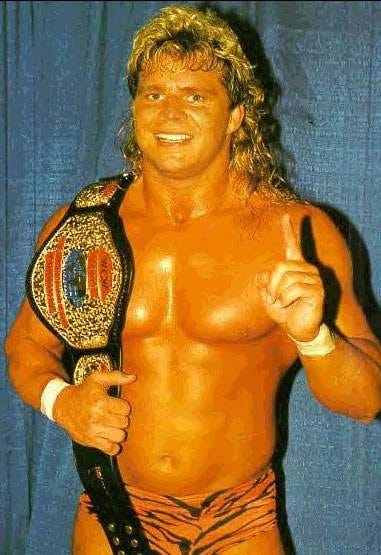
Antonio Pena 10-5-2006 at the age of 55

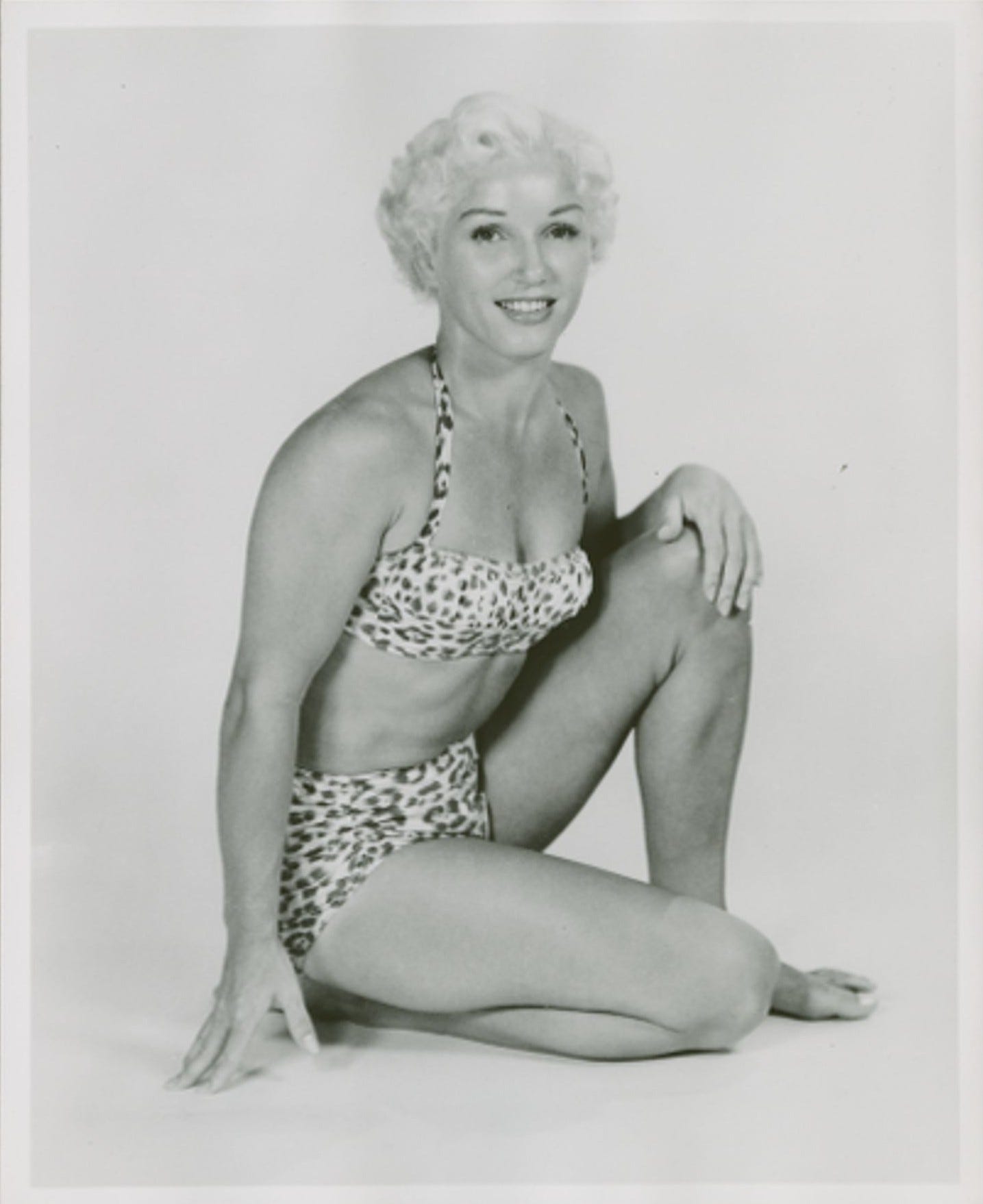
Lorraine Johnson 10-5-2020 at the age of 90
Significant Pro Debut
10-5-1984: Keiji Muto defeated Masahiro Chono on Day 1 of the Fighting Spirit Series at Koshigaya, Saitama, Japan
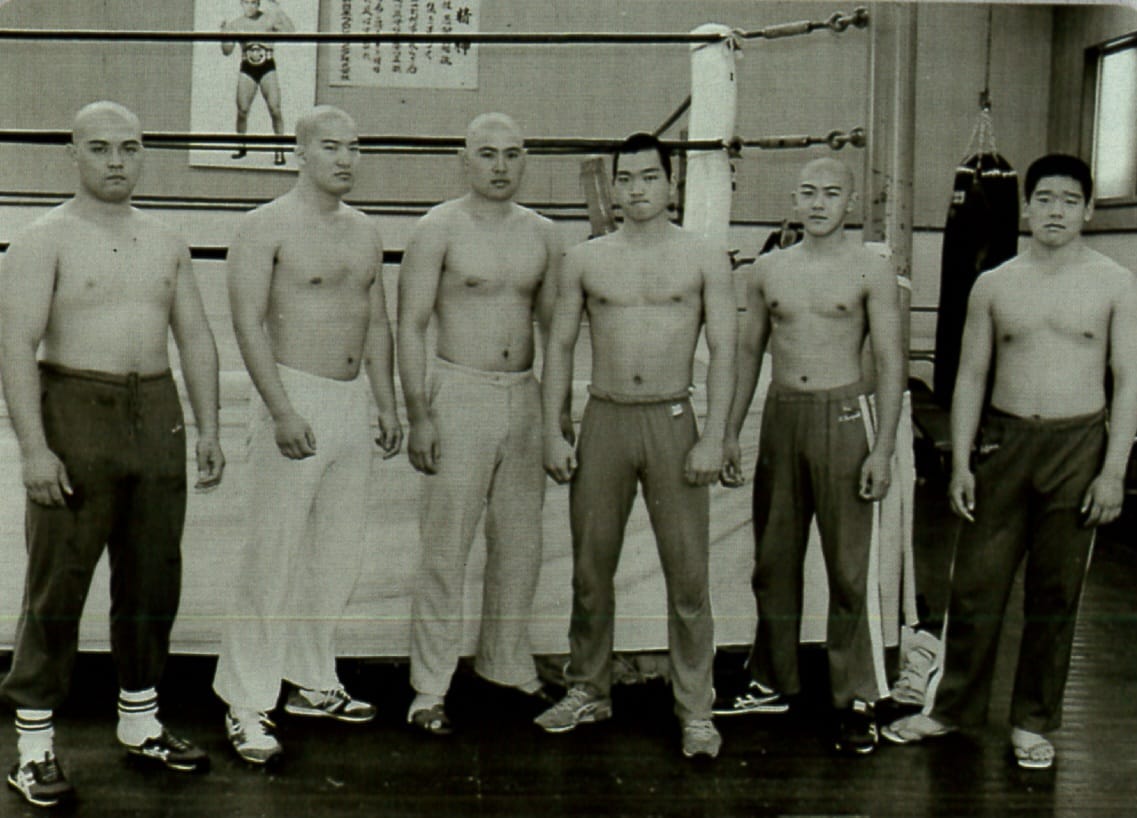
Pictured: 1984 Young Lions Class New Japan Pro Wrestling: Hashimoto, Chono, Muto, AKIRA, Funaki & Sasazaki
Much like Baba and Inoki a generation before them, Muto and Chono made their debut on the same day, trained together at the NJPW Dojo and entered the promotion on the same day, setting the stage for a lifelong rivalry that would define much of their careers. Their professional debuts occurred in a singles match against each other on October 5, 1984, in Koshigaya, Saitama Prefecture, Japan, at the Koshigaya City Gymnasium. Muto defeated Chono via submission using the Inverted ebi-gatame (a variation of the Boston crab, where the opponent is flipped onto their stomach and their legs are pulled back). The match went 8 minutes and 27 seconds.
Muto, born December 23, 1962, in Fujiyoshida, Yamanashi Prefecture, was a former amateur wrestler who joined NJPW after high school. Following this debut, he was sent on a “learning excursion” to the United States in 1985, wrestling in promotions like Championship Wrestling from Florida and developing his iconic Great Muta persona—a painted, mist-spewing heel that blended Japanese mysticism with high-flying athleticism. He would go on to become a multi-time world champion across NJPW, All Japan Pro Wrestling (AJPW), and even WCW, innovating moves like the Shining Wizard and Moonsault.
Chono, born September 17, 1963, in Seattle, Washington (but raised in Mitaka, Tokyo), had a background in amateur wrestling and karate. After losing his debut, he remained in NJPW, building a reputation as a tough, charismatic heel. He later led the Japanese branch of the nWo (New World Order) in the 1990s, feuding extensively with Muto and winning titles like the IWGP Heavyweight Championship.
Their 1984 debut symbolized the start of NJPW’s “Three Musketeers” era (alongside Shinya Hashimoto, who debuted shortly after), a golden period that elevated Japanese wrestling globally. The two faced off numerous times over the decades, including high-profile matches in the G1 Climax and tag team scenarios, with their final encounter coming in 2023 at Muto’s retirement show in Tokyo Dome—nearly 39 years after their first bout.
60 Year Flashback
10-5-1965: Gulas-Welch holds the first Pro Wrestling Card at the new Tennessee Fairgrounds Arena in Nashville, Tennessee
Pro wrestling cards had been held at the Hippodrome since Promoter Jim Graham mad moved his shows there on December 28th, 1931, since it had more seating than the Page Garage Arena.. A new 20-foot ring was installed with a two-foot apron. The Gulas-Welch partnership presented their first card at the Hippodrome on August 22nd, 1940, 25 years before, where they drew 1,000 people to the card.
In September 1965, a major fire struck the Tennessee State Fairgrounds on the 19th, destroying several buildings including the old Coliseum. This event prompted significant changes, including renovations and redecoration of facilities at the site. Gulas and Welch, who had been promoting at the Hippodrome, announced a permanent move of their weekly wrestling cards to the newly redecorated Fairgrounds Coliseum to capitalize on the larger capacity and improved setup. On September 30, Gulas, Welch, Fair Board member Cliff Andrews, and announcers Gil Greene and Jack Simpson inspected the premises ahead of the debut.
The last wrestling card at the Hippodrome on Tuesday, September 28th, 1965:
Rocky Montero defeated Kenny Mack
Jackie Fargo defeated Tamayo Soto
Tojo Yamamoto & Tor Kamata defeated Tony Baillargeon & Bud Clardy
Len Rossi & Pat O’Connor defeated The Mysterious Medics by DQ
The debut event for Gulas-Welch at this new Tennessee Fairgrounds Arena setup took place on October 5, 1965, marking the start of a “new era” for wrestling in Nashville. It was positioned as a major card to draw fans to the relocated promotion. The main event was an NWA World Heavyweight Championship match between reigning champion Lou Thesz and challenger Dick The Bruiser.
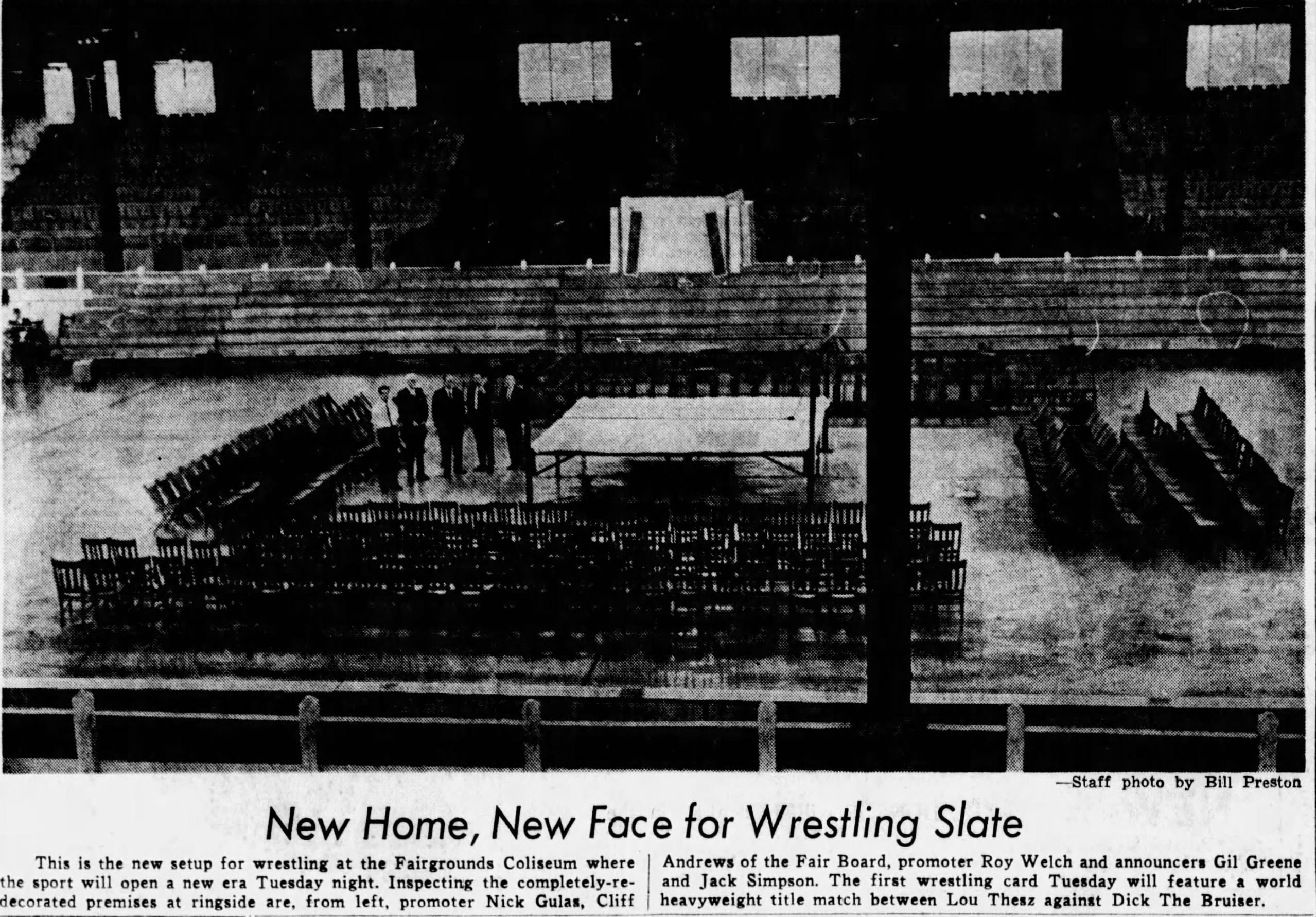
Pictured: October 1st, 1965: Nashville Tenneseean
The first wrestling card at the new Sports Arena drew 6,400 on Tuesday, October 5th, 1965:
Tojo Yamamoto & Tor Kamata defeated Chief Little Bear & Gus Kalas
Rita Cortez defeated Sherrie Lee
Tony Baillargeon & Wilbur Snyder defeated Karl & Eric Von Brauner
Jackie Fargo & Len Rossi vs the Mysterious Medics ended as a time limit draw
Lou Thesz (ch) vs Dick The Bruiser for the NWA World Heavyweight Title ended as a no contest at one fall each
They would come back with a Thesz-Bruiser return match the following week on October 12th, 1965 with Thesz again retaining the championship.
The Life and Career of Mickey Baarnes
Mickey Barnes (sometimes spelled “Baarnes” in older records) was a professional wrestling promoter and possibly a wrestler himself, active primarily in the mid-20th century in the Southeastern United States. Information about his personal life, such as exact birth and death dates, appears limited in available historical records, suggesting he may have kept a low profile outside of wrestling circles. He is believed to have been born on this day, October 5th, 1918. According to wrestling historian Beau James, He was known for his close relationships within the wrestling community, including a strong friendship with wrestler Whitey Caldwell, who named his oldest daughter Mickey in his honor.
Barnes entered the wrestling business as a promoter in the 1940s. He began running shows at the Asheville City Auditorium in North Carolina starting in January 1946, with assistance from Johnny Bowers. He continued promoting events there through 1950, 1951, and 1952. These cards typically featured talent booked from Nick Gulas’ office in Nashville, Tennessee, which was a major hub for regional wrestling at the time. This collaboration highlights Barnes’ ties to the established National Wrestling Alliance (NWA) territory system, where promoters like Gulas supplied wrestlers to local town promoters.
By the 1950s and early 1960s, Barnes had expanded his operations to own and independently promote wrestling in several key towns, including Johnson City, Bristol, and Kingsport in Tennessee; Harlan in Kentucky; and some smaller Virginia locations. While larger booking offices like those run by Nick Gulas and Roy Welch controlled much of the Southeast, Barnes maintained autonomy over these specific towns. He operated under Gulas’ booking umbrella for talent but handled local promotion himself, a common arrangement in the pre-national era of wrestling. in the late 1950s, Barnes was also involved in helping to run and book events in Memphis, Tennessee, as part of efforts to stabilize the local scene. He was brought in alongside figures like Buddy Fuller (son of promoter Roy Welch) following the sale of Memphis to Roy Welch and Nick Gulas in July of 1956.
Barnes’ reputation in the industry was notably positive. Veteran wrestler Scotty Thompson, in a 2005 interview, described him as one of the “two most honest promoters” he encountered during his career (the other being Larry Kasaboski of Ontario), contrasting him with many “shady or downright crooked” figures in the business. Wrestlers reportedly held him in high regard, which contributed to stable operations in his towns. Barnes continued promoting into the 1970s, but by that decade, he sold his Tri-Cities territories (Johnson City, Bristol, and Kingsport) to wrestler Ron Wright. Lester Welch later took over some promotional duties in the area as well.
This marked the end of his direct involvement in day-to-day promotion. Historical discussions suggest Barnes may have also worked as a wrestler himself during the 1960s and 1970s, particularly in my research into Amarillo and Oklahoma. He was remembered for his technical wrestling style, tough in-ring presence, and notable feuds, including one with Dory Funk Jr. that drew crowds in the Amarillo area. Fans and peers recalled him as a professional who influenced younger talent.
Barnes operated during the “territory era” of professional wrestling (1930s–1980s), when regional promoters like him were essential to the industry’s structure before national expansions by groups like the WWF (now WWE). His territories were part of the broader NWA ecosystem, and his honest dealings helped sustain local wrestling scenes in rural and mid-sized towns. While not as famous as big-name promoters like Vince McMahon Sr. or Nick Gulas, Barnes is occasionally referenced in wrestling history forums and interviews as a reliable figure who prioritized fair treatment of talent.
Thank You for Reading
I’m Tony Richards, Pro Wrestling Historian, Author and Storyteller. I share pro wrestling historical items in each issue of the Time Tunnel Pro Wrestling History Newsletter. Thanks for reading! If you enjoy my information on select events, matches and insights, please share it with folks you think might like to be a subscriber!
Remember, paid subscribers get access to exclusive and special content such as some special issues including a multi-part deep dives on wrestling territories, wrestler bios and championship title histories, special audio and video interviews on territory pro wrestling and more available in the Pro Wrestling Time Tunnel for Premium Subscribers.