


May 2 in the Tunnel:
Happy Birthday to those who have passed on and to those great wrestlers still with us:
In Memoriam:
"Wild Bull" Curry 1913
Don Fields 1932
Don Kernodle 1950
Randy Colley\Moondog Rex 1950
Ray Traylor\Big Bubba Rogers\Big Boss Man 1963
Happy Birthday:
Dwayne Johnson\The Rock (53)
Pat McAfee (38)
Joe Hendry (37)
RIP Memorial: We stop & remember those who have passed on this day and gave themselves to the business for us, the fans. We salute you and thank you.
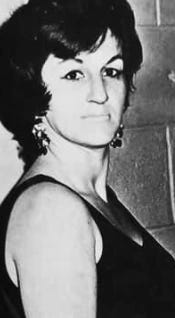
Barbara Galento 5-2-1994 at the age of 54
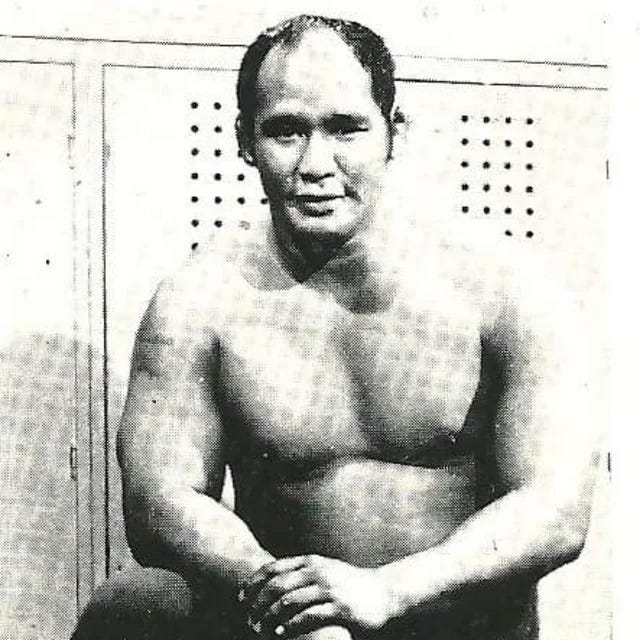
Sam Steamboat 5-2-2006 at the age of 71
Time Tunnel Pro Wrestling World Championship Flashback:
80-Year Flashback:
5-2-1945: Frank Sexton defeated Sandor Szabo to win the Boston version of the AWA World Heavyweight Championship in Boston, Massachusetts
*Tony Note: Professional wrestling just like the rest of the world was starting into a new cultural transition and another transition that included every area of human living as World War II was winding down to an Allied Victory in the European Theater, but there had been a lack of professional sports in America through the war years of 1941 through 1945. Even still this match and card drew 6,500 fans in Boston at. the Boston Arena. This match had a good build between the two wrestlers as Frank Sexton had wrestled Sandor Szabo to a draw two matches ago, while Szabo had edged out a close win in their last match, taking the audience on a nice tight, close couple of matches that left just the right amount of doubt that Szabo could be beaten as Champion, but with enough momentum for Sexton for fans to believe that a title win was within the believable.
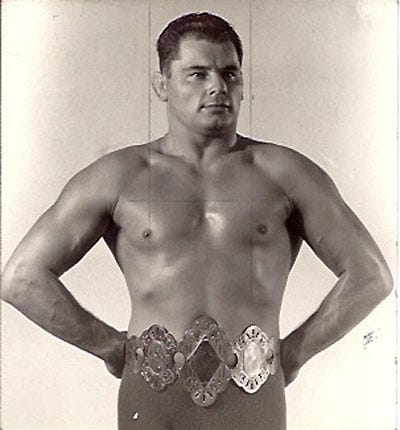
Szabo was of Hungarian descent, he was 39 years old at the time of this title defense and he had been a huge attraction going back into the decade of the '30s. Being introduced to the wrestling business by Jack Pfefer and Jack Curley, he was a big, physical specimen and he was promoted as a special attraction in his appearances, winning his first regional championship on the West Coast in 1937, the Pacific Coast Heavyweight Title, which would become a prestigious NWA-prefixed championship after the formation of the Alliance in a couple years. Szabo was a star in California, having a huge run there, particularly in San Francisco. Szabo really hit a zenith of his career when he won the National Wrestling Association World Championship from multi-sports star, Bronko Nagurski in 1941, and holding the title for over a year's time. After the title loss in this match, he began to gravitate more into the management side of the business, having success back in San Francisco and eventually becoming an assistant booker to Jules Strongbow in Los Angeles.
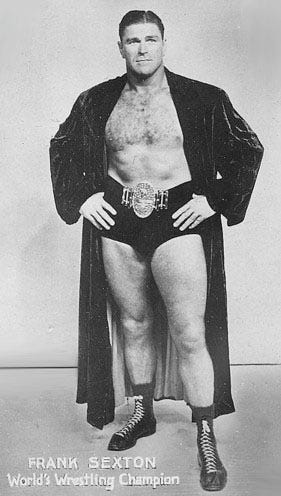
Sexton is one of the more lost, forgotten world titleholders of the 20th Century. He was from the wrestling rich Midwest, having been born in Ohio and like so many wrestlers of the time, grew up as a hard-working farm boy. He was so physically strong as a young boy, his nickname became "Powerhouse" as a football player in High School. He entered the professional business in 1932, he was not a Farmer Burns disciple, as so many from that area and era were, but he was rather trained by "Bull" Gossard, a veteran of the mat game, who turned out some phenomenal wrestlers. Sexton had an impressive debut in his first several months, so he started venturing outside Ohio, working in Boston, Wichita, Kansas City and other cities. He gave impressive showings of himself, particularly against notable opponents such as Orville Brown. Working in this early era of wrestling being "booked", where more character development was taking place, and masked heels had been successful, so Sexton was encouraged to go down the heel road, so he began a series of stints as a rule-breaking, masked heel performer with another innovation coming into vogue in pro wrestling storytelling, the heel manager. Coming into the 1940s, Sexton presented himself first as "The Masked Marvel" in 1939 and then around 1941 as the "Black Panther" in Northern California. He took as his manager, the pioneer heel advisor, Count Pietro Rossi, who had a brand of handling large, rule-breaking masked men.
Certainly, Sexton had a really strong run in California and had begun working his way back toward the opposite Coast, where he eventually ended up in Boston, working for noted promoter, Paul Bowser in January of 1945. In one match in Rochester, he had held the AWA World Champion, Steve Casey to a draw and lost the rematch, this same setup being used with his program with Szabo. Szabo suffered a loss with the Champion Casey on April 4th having superstar baseball player, Babe Ruth as the special referee for the match, before finally beating Casey for the title, setting up this match at the beginning of May with Szabo. Following Sexton's win, Bowser had for himself a great three-way angle over his World Title going between Sexton, Szabo and Casey resulting in several title matches and quick switches.
The match itself was quite exciting with the incumbent champion Szabo with his huge size and the incredibly powerful Sexton exchanging momentum in the match which lasted an amazing one hour, eleven minutes and nine seconds. Sexton finally emerged victorious, winning the match and championship with a reverse backfall. According to newspaper coverage at the time, the finish was set up in such a way, even though the title was being traded between the three men, a Sexton victory was a genuine surprise to the crowd and while we have come to know in professional wrestling, it not always good to surprise the crowd, this time, it was a good surprise. Many in the crowd believed due to his reputation, Szabo was going to be a more long-term title holder. For two big and powerful mat wrestlers, the match moved at a fast and aggressive pace for almost exactly an hour, with the finish surprisingly coming rather quickly after Szabo was selling weakness and wearing down to Sexton's ongoing assault.
Special Ladies Spotlight Flashback:
5-2-1975: Cora Combs vs Lady Satan at John Marshall High School in Indianapolis, Indiana
*Tony Note: If you would have asked me as a 12-year-old kid in 1975 what my idea of the ideal female professional wrestler was, I would have clearly and without hesitation said to you Cora Combs. I'll add that would change as my fandom and experience with pro wrestling would advance. The next answer in my evolution as a fan would have been Sherri Martel, then Debbie Combs and Candi Devine. When I had my small promotion in Western Kentucky in 1986-1989, I sold a package of Summer outdoor amphitheater shows to the State Parks network in Western Kentucky and had a chance to book Devine and Martel in matches with each other and I don't mind telling you I kept coming up with excuses to drop into the ladies dressing room to make sure they didn't need anything. I may have also booked Debbie Combs during that period of time, I want to say I had her on a high school fundraiser or two, I have a vague memory of it, but I can't remember the specifics.
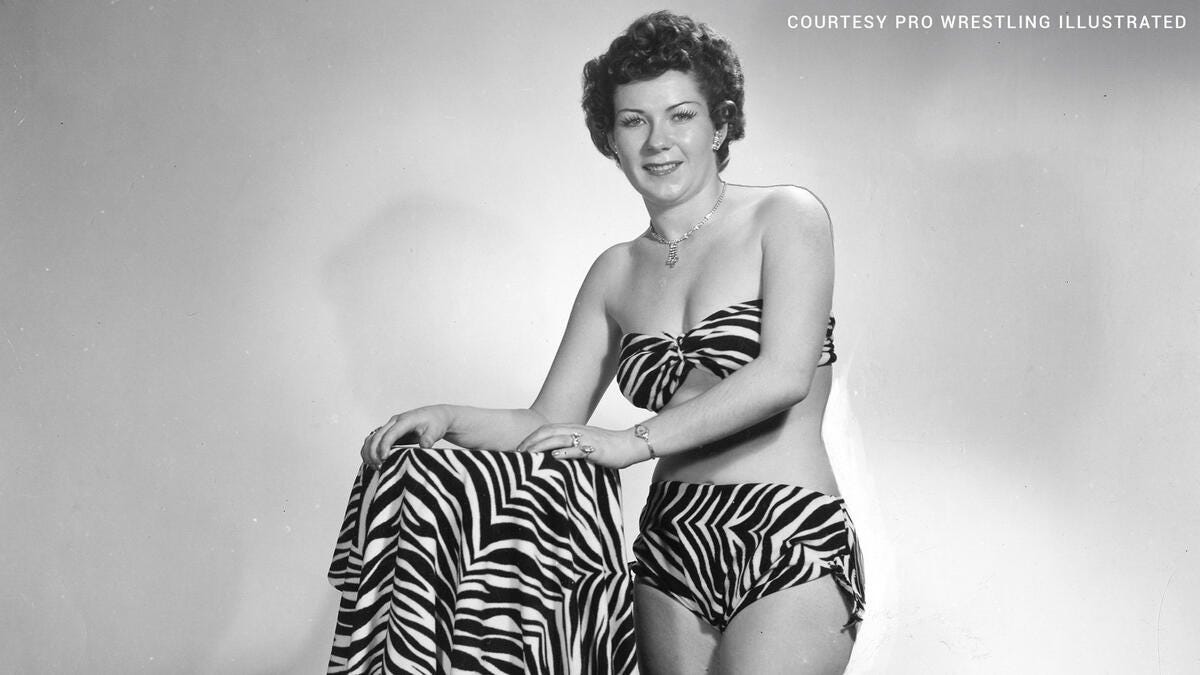
Cora Combs was born to Polish descent parents as Beulah Mae Svonsteckik, on St Patrick’s Day in 1927, in my home state of Kentucky, on the Eastern side in Hazard. Later shortening the name to Szostecki. Growing up in the impoverished area of Kentucky coal mining, she had dreams of being a star and she entered the entertainment business as a Country Music singer, and she worked with a band called the Trail Riders. Like her contemporary, huge star Loretta Lynn, they were true coal miner's daughters. Beulah Mae was a born athlete, competing in track and field, as well basketball in High School, but her true love was music. She learned to play the stand-up bass guitar and like every young person in the six states surrounding Kentucky, Nashville, Tennessee was the place where stars were made. Like all bands and singers of the time, the Trail Riders worked every Honky Tonk and Juke Joint around, hoping to be "discovered" by some Music City talent scout or A&R man.
Nick Gulas and Roy Welch were the pro wrestling kingpins in Nashville and after her sister, who attended the matches regularly, kept urging her to go along, she relented and that's where her career and life took a drastic detour. Cora fell in love with it. Even though it wasn't the music business, it had all the same things. The lights, the excited crowd, the stardom and Cora had the body and the athletic ability, it was love at first sight between Cora and the wrestling business. She met Nick Gulas there at The Hippodrome and she convinced him she had what it took, so he sent her up to Billy Wolfe in Ohio, who trained and booked the female wrestlers of the time. Cora was twenty-one. She debuted in Jacksonville, Mississippi in 1945, starting where many rookies started, in a seven-woman battle royal match. Wolfe put the rookie Combs with June Byers and Byers became her teacher and mentor. This would begin an amazing 50-year career in the wrestling business.
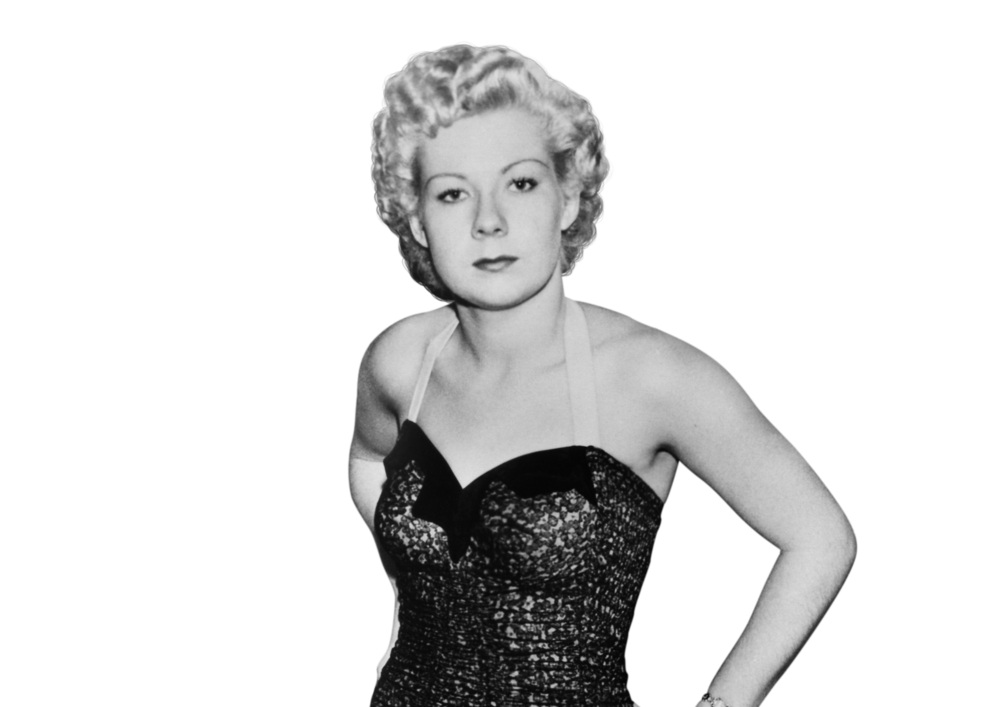
Transitioning from the 1940s, particularly after the World War, women began to be presented differently in every area of entertainment, especially Hollywood. Cora Combs fit in with that transition perfectly. She was talented, athletic combined with being an exceptional worker and he really good looks. She had the 1950s glamour-look coming into vogue for the time, and while she might not have been a national superstar performer of the time, in the Southern part of the US, she was a big, big name and a true attraction for fans to the matches. The reason I mention that is Combs eventually had enough stroke to pull out of Billy Wolfe's group and book herself on cards, rather than having to go through him. She worked and drew fans in every southern state and town as well as working internationally in Mexico, Japan, Cuba, Africa and others. Combs never held the coveted NWA World Women's Title, but she did obtain the NWA United States Women's Belt and also the NWA Southern Women's Championship controlled by Florida promoters. In the mid-1960s, California legalized women’s wrestling and in 1966, she owns the California State Women's Title.
In regard to today's flashback match, her daughter, Debbie began to dabble in professional wrestling in 1971 and from then through 1977, she had a handful of matches each year. Today's match is one of them where Cora would put Debbie under a mask as Lady Satan and take her into the ring, in front of a crowd, work with her and teach her the business. Amazing and real "on-the-job training. She would teach her moves, crowd reactions and timing. The really brilliant part of it was, Debbie, under the mask could focus on the basics of timing and crowd psychology without having to concern herself with the tough part of wrestling, the facials. The crows couldn't see her face, so the mysterious and evil Lady Satan was protected from that concern, as well as hiding the age of the youthful Debbie. I have another story about a couple Combs and Lady Satan matches I'll save for future issues.
One Thing I Learned Today About Pro Wrestling History:
I learned this today during my research time for my Dory Funk Sr book, "The Life and Times of Dory Funk Sr and the West Texas Wrestling Territory". The biggest card in Houston, Texas in the year of 1970 was on May 30th as NWA World Champion Dory Funk Jr defended his title against Chief Wahoo McDaniel, as a matter of fact, at the time, it was the biggest crowd in Texas wrestling history. The undercard featured Professor Boris Malenko defending his NWA American Title against Fritz Von Erich, Johnny Valentine putting his NWA Texas Title up against Mil Mascaras, NWA Texas Women's Champ Evelyn Stevens vs Betty Niccoli, Spoiler #1 defending the Texas Brass Knucks Title against Killer Kowalski, Terry Funk made his debut in Houston on this card and his interference in the match cost Wahoo the title, setting up a feud between the big Chief and the whole Funk family.
Thank You for Reading
I'm Tony Richards, Pro Wrestling Historian, Author and Storyteller. I share pro wrestling historical items in each issue of the Time Tunnel Pro Wrestling History Newsletter. Thanks for reading! If you enjoy my information on select events, matches and insights, please share it with folks you think might like to be a subscriber!
Remember, paid subscribers get access to exclusive and special content such as to commemorate his induction to the WWE Hall of Fame, I'll be publishing some special issues including a multi-part career retrospective on Dory Funk, Sr, a multi-part flashback series of articles on the Georgia Championship Wrestling Territory in May 1975 including all the recorded cards for the month, some special audio and video interviews and more.