


September 30th in the Time Tunnel:
Happy Birthday to those who have passed on and to those great wrestlers still with us:
In Memoriam:
Chris Von Erich 1969
Happy Birthday:
Mustafa Saed (62)
Candice Michell (47)
Swerve Strickland (35)
Trevor Caddell\Cameron Grimes\Trevor Lee (32)
RIP Memorial: We stop & remember those who have passed on this day and gave themselves to the business for us, the fans. We salute you and thank you.
Tiger Tasker 9-30-1991 at the age of 78

Treach Phillips 9-30-1995 at the age of 66

Joe Brunetti 9-30-1997 at the age of 70
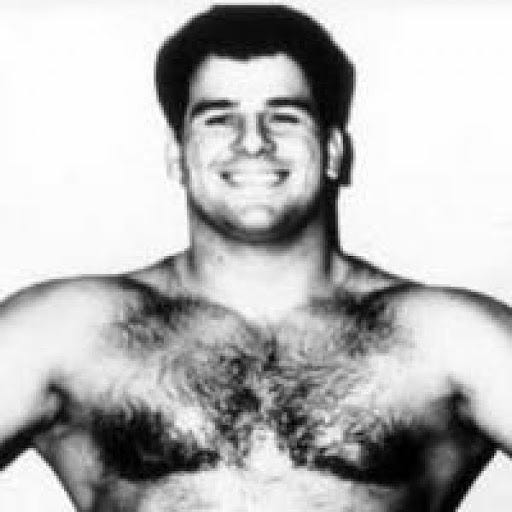
Bobby Jaggers 9-30-2012 at the age of 64
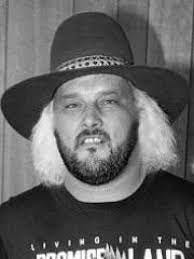
Bernard Herrman\Ricky Starr 9-30-2014 at the age of 83
Significant Debuts
9-30-1960: Shohei Baba and Antonio Inoki both made their professional debut on the same day in Japan; Baba won his first match and Inoki lost his
Shohei “Giant Baba
Shohei Baba, better known as Giant Baba, was born on January 23, 1938, in Sanjo, Niigata Prefecture, Japan. He was the youngest son in his family and experienced rapid growth due to gigantism, reaching heights that made him stand out from a young age—by ninth grade, he was already 175 cm (about 5’9”) tall, and he eventually grew to 209 cm (6’10”). Baba initially pursued a career in professional baseball, excelling as a pitcher. He joined the Yomiuri Giants in 1955 at age 17, where he played until 1959, appearing in only three games with a 0–1 record. He briefly moved to the Taiyo Whales in 1960 but retired from baseball that year due to health issues, including a 1957 brain tumor surgery and an injury from a fall.
During his baseball days, Baba met Rikidozan, the legendary founder of Japanese professional wrestling (puroresu), who suggested he would thrive in wrestling given his immense size and athleticism. After retiring from baseball, Baba contacted Rikidozan and began training at the Japan Pro Wrestling Alliance (JWA) dojo in April 1960. There, he trained alongside Kanji Inoki (later Antonio Inoki), both as disciples of Rikidozan.
Antonio Inoki
Antonio Inoki, born Kanji Inoki on February 20, 1943, in Yokohama, Japan, was the second-youngest of 11 siblings in a once-affluent family. His father, a businessman and politician, died when Inoki was just five years old. Post-World War II financial hardships led the family to emigrate to Brazil when Inoki was 14 (his grandfather died during the voyage). In Brazil, Inoki excelled in track and field, winning regional championships in shot put, discus, and javelin throw, as well as national titles in shot put and discus.
At age 17, while in Brazil, Inoki met Rikidozan during one of the wrestler’s tours. Impressed by Inoki’s athletic prowess, Rikidozan invited him to return to Japan and train as his disciple. Inoki joined the JWA dojo, training under Rikidozan, Karl Gotch, Isao Yoshiwara, and Kiyotaka Otsubo. He was a dojo classmate of Giant Baba, forging an early bond that would later evolve into both partnership and rivalry in puroresu.
On September 30, 1960, both Baba and Inoki made their professional wrestling debuts on the same JWA event card at the old Daito Ku Gymnasium (also known as Daitoku Gymnasium) in Tokyo, Japan. This marked a pivotal moment in Japanese wrestling history, as the two Rikidozan protégés entered the ring for the first time, setting the stage for their legendary careers. The event was part of the booming puroresu scene in 1960, with Rikidozan actively scouting and training new talent to build the industry.
Baba’s Debut: Baba, billed at his towering height, faced Yonetaro Tanaka (sometimes spelled Yonetaru Tanaka) and won the match. This victory highlighted his potential as a dominant force, leveraging his size and athletic background from baseball
Inoki’s Debut: Inoki, who had recently adopted the ring name “Antonio” (inspired by wrestler Antonino Rocca), faced Kintaro Oki (also spelled Kintaro Ohki), another Rikidozan trainee. Inoki lost the match, which was typical for debuts to build character and experience.
The shared debut date was no coincidence; both had been discovered and mentored by Rikidozan in unique ways—Baba through his baseball fame in Japan, and Inoki during Rikidozan’s international travels. They trained rigorously together at the JWA dojo, enduring the intense, traditional Japanese wrestling regimen. After their debuts, they continued to rise in JWA, eventually forming the popular tag team “B-I Cannon” (Baba-Inoki) in the late 1960s, winning the NWA International Tag Team Championship four times. However, following Rikidozan’s murder in 1963 and internal JWA politics, they parted ways: Inoki founded New Japan Pro-Wrestling (NJPW) in 1972, while Baba established All Japan Pro Wrestling (AJPW) later that year, sparking one of puroresu’s greatest rivalries.
40 Year Flashback
9-30-1985: Jim Crockett Promotions and Jarrett Promotions co-promoted The Great American Bash at the Mid-South Coliseum in Memphis, Tennessee
The Great American Bash in Memphis on September 30, 1985, was part of Jim Crockett Promotions’ (JCP) inaugural Great American Bash tour, which began with a major event in Charlotte, NC, on July 6, 1985, but extended into additional tour dates in the fall. This particular show was co-promoted by JCP and Jerry Jarrett’s Jarrett Promotions (operating as the Continental Wrestling Association, or CWA, in the Memphis territory) as a collaborative effort to blend talent from both promotions. The partnership stemmed from a talent-trade agreement initiated in fall 1984 between Jarrett, Crockett, and Ole Anderson (from Championship Wrestling from Georgia) to counter Vince McMahon’s national expansion of the WWF, which included acquiring majority control of the WCW time slot on WTBS. This agreement allowed for cross-promotion of stars across territories to strengthen regional wrestling against the WWF’s growing dominance.
The event was held at the Mid-South Coliseum in Memphis, Tennessee, a staple venue for CWA shows. Promotion was limited to about two weeks, as there was no regular Monday night card on September 23 due to the Mid-South Fair. Buildup included TV recaps of Jerry Lawler’s career, with Lawler vowing to win a world title in 1985 or retire—a promise he made on air in fall 1984. There were rumors of a negotiated NWA World Heavyweight Title run for Lawler, potentially winning the belt here and dropping it back to Ric Flair at Starrcade ‘85, though this was never confirmed and ultimately did not occur. The main event had historical roots in a 1982 studio match where Lawler defeated Flair via countout, a feud left unresolved when Jarrett opted for AWA Champion Nick Bockwinkel in a prior booking.
The show drew 9,496 fans, generating a record gate of over $95,000 for Memphis wrestling at the time, with ticket prices set at $8, $15, and $25—the highest ever for the territory.
The Great American Bash at the Mid-South Coliseum in Memphis, Tennessee
Billy Travis, Tommy Wright & Tojo Yamamoto defeated Buddy Wayne, Ron Sexton & Mr. Class
Koko B. Ware (ch) defeated Tom Prichard by DQ to retain the NWA Mid-America Heavyweight Titles Heavyweight Title
Ron Bass defeated Tarras Bulba
Bill Dundee & jimmy Valiant bs Jonathan Boyd & Rip Morgan ended as a no contest
The Mongolian Stomper defeated Phil Hickerson
The Fabulous Ones defeated Michael hayes & Terry Gordy
Tully Blanchard (ch) vs Magnum TA ended as a DDQ for the NWA United States Heavyweight Title
Pez Whatley defeated Buddy Landel
The Rock & Roll Express (ch) defeated The Russians to retain the NWA World Tag Team Titles
Ric Flair (ch) defeated Jerry Lawler by DQ to retain the NWA World Heavyweight Title
One Thing I Learned Today About Pro Wrestling History
Joe Brunetti teamed with his brother Guy to hold the World Tag Team Titles in Chicago in 1956 and the Canadian Open Tag Team Titles in Toronto several times in 1957.
Thank You for Reading
I’m Tony Richards, Pro Wrestling Historian, Author and Storyteller. I share pro wrestling historical items in each issue of the Time Tunnel Pro Wrestling History Newsletter. Thanks for reading! If you enjoy my information on select events, matches and insights, please share it with folks you think might like to be a subscriber!
Remember, paid subscribers get access to exclusive and special content such as some special issues including a multi-part deep dives on wrestling territories, wrestler bios and championship title histories, special audio and video interviews on territory pro wrestling and more available in the Pro Wrestling Time Tunnel for Premium Subscribers.