


September 29th in the Time Tunnel:
Happy Birthday to those who have passed on and to those great wrestlers still with us:
In Memoriam:
Skandor Akbar 1934
Ann Casey 1938
Happy Birthday:
Stacey Carter\The Kat (55)
Yoshiro Tojeri (55)
Candace LaRue (40)
Rush (37)
RIP Memorial: We stop & remember those who have passed on this day and gave themselves to the business for us, the fans. We salute you and thank you.
Sheik Ali 9-29-1976 at the age of 49
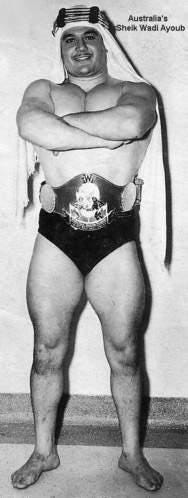
Steve Kovacs 9-29-1998 at the age of 62

Mike York\The Alaskan 9-29-2002 at the age of 61
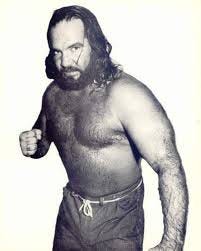
Stan Vachon 9-29-2012 at the age of 79

Gene Petit\Cousin Luke 9-29-2013 at the age of 64
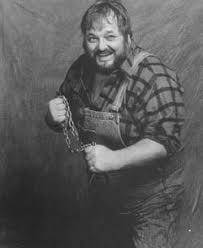
Eddie Crawford\The Snowman 9-29-2021 at the age of 74

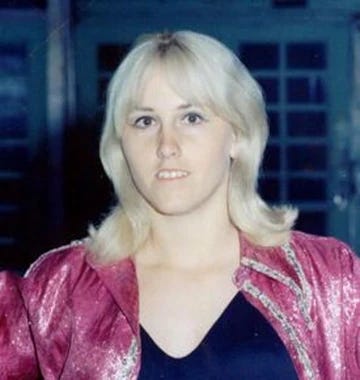
Joyce Grable 9-29-2023 at the age of 70
40 Year Flashback
9-29-1985: Ric Flair with Ole & Arn Anderson break Dusty Rhodes’ ankle inside the cage at The Omni Coliseum in Atlanta, Georgia
In the mid-1980s, the National Wrestling Alliance (NWA) was dominated by high-profile rivalries, with Dusty Rhodes positioned as the ultimate babyface hero—the “American Dream,” a relatable everyman fighting for the common fan—against Ric Flair, the arrogant, limousine-riding, jet-flying heel champion known as the “Nature Boy.” Their feud had been building for years, rooted in class warfare themes: Rhodes represented the working class, while Flair embodied excess and elitism. By 1985, Rhodes had challenged Flair multiple times for the NWA World Heavyweight Championship, often coming close but falling short, such as the match that was stopped due to blood by Joe Frazier at Starrcade 1984.
Dusty had taken over the booking position at Jim Crockett Promotions in late Summer\early Fall of 1984 and had positioned Flair as more of a prominent babyface in the Carolinas, while wrestling mainly as a heel in defending the title in other territories like Texas, Alabama and others. They even tagged together in a couple of situations but their ongoing rivalry escalated tensions in the Mid-Atlantic territory, especially during late 1984 going into the Starrcade match, but also leading up to the Great American Bash in the Spring and Summer of 1985 where Flair was also feuding with the Russian heel faction led by the Koloffs (Nikita, Ivan, and Krusher Khruschev), adding layers of alliances and betrayals to the storylines.
Leading into September 1985, Flair’s character was shifting toward forming a dominant heel stable. Ole and Arn Anderson (billed as the Minnesota Wrecking Crew, cousins in storyline) were established heels who had been teaming together, often clashing with babyfaces like Rhodes. The NWA bookers, including Rhodes himself in a creative role, were crafting angles to build long-term heat on the heels and create memorable moments that would draw crowds. The Omni Coliseum in Atlanta was a key venue for these events, known for hosting intense, sold-out shows that advanced major story arcs and this angle was actually a repeat of the famous angle that Rhodes had done with Ole Anderson, Gene Anderson & Ivan Koloff in the Summer of 1980, where Ole Anderson as Rhodes’ partner turned on him in the cage in Atlanta and while Rhodes received a severe beating, there was no injury angles attached to it. On this day in pro wrestling history, Rhodes would take it the angle one big step further as a way to lead to Starrcade 1985.
The pivotal event unfolded during an NWA card at the Omni Coliseum in Atlanta, Georgia. The main event was a steel cage match where Ric Flair defended the NWA World Heavyweight Championship against Nikita Koloff. Flair retained the title in a hard-fought bout. Immediately after, Ivan Koloff and Krusher Khruschev stormed the cage, closing the door and ambushing Flair in a post-match beatdown, capitalizing on their faction’s ongoing grudge against him.
Dusty Rhodes, despite his own history of bad blood with Flair, rushed to the cage to make the save, positioning himself as the heroic intervener. However, in a shocking swerve, Ole and Arn Anderson charged in, locked the cage door from the inside, and turned the attack on Rhodes. Flair, revealing his true allegiances, joined the Andersons in the assault. They targeted Rhodes’ leg, with the Andersons holding him down while Flair climbed to the top turnbuckle and leaped onto Rhodes’ ankle, “breaking” it in a dramatic injury angle (this was a storyline injury, but sold as legitimate to the audience). Flair then locked in his signature figure-four leglock for added emphasis until babyface rescuers like Magnum T.A. and others finally forced the door open. The crowd’s reaction was intense, nearly causing a riot, as fans were outraged by the betrayal and viciousness of the attack.
This angle was masterfully executed to generate massive heel heat, with the locked cage symbolizing isolation and helplessness, amplifying the drama. It wasn’t just a random beatdown; it tied into broader NWA narratives of power struggles, where heels like Flair and the Andersons sought to dominate and eliminate threats like Rhodes and here’s where Dusty took the 1980 angle one step further five years later in the Omni.
The “broken ankle” storyline wrote Rhodes off television temporarily, allowing him to sell the injury with a cast and build sympathy. It directly set up Starrcade ‘85: The Gathering on November 27, 1985, where Rhodes challenged Flair in another steel cage match for the title.
More significantly, the Omni attack is widely regarded as the unofficial birth of the Four Horsemen, one of wrestling’s most iconic stables. Shortly after, Tully Blanchard joined Flair, Arn Anderson, Ole Anderson, and manager J.J. Dillon to formalize the group, which would terrorize the NWA for years with their “enforcer” tactics, luxury lifestyle promos, and dominance over babyfaces. The incident shifted storylines toward stable warfare, pitting the Horsemen against heroes like Rhodes, Magnum T.A., and the Rock ‘n’ Roll Express. Rhodes later got revenge in angles like attacking Ole Anderson, keeping the cycle of violence and retribution going.
It cemented Flair and the Horsemen as legendary villains while elevating Rhodes’ underdog persona, influencing countless future storylines in Jim Crockett Promotions, which was already drawing extremely well in 1985, but this really threw rocket fuel on the territory leading them into what would become a record-breaking revenue year for Jim Crockett Promotions in 1986.
9-29-1985: Jimmy Garvin & Steve Regal defeat The Road Warriors for the AWA World Tag Team Championships at the Civic Center in St. Paul, Minnesota
The American Wrestling Association (AWA), run by Verne Gagne, was one of the major wrestling promotions in the mid-1980s, competing with the expanding WWF and NWA territories. The AWA World Tag Team Titles were a prestigious championship, often held by dominant power teams. The Road Warriors—Road Warrior Hawk (Michael Hegstrand) and Road Warrior Animal (Joe Laurinaitis), managed by “Precious” Paul Ellering—were the reigning champions going into late 1985. They captured the titles on August 25, 1984, by defeating The Crusher and Baron von Raschke in Las Vegas, Nevada. Their reign lasted over a year (391 days), during which they established themselves as an unstoppable force with their intimidating spiked shoulder pads, face paint, and brutal in-ring style. They feuded with top teams like The Fabulous Ones (Stan Lane and Steve Keirn), Larry and Curt Hennig, Dick the Bruiser and The Crusher, The Blackjacks (Blackjack Mulligan and Blackjack Lanza), Jerry Lawler and Austin Idol, Manny Fernandez and Dusty Rhodes, and most notably, The Fabulous Freebirds.
The Fabulous Freebirds—Michael “P.S.” Hayes, Terry “Bam Bam” Gordy, and Buddy “Jack” Roberts—were a rebellious heel stable known for their rock ‘n’ roll persona, Confederate flag imagery, and rule-breaking tactics. They entered the AWA in 1985 as major antagonists, clashing with the Road Warriors in intense brawls that highlighted the Warriors’ power against the Freebirds’ cunning and interference-heavy style. This feud built heat, positioning the Freebirds as threats to the tag titles.
Jimmy “Gorgeous” Garvin and “Mr. Electricity” Steve Regal (not to be confused with the later WCW/WWE star William Regal) were an up-and-coming heel tag team in the AWA. Garvin, a flamboyant playboy character accompanied by his valet Precious (Patti Garvin, his real-life wife), had been in the AWA since 1984, often portraying a cocky, self-absorbed wrestler. Regal was a solid midcard performer known for his athleticism and energy. They teamed up sporadically but weren’t seen as top contenders initially. However, Garvin had loose affiliations with the Freebirds (he would officially join them in 1989), which tied into the larger storyline. Garvin and Regal were positioned as underdogs who relied on opportunism and alliances to climb the ranks.
Behind the scenes, the Road Warriors were growing dissatisfied with the AWA. They no-showed an ESPN TV taping in early September 1985, leading to tension with promoter Verne Gagne. They negotiated better pay and travel but began phasing out, with plans to jump to Jim Crockett Promotions (NWA). This real-life friction influenced booking decisions, including the title change.
The buildup revolved around the Road Warriors’ ongoing war with the Freebirds, which escalated in September 1985. The Freebirds taunted the Warriors with mocking face paint and ambushes, drawing massive crowd heat. This culminated at AWA’s major event, Super Clash ‘85, on September 28, 1985, at Comiskey Park in Chicago. There, the Road Warriors defended the titles against Hayes and Gordy (with Roberts at ringside). The match was a chaotic brawl: The Warriors dominated early, but interference from Roberts and an illegal pin by Hayes (who wasn’t the legal man) led to a controversial finish. Initially, the Freebirds were announced as winners, but Verne Gagne reviewed the footage and reversed the decision to a disqualification, allowing the Road Warriors to retain. This angle built frustration for the Freebirds and kept the feud boiling.
The very next day, on September 29, 1985, at an AWA house show in the St. Paul Civic Center in St. Paul, Minnesota (AWA’s home turf), the Road Warriors defended again—this time against Garvin and Regal. The storyline framed this as a “routine” defense for the dominant champions, but it tied into the Freebirds feud. Garvin and Regal were opportunistic heels looking to capitalize on the Warriors’ fatigue from the previous night’s war. The match itself saw the Road Warriors in control, using their signature power moves like shoulder blocks, press slams, and the Doomsday Device setup. However, the Freebirds (specifically Michael Hayes) interfered, distracting the referee and attacking the Warriors from behind. This allowed Garvin (possibly with a loaded fist or other illegal tactic) to score the upset pin on Animal, shocking the crowd and ending the Road Warriors’ reign.
This title change was controversial and served as a way to “bury” the departing Road Warriors. On AWA TV broadcasts, the interference footage was edited out, making it appear as a clean loss to diminish their aura as they left for the NWA. The win elevated Garvin and Regal, who defended the titles against teams like the Hennigs and Scott Hall before Regal’s departure in early 1986 led to a fictional title loss to Hall and Curt Hennig. The event drew a strong crowd in St. Paul, and the upset is remembered as a pivotal moment in AWA’s decline, as losing the popular Road Warriors contributed to fan disillusionment amid competition from the WWF and JCP’s National Expansion efforts.
40 Year Flashback
A Time Capsule Review of the Pro Wrestling Cards In the North American Wrestling Territories On This Day In Pro Wrestling History
As a regular Monday feature of The Pro Wrestling Time Tunnel’s Daily Chronicle, we crack open the Wrestling Time Capsule to do a survey of the cards, matches and performers of the decades of territory pro wrestling. This week we flashback to this Day in Pro Wrestling History, Sunday, September 29th, 1985.
The mid-1980s marked a transformative period in professional wrestling, often called the “Rock ‘n’ Wrestling” era, driven by the World Wrestling Federation’s (WWF, now WWE) national expansion under Vince McMahon Jr. This boom saw wrestling blend with pop culture through celebrity crossovers, MTV specials, animated series like Hulk Hogan’s Rock ‘n’ Wrestling, and major events that drew mainstream attention. Prior to 1985, wrestling was largely regional, with promotions operating under the National Wrestling Alliance (NWA) umbrella or independently like the American Wrestling Association (AWA). By 1985, both the WWF and JCP had begun aggressively poaching talent, building up powerful rosters, breaking out of their traditional area, using powerful cable channels like USA Network and WTBS-17 and in addition, syndicating shows, breaking the imaginary geographic lines marking up the territorial system.
Key milestones earlier in the year included WWF’s inaugural WrestleMania on March 31, featuring Hulk Hogan and Mr. T defeating Roddy Piper and Paul Orndorff, which solidified Hogan’s heroic persona and the promotion’s entertainment focus. Immediately following in the first week of April, JCP started its shows on WTBS and running outside its home area in Georgia, Florida and Ohio. In June, they ventured into the West Coast including Los Angeles. Meanwhile they used alliances with other promoters to run in Chicago, Tulsa, Memphis and Lexington, Kentucky. They set a company record for biggest gross gate in company history, July 6th at the ball park in Charlotte with the first Great American Bash show. Meanwhile, the few remaining small territory offices tried to fight back as best they could with what they had available. WCCW had a weird circumstance where they had the opportunity to run Israel, from a chance viewing of their television show there which proved very popular, which they followed with an official syndicated show to pave the way for the tour.
In September 1985, the landscape reflected all these shifts: WWF house shows, and TV tapings dominated North America, while NWA-affiliated territories and AWA hosted interpromotional supercards to counter WWF’s momentum. No major pay-per-views occurred that month, but house shows, title defenses, and TV episodes built toward fall events like WWF’s Saturday Night’s Main Event (October) and NWA’s Starrcade (November). Global influences included cancellations in Mexico due to a devastating earthquake and anniversary shows in Puerto Rico.
Here is a look back at the cards being run by the remaining offices on September 29th, 1985, which was a Sunday.
Championship Wrestling from Florida, Tampa, FL Office
Eddie Graham Sports Complex in Orlando, Florida
Jack Hart defeated Dale Apollo
Cocoa Samoa defeated The Grappler
Buddy Rose defeated Frank Lang
Rick Rude defeated Wahoo McDaniel
Mike Graham & Kendall Windham defeated Kevin Sullivan & Bob Roop in a Lumberjack Match
Texas All-Star Wrestling, San Antonio, TX Office
Freeman Coliseum in San Antonio, Texas
Ric McCord defeated The Biker
Paul Diamond, Shawn Michales & Kelly Kiniski defeated Killer Tim Brooks, J.R. Hogg & Ox Baker
Gene Kiniski & Nick Kiniski defeated Dory Funk, Jr & Mike Golden by DQ
Dale Veasey defeated Hector Guerrero
Al Madril defeated Scott Casey
*Hood I and Hood II defeated American Force (Diamond\Michaels) (ch) to win the Texas All-Star USA Tag Team Championship
Kamala defeated Ernie Ladd
Big Bubba defeated One Man Gang by DQ
*Chavo Guerrero defeated Ted DiBiase (ch) to win the Texas All-Star Wrestling USA Heavyweight Championship
Big Bubba won the $100,000 25-Man 2-Ring Battle Royal
Pacific Northwest Wrestling, Portland Wrestling Office, Portland, Oregon
Fairgrounds Arena at the Lane County Fairgrounds in Eugene, Oregon
Moondog Moretti vs Steve Pardee ended as a time limit draw
Timothy Flowers defeated Scott Doring
Mike Miller vs Steve Simpson ended as a time limit draw
Joe Savoldi defeated Karl Steiner
Debbie Combs defeated Liz Chase
Ricky Vaughn defeated Alexis Smirnoff by DQ
Continental Championship Wrestling, Pensacola, FL, Office
(Monday 9/30/1985) Boutwell Auditorium in Birmingham Alabama (House Show and TV Taping)
*Roy Lee Welch defeated Bill ash (ch) to win the NWA United States Junior Heavyweight Championship
Roberto Soto defeated Keith Eric
Brad Armstrong & The Bullet defeated The bruise Brothers (Cash\Boyd)
The Flame defeated Benny Traylor
Exotic Adrian Street defeated Roberto Soto by DQ
*The Nightmares (Wayne\Davis) defeated The Soul Patrol (Austin\Brown) (ch) to win the NWA Southeastern Tag Team Championships
Brad Armstrong & The Bullet vs Robert Fuller & Jimmy Golden ended as a no contest
Big John Harris defeated Ron Fuller
*Tommy Rich defeated The Flame (ch) to win the Continental Heavyweight Championship
American Wrestling Association, Minneapolis, MN Office
Civic Center in St. Paul, Minnesota, attendance 2,000
Buck ZumHofe defeated Rick Renslow
Scott Hall defeated Drew Tossei
Giant Baba & Genichiro Tenryu vs Stan Hansen & Larry Zbyszko ended as a no contest
Jerry Blackwell & Little Mr. T defeated The Fabulous Freebirds (Hayes\Roberts)
Sgt. Slaughter defeated Boris Zhukov & Chris Markoff in a 2 on 1 Handicap Match
Rick Martell (ch) defeated Jumbo Tsuruta to retain the AWA World Heavyweight Title
*Jimmy Garvin & Steve Regal defeated The Road Warriors (ch) to win the AWA World Tag Team Championships
World Wrestling Federation, Stanford, CT Office
The Arena in St. Louis, Missouri, attendance 3,100
King Tonga defeated Moondog Spot
Davey Boy Smith & Dynamite Kid defeated Bret Hart & Jim Neidhart
Junkyard Dog defeated Terry Funk
Don Muraco defeated Ricky Steamboat by DQ
Paul Orndorff vs Roddy Piper ended as a DCO
Rosemont Horizon in Chicago, Illinois, attendance 14,000
Corporal Kirchner defeated Barry Orton
Les Thornton vs Scott McGhee ended as a time limit draw
Cousin Junior defeated Tiger Chung Lee
B. Brian Blair defeated Rene Goulet
Jim Brunzell defeated Steve Lombardi
Tito Santana (ch) defeated Randy Savage by DQ for the WWF Intercontinental Title
Uncle Elmer defeated Brutus Beefcake
Ivan Putski defeated Nikolai Volkoff
Andre The Giant & Hulk Hogan defeated Big John Studd & King Kong Bundy
Jim Crockett Promotions, Charlotte, NC Office
The Coliseum in Charlotte, North Carolina, attendance 12,000
Brady Boone defeated Tommy Lane
Pez Whatley defeated Mike Davis
Jimmy Valiant defeated Superstar Billy Graham
The Rock & Roll Express (Morton\Gibson) (ch) defeated Abdullah The Butcher & The Barbarian
Dusty Rhodes (ch) defeated Arn Anderson, NWA World Television Title
Tully Blanchard (ch) vs Magnum TA ended in a DCO for the NWA United States Heavyweight Title
Ric Flair 9ch) defeated Nikita Koloff to retain the NWA World Heavyweight Title
The Omni Coliseum in Atlanta, Georgia, attendance 12,000
Buddy Landel defeated Denny Brown
Abdullah the Butcher defeated Sam Houston
Ron Bass defeated Black Bart by DQ
Ole & Arn Anderson vs Ron Garvin & Terry Taylor ended w/o a winner
Dusty Rhodes (ch) defeated The Barbarian to retain the NWA World TV Title
Rock & Roll Express (ch) defeated The Russians (Koloff\Khruschev) by DQ to retain the NWA world Tag Team Titles
Tully Blanchard 9ch) vs Magnum TA ended as a No contest for the NWA United States Heavyweight Title
Ric Flair (ch) defeated Nikita Koloff in a Steel Cage Match to retain the NWA World Heavyweight Title (angle breaking Dusty Rhodes ankle after this match conclusion)
We will start reviewing the Time Capsule Cards for October 1955 in next week’s Monday edition of The Daily Chronicle.
Thank You for Reading
I’m Tony Richards, Pro Wrestling Historian, Author and Storyteller. I share pro wrestling historical items in each issue of the Time Tunnel Pro Wrestling History Newsletter. Thanks for reading! If you enjoy my information on select events, matches and insights, please share it with folks you think might like to be a subscriber!
Remember, paid subscribers get access to exclusive and special content such as some special issues including a multi-part deep dives on wrestling territories, wrestler bios and championship title histories, special audio and video interviews on territory pro wrestling and more available in the Pro Wrestling Time Tunnel for Premium Subscribers.