


September 27th in the Time Tunnel:
Happy Birthday to those who have passed on and to those great wrestlers still with us:
In Memoriam:
(none)
Happy Birthday:
Ricky Fuji (60)
Cathy Kelley (37)
Ortiz (34)
Leyla Hirsch (29)
RIP Memorial: We stop & remember those who have passed on this day and gave themselves to the business for us, the fans. We salute you and thank you.
Charley Fox 9-27-1951 at the age of 60

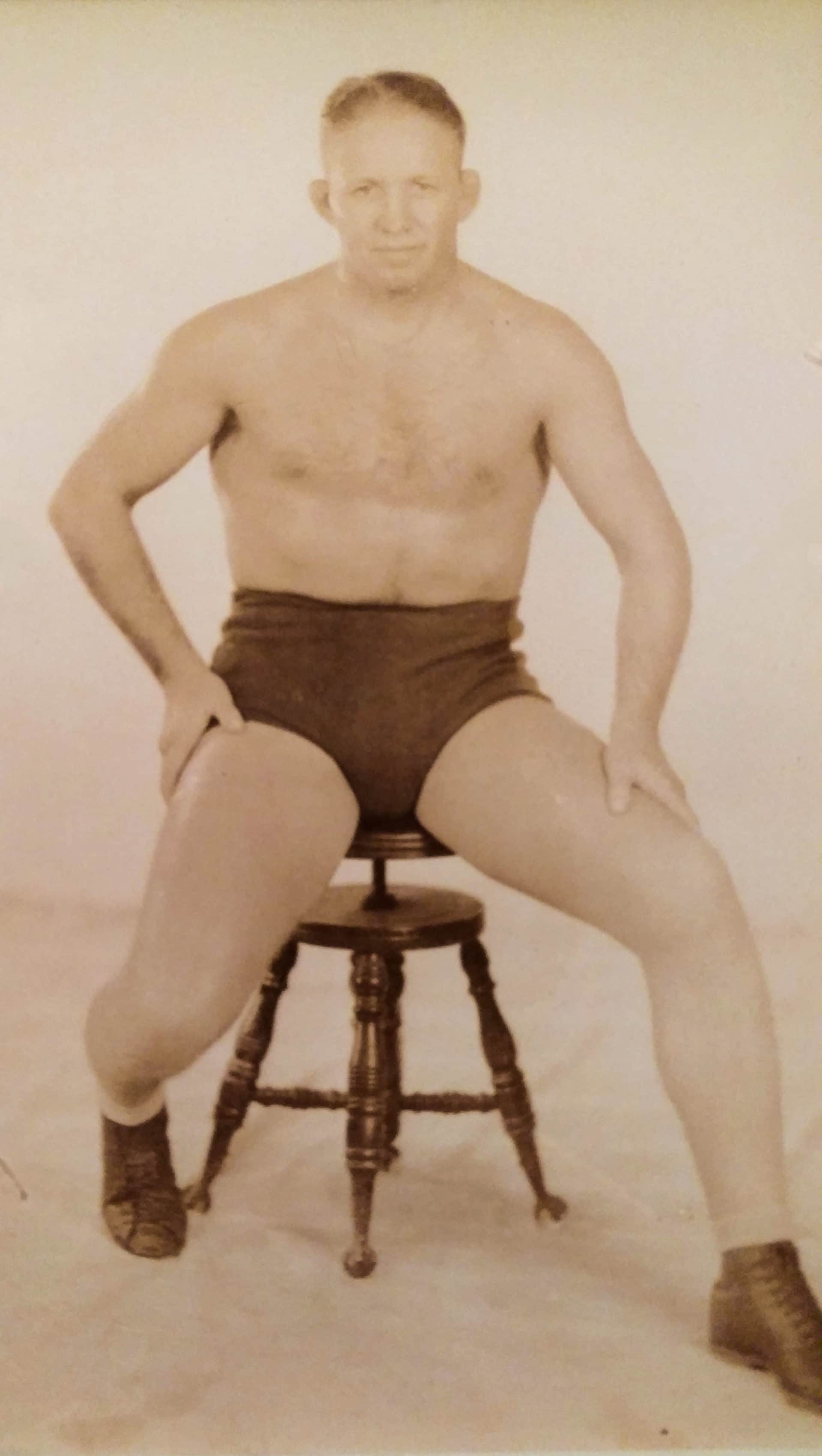
Roy Welch 9-27-1977 at the age of 75
50 Year Flashback
9/19/1975, 9/26/1975 & 10/3/1975: EMLL’s 42nd Anniversary Shows at Arena Mexico in Mexico City, Mexico
The 42nd Anniversary Shows of Empresa Mexicana de Lucha Libre (EMLL, now known as Consejo Mundial de Lucha Libre or CMLL) in 1975 marked the celebration of the company’s founding on September 22, 1933, by Salvador Lutteroth. EMLL was the oldest active professional wrestling promotion at the time and remains so today. These anniversary events were EMLL’s premier annual spectacles, akin to modern mega-events like WWE’s WrestleMania, often featuring high stakes matches such as Lucha de Apuestas (wager matches involving masks, hair, or careers). In 1975, unusually, the anniversary was spread across three separate Friday night shows at Arena México in Mexico City, replacing the regular Super Viernes programming. Arena México, opened in 1956, is dubbed “The Cathedral of Lucha Libre” and hosted all major EMLL events. Matches followed lucha libre traditions, with wrestlers as técnicos (faces/good guys) or rudos (heels/bad guys) in scripted rivalries, typically in best two-out-of-three falls format.
The three-part format allowed for extended storytelling, including a prominent feud between El Santo and Perro Aguayo that spanned the shows. Part 1 focused on tag team hair wagers and a title defense, Part 2 highlighted championship matches, and Part 3 concluded with a major mask vs. hair bout. Attendance grew across the events, reflecting rising interest.
Part 1: September 19, 1975, Attendance approximately 14,000
The show emphasized rivalries from EMLL’s ongoing storylines, including the dissolution of the Ola Blanca tag team (Dr. Wagner and Ángel Blanco) and hair wagers, a staple of lucha libre where losers are publicly humiliated by shaving their heads.
Indio Jeronimo vs Mr. Steel
September Negro vs Tony Lopez
El Cobarde vs El Nazi in a heel vs heel match
Gino Hernandez defeated Tony Salazar
El Santo, Blue Demon & Ringo Mendoza defeated Perro Aguayo, Karloff LaGarde & Alfonso Dantes
Dr. Wagner vs Angel Blanco went to a draw with Blanco winning Fall 1, double pin draw in Fall 2 and Wagner winning Fall 3, Wagner retained the NWA world Light Heavyweight Championship
Los Gemelo Diablos defeated Coloso Colosetti & Rubi Rubalcava in a 2 out of three falls hair vs hair match, Colosetti & Rubalcava get their heads shaved after the match
Part 2: September 26, 1975, Attendance approximately 17,500
This show built on Part 1’s momentum, focusing on title defenses and escalating the El Santo-Perro Aguayo rivalry. It featured a mix of singles, tag, and trios matches, with championships on the line highlighting EMLL’s international ties via NWA affiliations.
Carique Mara defeated Manuel Robles
Fishman defeated Mr. Tempest
Ringo Mendoza & Gino Hernandez defeated Adorable Rubi & Tony Salazar
Alfonso Dantes, Diablos I & II defeated Huracan Ramirez, Dr. Wagner & Cien Caras
El Halcon defeated Raul Reyes (ch) to win the Mexican National Heavyweight Championship
Blue Demon (ch) defeated Karloff LaGarde to retain the NWA World Welterweight Championship
Perro Aguayo (ch) defeated El Santo to retain the NWA World Middleweight Championship
Part 3: October 3, 1975, Attendance 17,500
This final installment concluded the three-part anniversary celebration, building on the escalating rivalry between El Santo and Perro Aguayo from the previous shows. It emphasized high-stakes matches, including a title defense and the climactic Lucha de Apuestas (wager match), where the loser faced public humiliation—either unmasking or head-shaving. The event replaced the regular Super Viernes programming and highlighted EMLL’s tradition of dramatic storytelling in lucha libre.
Leo Lopez vs Chino Chow
Babe Face vs Ciclon Veloz
Alfonso Dantes & Angel Blanco defeated Dr. Wagner & El Halcon
Coloso Colosetti, Fishman & Raul Reyes defeated Alberto Munoz, Cien Caras & El Rostro in two out of three falls
Ringo Mendoza (ch) defeated Tony Salazar, Mendoza retained the Mexican Middleweight Championship
El Santo defeated Perro Aguayo in a mask vs hair match, Aguayo was shaved bald after the match
9/27/1975: Mark Lewin defeated The Sheik for the NWA United States Heavyweight Championship at Cobo Arena in Detroit, Michigan
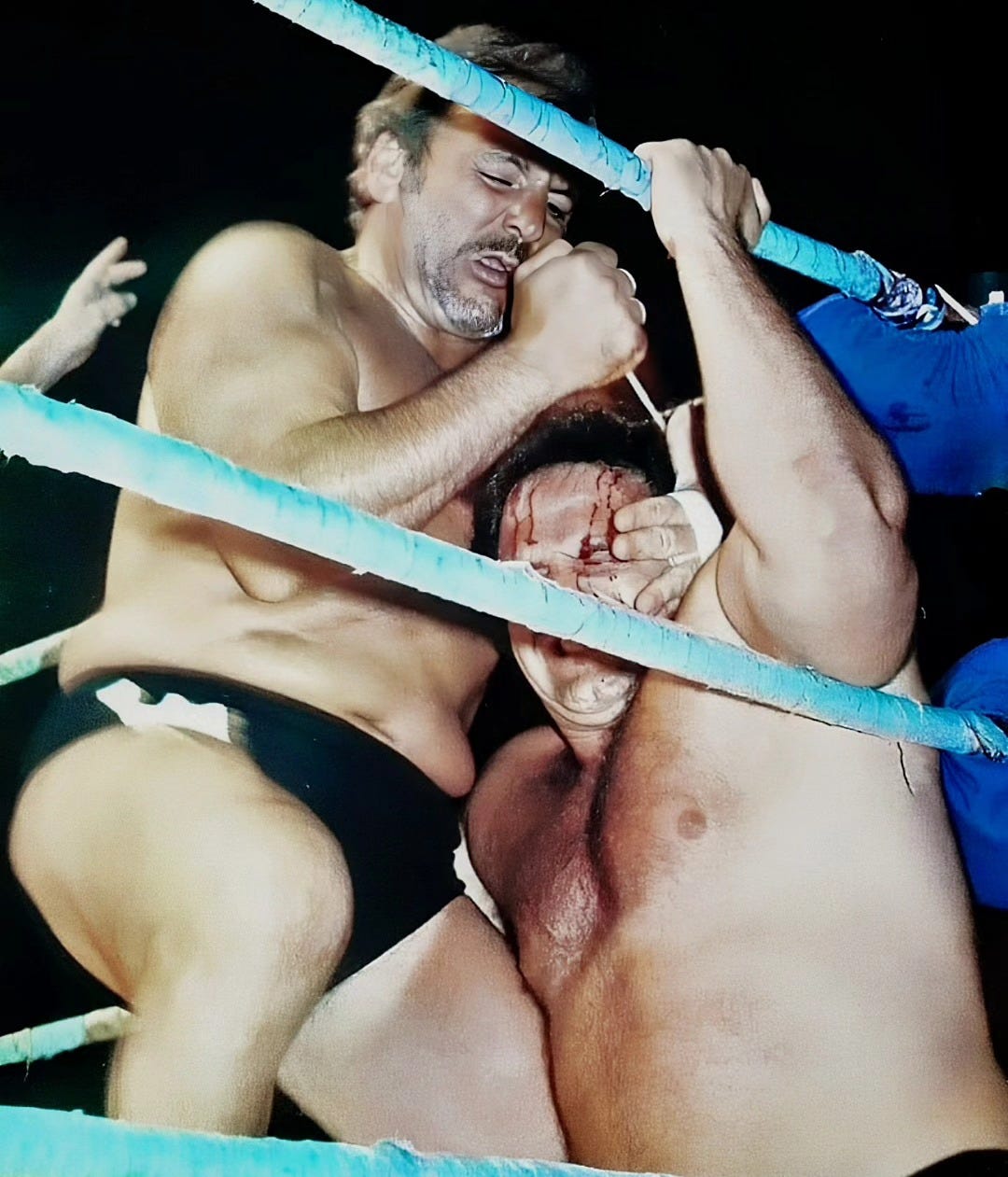
Pictured: The Sheik carves up Mark Lewin in the corner at Cobo Arena in Detroit, Michigan
This version of the NWA United States Heavyweight Championship in Detroit is the original version of the title, regardless of various claims including the Jim Crockett version which was first originated in 1975. This Detroit version of The NWA United States Heavyweight Championship (Detroit version) was a regional title under the National Wrestling Alliance banner, originally introduced as the Chicago version on September 3, 1953, with Verne Gagne as the first champion under Fred Kohler Enterprises. It transitioned to Detroit’s Big Time Wrestling in 1959 and became the promotion’s flagship singles title until its retirement in October 1980. Key holders included Bobo Brazil (multiple reigns), The Sheik (record 12 reigns, with the longest at 538 days), Wilbur Snyder, Johnny Valentine, and AWA stars like Verne Gagne and Dick the Bruiser. The belt was central to Detroit’s storylines, often defended at Cobo Arena in bloody, intense matches that drew on the territory’s hardcore style.
This title switch was part of a turbulent year for the Detroit version of the NWA United States Heavyweight Championship, which saw multiple changes amid feuds in the Big Time Wrestling territory. The Sheik had reclaimed the belt from Bobo Brazil on July 5, 1975, marking his eighth reign after a series of earlier swaps: Brazil was awarded the title on January 25, 1975, due to The Sheik no-showing defenses; Abdullah the Butcher briefly held it from February 8 to April 19, 1975; and Brazil regained it before losing to The Sheik.
Lewin’s victory on September 27 was short-lived—he dropped the title to “Bulldog” Don Kent on November 1, 1975, but regained it in December 1975. The feud between Lewin and The Sheik extended beyond this match, including tag team encounters earlier in 1975 (e.g., The Sheik & King Curtis defeating Lewin & Bobo Brazil on August 2, 1975) and rematches in 1976, such as a notable “loser leaves town” bout on February 14, 1976, where The Sheik regained momentum. These rivalries were built around The Sheik’s dominant heel persona clashing with babyfaces like Lewin, who was positioned as a heroic challenger in Detroit during this period.
Lewin, although he came in for the shot in August, had been working as Stu Hart’s booker in Calgary’s Stampede Wrestling for most of 1975. Lewin was born March 16, 1937, in Buffalo, New York, Lewin began wrestling at age 16 in 1953, trained by his brother-in-law Danny McShain. His brothers Donn and Ted were also wrestlers. Early success came as a babyface tag partner with Don Curtis in territories like New York and Chicago. By 1963, he adopted the alternating “Maniac” or “Mad” Mark Lewin heel persona while maintaining babyface runs. In 1973 and 1974, he had worked as booker for Jim Barnett’s World Championship Wrestling promotion drawing huge crowds in Australia and New Zealand along with his good friend King Curtis Iaukea, who often was part of Lewin’s crew and who had followed him to Stampede in 1975.
Attendance for this show at Cobo Arena was reported at 5,273, which was considered moderate to light for the era at Cobo Arena (capacity around 12,000), reflecting some decline in the Detroit territory’s popularity by the mid-1970s. The card also included a very young and green Randy Poffo (Savage) who took a loss for Stan Stasiak. Afa & Sika, who were working as The Islanders at this time, went to a time limit draw with Bobo Brazil & El Brasero, Hank James & “The Stomper” (who was Guy Mitchell under a hood) defeated Bulldog Don Kent & Kurt Von Brauner, Gino Brito & Edouard Carpentier were on the show as well as a women’s match and an opening tag match with Lou Klien and three of his trainees.
One Thing I Learned Today About Pro Wrestling History
Mark Lewin won his first major title in 1958, the WWWF United States Tag Team Titles forming one of the greatest babyface tag teams in Pro Wrestling History with Don Curtis. They had a major program, drawing tons of money with The Golden Grahams in the WWWF, selling out towns up and down the Eastern Seaboard.
Thank You for Reading
I’m Tony Richards, Pro Wrestling Historian, Author and Storyteller. I share pro wrestling historical items in each issue of the Time Tunnel Pro Wrestling History Newsletter. Thanks for reading! If you enjoy my information on select events, matches and insights, please share it with folks you think might like to be a subscriber!
Remember, paid subscribers get access to exclusive and special content such as some special issues including a multi-part deep dives on wrestling territories, wrestler bios and championship title histories, special audio and video interviews on territory pro wrestling and more available in the Pro Wrestling Time Tunnel for Premium Subscribers.
Ricky Fuji...I saw him wrestle a few times in Calgary. Like other Japanese boys sent to Calgary they considered it a BIG feather in their cap and worked it into a gimmick in Japan. Hashimoto and two others became the Calgary Hurricanes and Ricky Fuji became the Calgary Tiger. We were spoiled for Japanese talent here when I was still going to the Calgary matches in the 80's: Liger, Hiro Hase, The Cobra, Monster Ripper, Chigusa Nagayo, Junji Hirata, Shunji Takano, Rusher Kimura, Benkei Sasaki, Kawada, Hashimoto and before that crew we had guys like Animal Hamaguchi, Mr. Pogo, Mr. Hito, Mr. Sakurada, Kinji Shibuya, Tokyo Joe, etc. ALWAYS a lot of Japanese and British guys in Calgary.