


May 1 in the Tunnel:
Happy Birthday to those who have passed on and to those great wrestlers still with us:
In Memoriam:
Neff Maivia 1924
Count Von Bromberg 1910
Mickie Henson 1963
Happy Birthday:
Dave Taylor (68)
Gary Steele (52)
Ace Romero (35)
Tiffany Stratton (26)
RIP Memorial: We stop & remember those who have passed on this day and gave themselves to the business for us, the fans. We salute you and thank you.
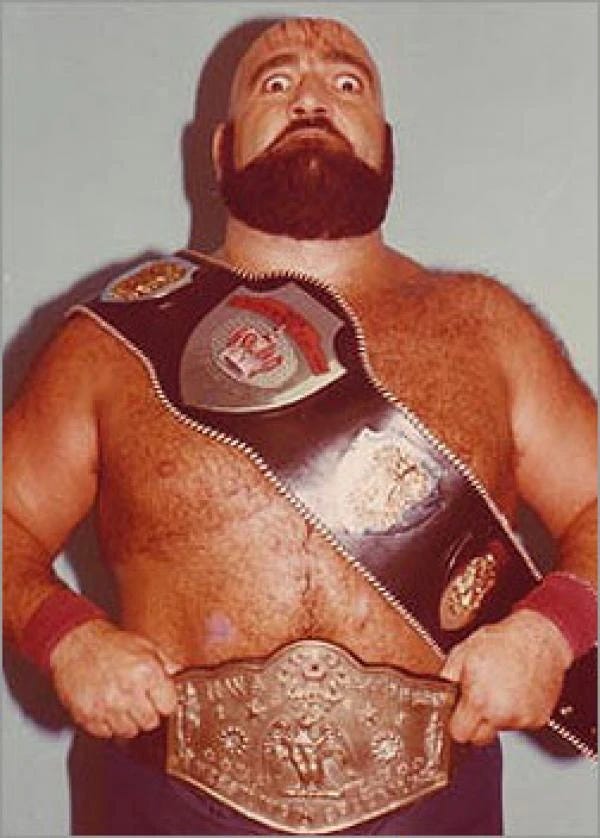
Jos LeDuc 5-1-1999 at the age of 54
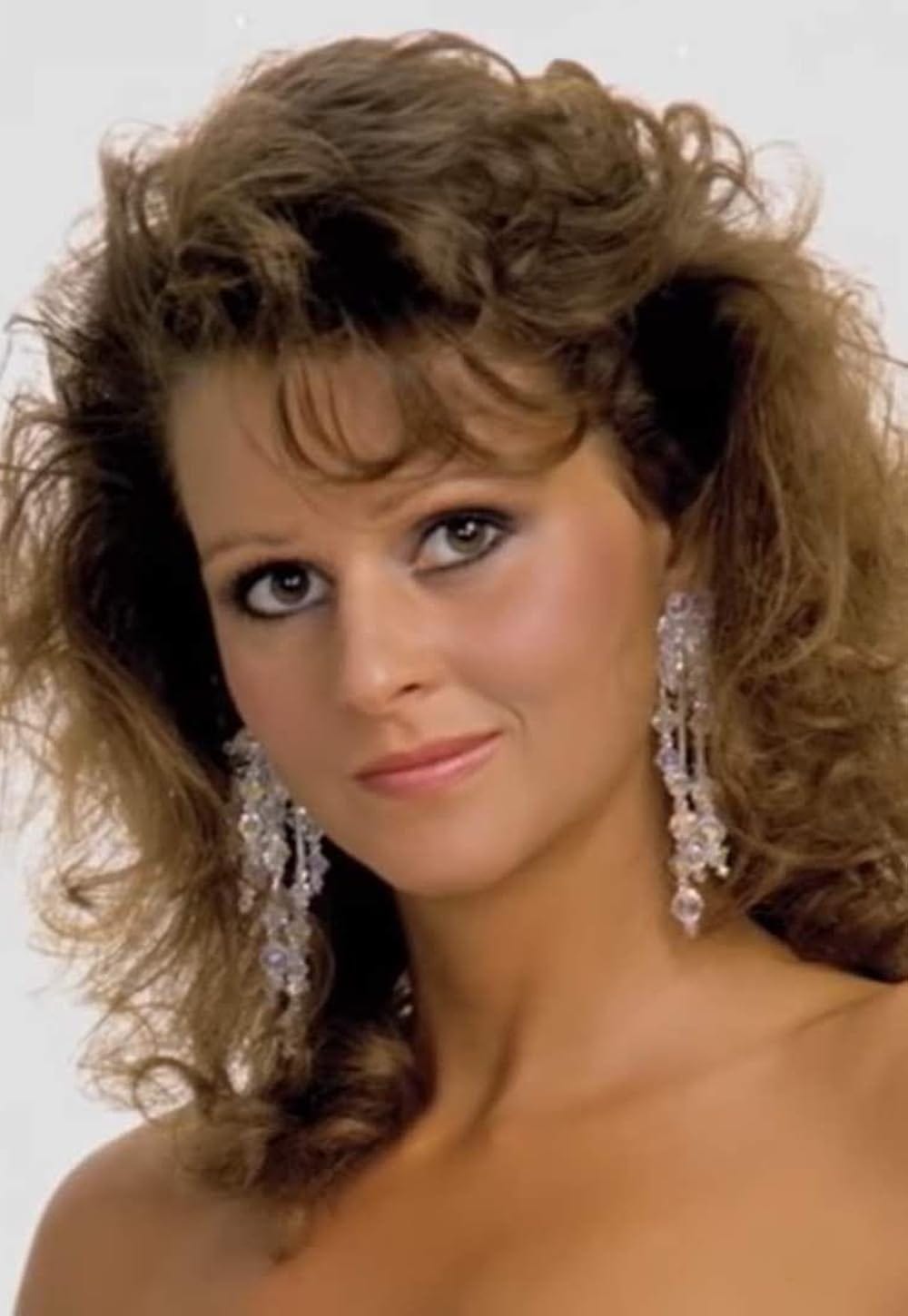
Miss Elizabeth Huelett 5-1-2003 at the age of 42
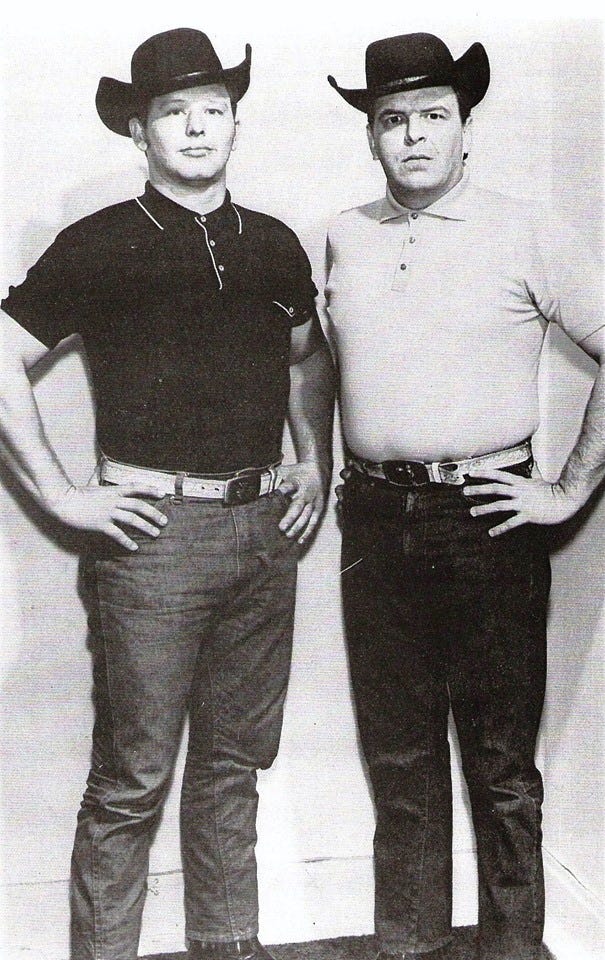
Kurt Von Poppenheim 5-1-2003 at the age of 89

Joe Turner 5-1-2014 at the age of 75
Select Time Tunnel Pro Wrestling Match Flashbacks:
60-Year Flashback:
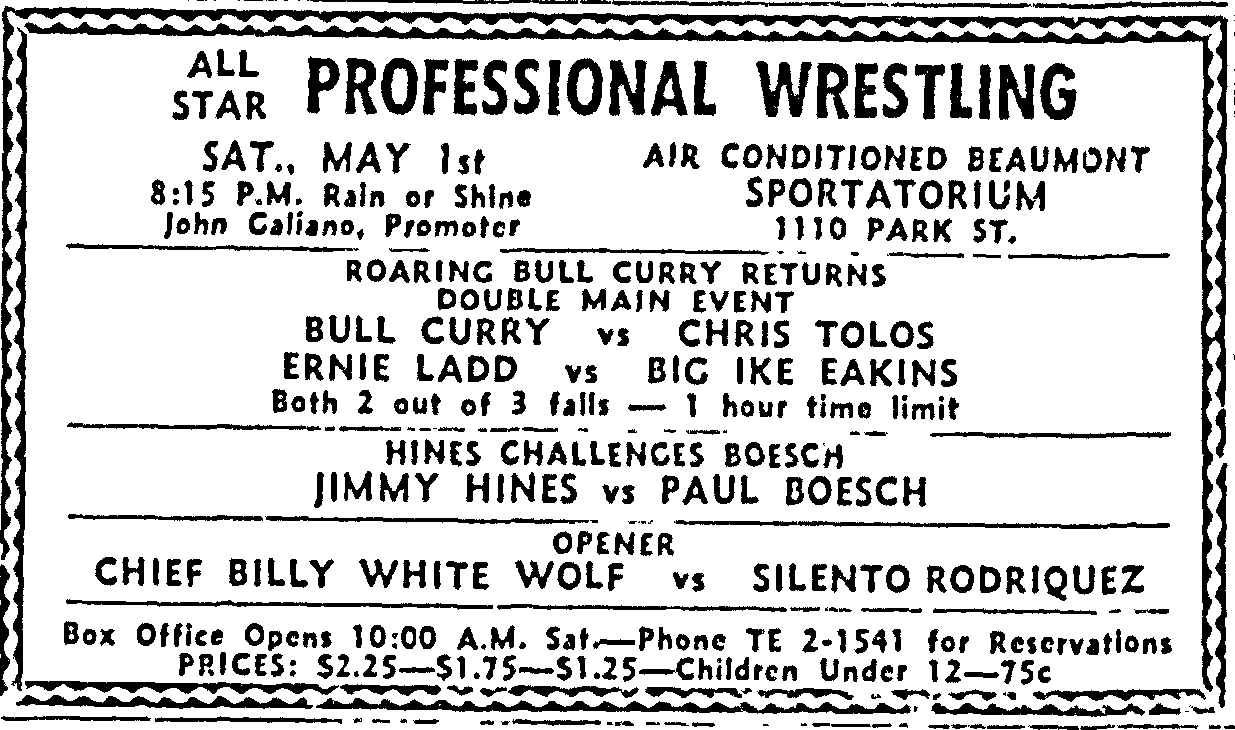
5-1-1965: Ernie Ladd defeated Ike Eakins by 2 falls to 0 at the Sportatorium in Beaumont, Texas
*Tony Note: Ike Eakins was one of the leading performers in the professional wrestling business in the late 1950s and the majority of the 1960s. It's understandable why many wrestling fans would not remember him that well as he had a twenty-year career in the business from 1948 until 1968 and he traveled and worked for most of the booking offices in the country at the time. He was used primarily from the mid-card to main events during this period of time. There's an interesting period for me, as a fan from 1960 through 1973 where the territorial wrestling business was driven by the local television in that area, there were no national shows, so if a wrestler didn't come through my area or was featured in the national magazines, I had no awareness of them. Eakins did perform in the Tennessee territory, but it was before my time. I've only become familiar with him through my study of wrestling history. My studies of him indicate he was a rough, tough customer.

Don Leo Jonathan, a big rough wrestler himself was asked who the toughest wrestler he ever faced was and he gave three answers: Danny Hodge, Bronko Lubich and Ike Eakins. Eakins had a tragic death as he suffered an accident in the ring wrestling Big Boy Hines in Atlanta, Georgia. During the match, he suffered a broken collarbone, and as wrestlers often did in those days, he refused to see a doctor and instead went back to his hotel room to rest. During the night, while he was sleeping, his collarbone split and cause deep and severe cuts internally. He woke up in bed while bleeding internally and he was throwing up blood, which led to his death that night in his hotel room. Police originally thought he had been killed when he was discovered due to all the blood in the room.
“I’d rather fight a man than to make love to a woman” - Ernie Ladd
"The Big Cat" Ernie Ladd was a legendary figure in the business and one of the most imitated voices on wrestling podcasts. Ernie had a distinctive voice tone and vocal pattern. He was a standout star at Grambling University in college football and was drafted by the San Diego Chargers. He was always vocal as a pro football player which led to a shoot angle with Dick Byers challenging Ladd to come down for a work out. Ladd responded by saying he wasn't interested in "coming down there with you phony wrestlers". Byers continued the challenge until Ladd agreed to come down. As was common in those days, they beat Ladd up, brutally rubbing his face in the mat. Ladd recalled "I realized I wasn't as good as I thought I was and I was out of my arena and in someone else's arena".1 He stayed with the Chargers until 1965, having won the AFL title in 1963. Like a few football players before him like Wahoo McDaniel, Fritz Von Erich and Bill Watts, he found out he could make much more money wrestling than playing football and not have as much toll taken on his body leading to a longer career. The interesting thing about today's match flashback is that 1965 is the year he transitioned from the San Diego Chargers to the Houston Oilers, who he played for in the 1965-1966 season. Ernie was becoming big in Texas, so he was a babyface in today's match with Eakins, who always played a dastardly, sullen heel.
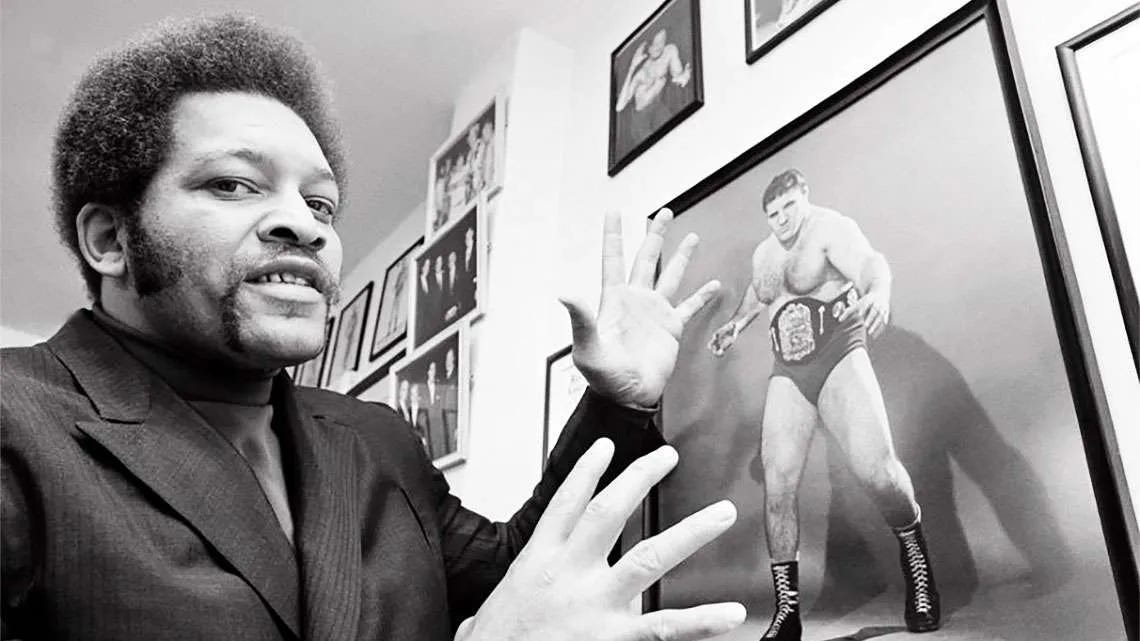
If you have seen the tapes of Ernie in Mid-South Wrestling in 1983 and 84 or in Mid-Atlantic around that time, you saw the Big Cat at the end of his career, when his knees were totally shot and he was fairly immobile in the ring. If you could imagine turning back the clock twenty years to 1965, can you imagine how agile and mobile he was at six foot nine and almost three hundred pounds. "The Big Cat" nickname was size, agility and speed. I can only imagine fans' reaction to Ladd in Texas at this time, he was a professional multi-sports superstar coming to wrestle in their hometown, where they could see him on their television and go to their local, small arena and see him up close and personal. Also, before becoming a heel in later years, as a babyface, Ladd could interact with the fans, sign autographs and pose for pictures. Must have been quite the experience for those fans. The booker put him over strong too, trouncing the rough, tough Eakins in two straight falls. They were planning on Ernie being in Texas for the long haul. Pual Boesch was pretty much retired from the ring at this point and was hosting the television show in Houston, so on this card was an early "wrestler challenges the TV announcer and former wrestler" angle with Bad Boy Jimmy Hines. Boesch went over in the match, as he would do for years in Houston when they would do this angle every other year or so with a top heel like Dory Funk Sr or Professor Boris Malenko. Interestingly, Hines was the guy Eakins wrestled in his last fatal match in Atlanta around two years from this.
50-Year Flashback:
5-1-1975: Antonio Inoki defeated Man Mountain Mike on Day 22 of the 2nd annual All Japan World League series in Kunemoto, Japan.
*Tony Note: Inoki had launched out founding New Japan Pro Wrestling after his stable-mate and close rival Giant Baba had just done himself with All Japan Pro Wrestling. These two huge figures in Japanese Professional Wrestling had been united in JPW from the mid-60s and will now drive the story of wrestling in Japan and the Asian Pacific for decades to come through transitions and paradigms in the business that neither man could have imagined at the start. 1972 was a banner and notable year for these two national promotions basically coming into existence so closely together, but yet so competitively fierce. It's now 1975 and both entrepreneurial sports stars are trying to differentiate themselves. Baba has the lead, both from being the first to go out on his own and also from having the National Wrestling Alliance membership and booking relationship with the Funk family. Baba had arranged for a NWA World Title reign for himself earlier in the year, if only for a week to 10 days, it was still a huge deal in Japan.
Inoki was angling for a mirror type recognition and notoriety through his purchase and ownership of the NWF World Championship, which we will get into in detail in another issue, but just to mention, the NWF relationship in the US was giving him something very valuable in Japan, a pipeline of foreign wrestlers to be used as heels in his various tours and tournaments. While it seemed, All Japan was always a step head, having been started before New Japan, this point in history was indicative, running its third year of its popular Champions Carnival series, Inoki had started a tournament points-based tournament style event tour of his own, called the World League in 1974. This was designed to show not only a national presence for New Japan, but also a world one, inviting the "best in the world" to Japan to compete. The 1st World League culminated in the finals on May 8th, 1974 with a three-way deadlock between Inoki, his major talent acquisition inside the country, Seiji Sakaguchi, whom he had convinced to jump from All Japan and one of his top prize, foreign heels, Killer Karl Krupp. The entire month long World League was booked around the two Japanese babyfaces vs the American heel with Inoki coming out on top winning over Krupp in the finals.
Now, a year later the 2nd World League is in full swing, it's the first day of May and the series is tight and winding down toward the finals again. It's again been booked as a tight race on points, with Inoki, Super Destroyer, Sakaguchi, Man Mountain Mike, Strong Kobayashi and Krupp all seemingly having a chance at the finals. On Day 22 of the World League in Kunemoto, Inoki emerges with a victory over Man Mountain Mike essentially eliminating him from the finals and keeping Inoki at the forefront in the points total and course set for another World League Finals appearance.
40-Year Flashback:
5-1-1985: Junkyard Dog defeated Greg Valentine (CH) by DQ for the WWF Intercontinental Title at the Westchester County Center in White Plains, NY
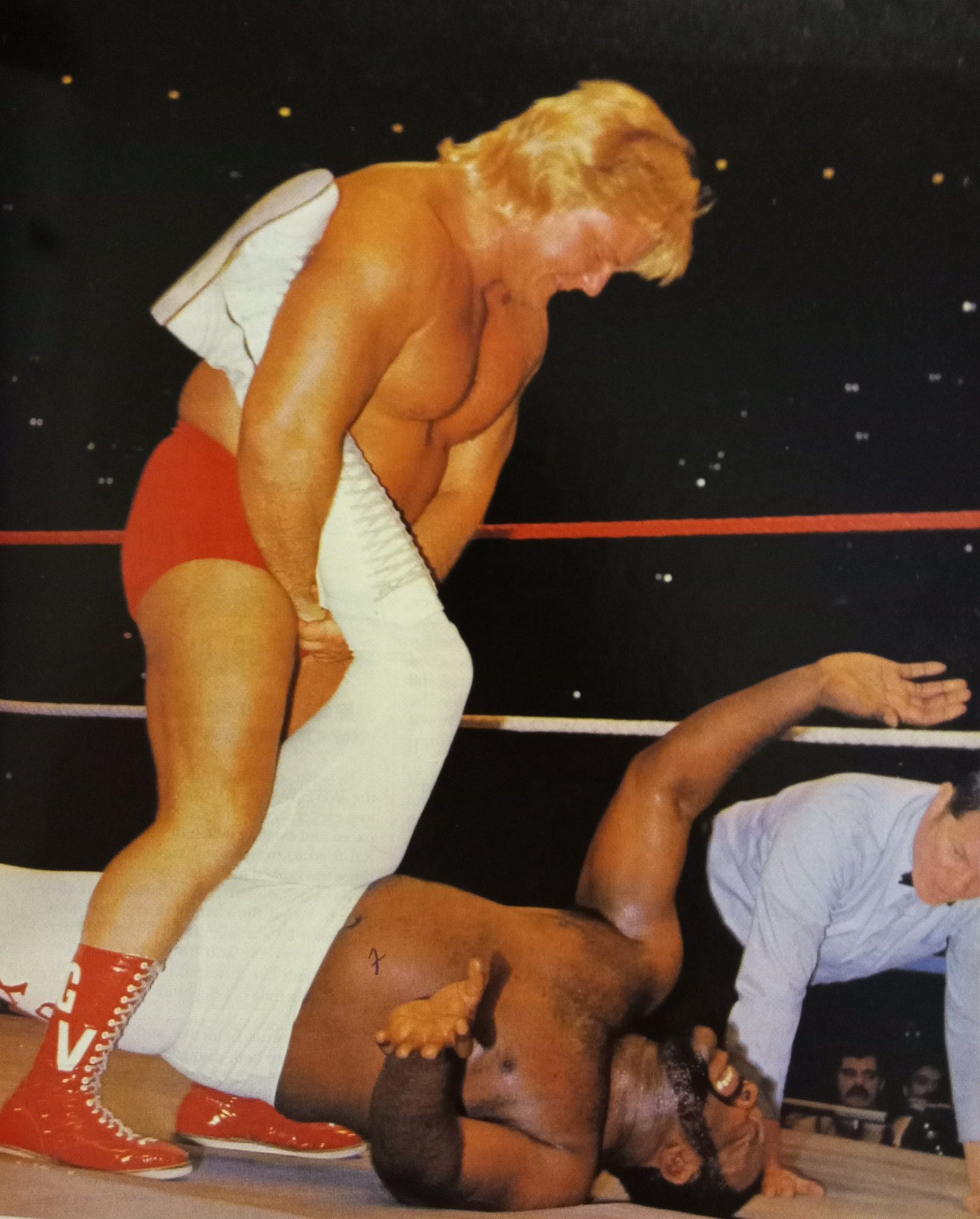
*Tony Note: The booking offices and consequently the territories they created are dying off rapidly and the stars that helped build them are in the Crockett and WWF main events as the forces of two sides are aligning themselves for a national wrestling war for the next two and a half years. Two headliners from the territory days getting national exposure. It unfortunate neither guy was what he once was. The Junkyard Dog left Bill Watts' Mid-South Wrestling the year prior in 1984. He had been something interesting, something different, a black Superhero, much like Sammartino to people in the Garden in New York in the 1960s and 1970s. To the folks in the Mid-South territory, particularly New Orleans, Dog was, in wrestling vernacular, "really over." While he was still somewhat over in the WWF, his body had begun to break down in his last year in Mid-South, due to the rigorous match types, the road schedule but mostly due to personal habits and abuse.
Greg Valentine, the son of a territory legend, was brought up in the business of professional wrestling. He was told from a child, that the business had to be "made real" to the fans, no matter what. Greg took those lessons to heart and that's is how he crafted his presentation. Working in often brutal, realistic and bloody matches in Florida, Los Angeles, Georgia and the Carolinas. His dog collar match with Roddy Piper at Starrcade 1983 in Greensboro, North Carolina being an example to point to for Valentine's style. So, this match wasn't what it once could have been at this stage for both guys, but it was still the match on top for the B-Show tour. McMahon and team would book the Dog in tag matches with Hogan for their southern US market invasion tours as a A and B show main event combination. Even then, they didn't draw in Oklahoma, Louisiana or Texas for several years and the regional promotions were gone.
One Thing I Learned Today About Pro Wrestling History:
By December 1939, there were at least 13 professional wrestling promoters who were issued licenses to promote professional wrestling events in Southern California by the California State Athletic Commission.2
Thank You for Reading
I'm Tony Richards, Pro Wrestling Historian, Author and Storyteller. I share pro wrestling historical items in each issue of the Time Tunnel Pro Wrestling History Newsletter. Thanks for reading! If you enjoy my information on select events, matches and insights, please share it with folks you think might like to be a subscriber!
Remember, paid subscribers get access to exclusive and special content such as to commemorate his induction to the WWE Hall of Fame, I'll be publishing some special issues including a multi-part career retrospective on Dory Funk, Sr, a multi-part flashback series of articles on the Georgia Championship Wrestling Territory in May 1975 including all the recorded cards for the month, some special audio and video interviews and more.
Ernie Ladd shoot interview HighSpots Network
Research provided by Tim Hornbaker