


September 13th in the Time Tunnel:
Happy Birthday to those who have passed on and to those great wrestlers still with us:
In Memoriam:
Lord Leslie Carlton 1914
Art Nelson 1927
Archie Underwood\Steve Kovacs\Danny Little Bear 1937
Happy Birthday:
Jerry Stubbs 73
Angelina Love 44
RIP Memorial: We stop & remember those who have passed on this day and gave themselves to the business for us, the fans. We salute you and thank you.
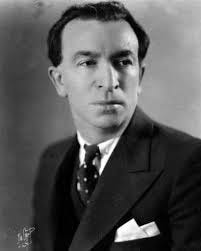
Jack Pfefer 9-13-1974 at the age of 79
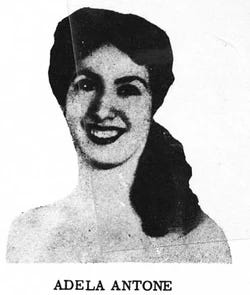
"Nature Girl" Adela Antone 9-13-2001 at the age of 70
Significant Pro Wrestler Debut:
9-13-1951: Luther Lindsey made his professional Wrestling debut at Haft's Acre in Columbus, Ohio
Luther Lindsay, who was born Luther Jacob Goodall in Norfolk, Virginia was a pioneering African American professional wrestler, widely regarded as one of the greatest of his era. Before entering wrestling, he was a standout athlete in football and amateur wrestling. He played college football as an All-American tackle-guard at Norfolk State and Hampton Institute, and he also won a CIAA wrestling championship. However, due to segregation laws in the Jim Crow South, he was barred from competing against white athletes, limiting his opportunities in integrated sports. This racial barrier likely contributed to his decision to transition to professional wrestling around 1950–1951, at which point he adopted his wife's surname, Lindsey, for his ring name.
Lindsey's professional debut occurred on September 13, 1951, at Haft's Acre arena in Columbus, Ohio, under the promotion of Al Haft, a longtime Ohio wrestling figure who had been active since the early 1900s as both a wrestler (under the name "Young Gotch") and promoter. Haft's Midwest Wrestling Association (MWA) was a key regional outfit, often featuring local talent alongside national stars, and his shows in Columbus drew steady crowds in the post-WWII era. In his debut bout, a singles match billed as best two-out-of-three falls (though it ended quickly), Lindsey faced veteran journeyman Tony Sinatra. Lindsey dominated, pinning Sinatra in the first fall at 1:39 to secure the victory. This rapid win showcased his explosive athleticism and set the tone for his early career momentum. The event was part of Haft's regular Thursday night cards at Haft's Acre, a venue known for its intimate atmosphere and role in launching Ohio talent.
Lindsey's Ohio run under Haft helped establish him regionally before he ventured to territories like the Pacific Northwest, where he became a top draw in the 1950s and 1960s, feuding with stars like Fritz Von Erich and Mad Dog Vachon.
9-13-1965: Hartford Love made his professional wrestling debut at the television taping for wrestling at CKLW, Channel 9 in Windsor, Ontario, Canada. It was. a tag team match with Love teaming with Rocky Starr in a loss to stars Bull Curry and Killer Karl Kox.
Hartford Love, whose real name was Wes Hutchings was a Canadian professional wrestler born in Newfoundland. He is best remembered for his work in various North American territories during the 1960s and 1970s, often as part of the tag team the Love Brothers alongside Reginald Love (Johnny Evans). The duo portrayed hippie-inspired heels known for dirty tactics like eye gouging and stomping, and they captured titles in promotions such as the International Wrestling Alliance (IWA) and toured Japan in 1972. Love also had a successful solo career, including a stint as Canadian Heavyweight Champion in George Cannon's Superstars of Wrestling promotion and appearances in Puerto Rico's World Wrestling Council (WWC), where he held the Caribbean Heavyweight Championship.
Hutchings made his professional in-ring debut under his real name, Wes Hutchings at a TV taping for CKLW Channel 9 in Windsor, Ontario. CKLW-TV (now known as CBET-DT) was a key television outlet in the region during that era, airing local wrestling programming as part of the broader Big Time Wrestling scene out of Detroit and southern Ontario. These tapings were typically held at arenas or studios in Windsor and featured matches for syndicated TV shows that reached audiences across Ontario and into the U.S. Midwest. Hutchings first match in pro wrestling marked the start of a career that spanned over 1,100 documented matches. Early bouts for Love were primarily in southern and northern Ontario territories under promoter Larry Kasaboski.
Hartford Love's career highlights included tag team success in the IWA (defeating teams like Billy Red Lyons and Dewey Robertson for the International Tag Team Titles in 1974), solo runs in promotions like Mid-Atlantic Championship Wrestling and Central States Wrestling, and a beloved babyface role in his home province of Newfoundland and Labrador through Superstars of Wrestling. He retired in the early 1980s (some sources cite 1981, others his final match in 1988 against Adrian Adonis), partly due to the physical toll and personal tragedies like the deaths of wrestling colleagues.
75 Year Flashback
9-13-1950: Japanese Wrestling Legend Rikidozan Retires from SUMO Wrestling
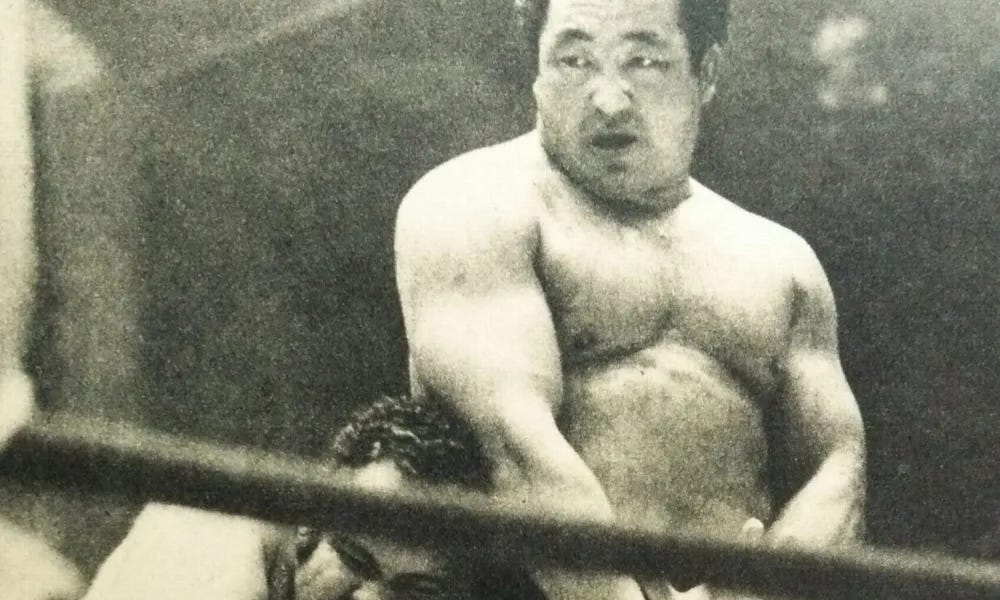
Pictured: Rikidozan
Rikidozan entered professional sumo in May 1940 at the age of 15, joining the Nishonoseki stable (a training group under a senior sumo elder). Due to discrimination against his Korean heritage during Japan's imperial era, he adopted a Japanese identity: he was "adopted" by wrestler Minosuke Momota and took the name Mitsuhiro Momota, with a fabricated backstory of being born in Omura, Nagasaki Prefecture. This allowed him to compete without overt bias. He quickly rose through the ranks:
Debuted in the lowest divisions and showed promise with his size (he stood about 6'1" or 185 cm and weighed around 265 lbs. or 120 kg, impressive for the era).
Reached the top makuuchi division in 1946.
Achieved his highest rank of sekiwake (a high-ranking position just below ozeki) in May 1949.
Competed in 23 grand sumo tournaments (basho), compiling a record of 135 wins and 82 losses.
Notable achievements included a runner-up finish in the June 1947 tournament (losing a playoff to Yokozuna Haguroyama), one Makushita division championship, one Sandanme championship, one Outstanding Performance prize, and two kinboshi (gold star) awards for defeating Yokozuna Azumafuji.
Despite his success, Rikidozan faced ongoing challenges, including subtle racism and tensions within the sumo world, which was deeply traditional and insular.
The Retirement Situation (September 1950)
Rikidozan retired abruptly in September 1950 at age 25, during or just after the autumn tournament. The official public reason given at the time was health-related: he claimed to suffer from paragonimiasis (a parasitic lung infection, often called "lung fluke," common in East Asia from eating raw crustaceans). However, historians and biographers widely view this as a cover story, with multiple underlying factors contributing to his decision, but here are the four primary driving forces leading to his exit from Sumo:
Dispute with his stablemaster: A major trigger was a heated argument with Tamanoumi Daitarō, the head of his stable. Rikidozan reportedly demanded a larger share of his earnings (he was a top earner but felt underpaid in the rigid sumo hierarchy). When denied, he impulsively cut off his chonmage (the traditional topknot hairstyle symbolizing a sumo wrestler's commitment) on September 10, 1950, effectively forcing his retirement. This act was irreversible and a profound break from sumo tradition.
Racial discrimination: As a Korean in post-WWII Japan, where anti-Korean sentiment lingered, he faced barriers to further promotion. Despite his Japanese alias, rumors of his origins circulated, and some believe this envy from Japanese seniors and systemic bias limited his ascent to ozeki or Yokozuna status.
Envy and internal politics: His rapid rise and popularity bred resentment among veterans, who saw him as an outsider disrupting the established order.
Financial motivations: Sumo salaries were modest compared to his potential elsewhere, and he later admitted financial independence as a factor.
The retirement was controversial and low-key; he didn't receive a formal danpatsu-shiki (retirement ceremony) like many wrestlers, underscoring the acrimony. It marked the end of his sumo involvement, and he symbolically severed ties by cutting his hair.
One Thing I Learned Today About Pro Wrestling History
Jerry Stubbs was the NWA Louisiana Heavyweight Champion in December of 1978, which was his first major championship in pro wrestling.
Thank You for Reading
I'm Tony Richards, Pro Wrestling Historian, Author and Storyteller. I share pro wrestling historical items in each issue of the Time Tunnel Pro Wrestling History Newsletter. Thanks for reading! If you enjoy my information on select events, matches and insights, please share it with folks you think might like to be a subscriber!
Remember, paid subscribers get access to exclusive and special content such as some special issues including a multi-part deep dives on wrestling territories, wrestler bios and championship title histories, special audio and video interviews on territory pro wrestling and more available in the Pro Wrestling Time Tunnel for Premium Subscribers.