


April 29 in the Tunnel:
Happy Birthday to those who have passed on and to those great wrestlers still with us:
In Memoriam:
Don Leo Johnathan 1931
Beauregard 1936
Pete Sanchez 1943
Happy Birthday:
Hector Guzman (67)
Paul Roma (66)
Sunshine (63)
Titus O'Neill (48)
Aksana (43)
Jay Lethal (40)
RIP Memorial: We stop & remember those who have passed on this day and gave themselves to the business for us, the fans. We salute you and thank you.
Joe Stecher 4-29-1974 at the age of 80
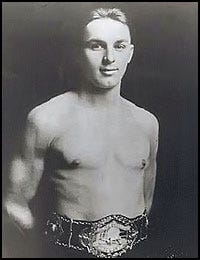
Cowboy Malott 4-29-1992 at the age of 85
No photo of Malott was available
Timothy Geohagen 4-29-1998 at the age of 76
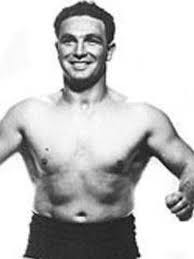
Hans Schroeder 4-29-2017 at the age of 75
Select Time Tunnel Pro Wrestling Match Flashbacks:
99-Year Flashback 4-29-1926: Joe Stecher defeated the "Nebraska Tigerman" John Pesek in 2 out of 3 falls to retain the World Heavyweight Title at the Coliseum in St Louis, Missouri.
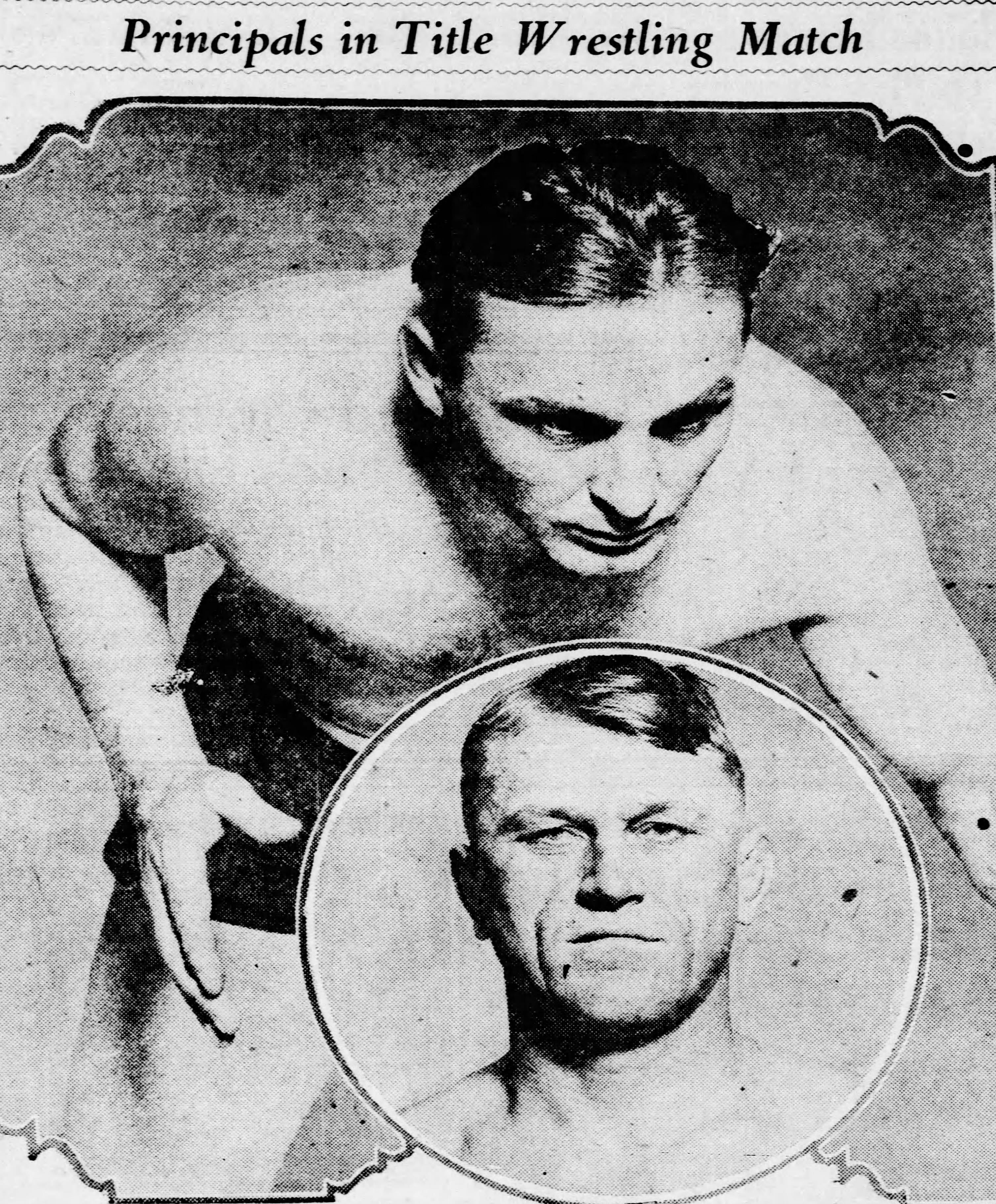
*Tony Note: In the photo above, Pesek just looks like a bad-ass heel, doesn’t he? Interestingly, this match took place on the day the legendary Stecher would pass away several years into the future. According to newspaper accounts we have on this match it drew 8,000 and $28,000 in the money of the time of the go-go 1920s and three years prior to the stock market crash and the beginning of The Great Depression. This was perhaps the most prosperous time in American History with people making more money than ever before and wanting entertainment, which professional wrestling fit the bill. Pro Wrestling sprung up out of the state of Iowa and found a super audience in the nearby city of St Louis, Missouri. Just as Stecher was, Pesek was one of the five or six most well-known, respected and feared professional wrestlers of the day. Pesek promoted himself with crowds of upcoming matches in cities with a challenge that would be utilized by touch, amateur wrestlers for decades forward. Pesek put up a bond worth $25,000 with the local newspaper in town to be paid to any man from the crowd who could win a fall from him. Dick Hutton in the 1950s, Tim Woods in the 1960s and 1970s and Bob Roop in the 1980s would do the same gimmick, for less money, I might add.
Both the champion Stecher and challenger Pesek were very cautious as the match began. Pesek was the aggressor and after a grueling 3 hours and 15 minutes, Pesek won the first fall. He started with a double wristlock; he worked into a head scissors and arm hold combo. He held his grip solidly and slowly lowered Stecher’s shoulders to the mat for a clean pin. Staying on the offense for the next fall, Pesek controlled the action until Stecher flipped him over and used his weight to pin Pesek. Some wrestlers who were surrounding the ring to watch the match said that Stecher actually softened up Pesek with a stranglehold before pinning him to win the second fall. As both men were wearing down using submission holds on each other, Stecher using his famous body scissors on at least four times around Pesek's mid-section which Pesek worked to break free each time, the final time with both men staggering to their feet, Pesek grabbed a crotch hold, picked up Stecher and slammed him down on the mat violently. Stecher jumped to his feet and Pesek clamped on a double wristlock. Stecher struggled free before Pesek could lock it in and pitch Pesek through the ropes, crashing to the floor. Pesek was carried to the dressing room for a ten-minute rest period and could not respond to the count, giving Stecher the match and retaining the World title.1 The match ended at 3:22 AM and the match official time was four hours and thirteen minutes with Stecher saying it was the hardest match he ever had. St Louis Post Dispatch Writer Dent McSkimming wrote that the match "was one of the most spectacular engagements in the history of professional wrestling".2
76 Year Flashback 4-29-1949: Gory Guerrero defeated Jack O'Brien for the NWA World Welterweight Championship at CMLL Super Friday (Viernes) at Arena Modelo in Mexico City, Mexico
*Tony Note: Known as "Super Viernes", Spanish for "Super Friday" was a CMLL event that took and takes place every Friday night in what is probably the longest running weekly pro wrestling event in history. While I am tempted to go into the history of what has been known as CMLL and EMLL through its history, I'll save that for a more comprehensive piece for our paid subscribers that we do for pro wrestling promotions in history, I will try to provide some basic insight on the NWA prefix to this championship. This title is inactive today, but it was originally created in 1946 by the promotion, and it was controlled and promoted by them until 1996. The National Wrestling Alliance was created in 1948 and Salvador Lutteroth's Mexico City booking office was admitted as a member at the NWA's fifth annual convention from September 5ht through the 7th of 1952. The NWA was experiencing a lot of success drawing money with the World Junior Heavyweight Title, so they achieved two objectives. One, they began to promote worldwide membership involvement with Mexico's addition alongside already having Canadian membership. And two, they could add another World Championship. This one being the World Light Heavyweight Championship, while allowing Lutteroth to control and book the champion.
Since the match pre-dates the membership, it was not an "NWA-branded title" at the time of the match, but most historians have agreed to attach the NWA prefix to it for historical purposes since its existence was only five years prior to membership and only had a handful of champions. The Welterweight title was one of three NWA World championships created and controlled by Lutteroth, the other two being the previously mentioned Light Heavyweight and also a World Middleweight title. All championship matches held in Mexico were two out of three falls with 30-, 45- and 60-minute time limits. The Welterweight limit was 150 to 172 pounds, but champions through history have been heaver or lighter at times than the rules defined. The most famous wrestler in Mexican wrestling history, El Santo was the first World Welterweight Champion. He won the title on March 15th, 1946, and held it for 337 days before losing it to Jack O'Brien on February 15th, 1947. O’Brien was the champion for 804 days before this match with Gory Guerrero, who also had an extended run with the title for one day longer than O'Brien at 805 days as champion. In the upcoming book I am working on "The Life and Times of Dory Funk Sr and the Amarillo/West Texas Wrestling Territory", Guerrero is featured greatly as he was one of two. outstanding, money drawing Spanish stars in the territory, the other being Ricky Romero.
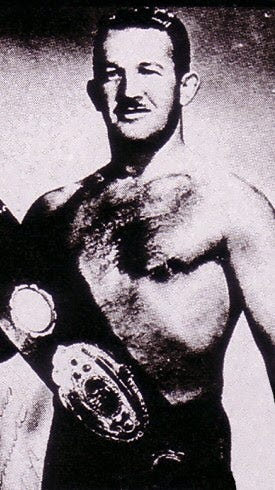
O'Brien was a native of Italy but spent the majority of his career working for Lutteroth in Mexico. He was known as "Roughhouse" Jack O'Brien and in the course of his career, he held all three of the World Championships mentioned before. Some historians credit O'Brien with the innovation of the Abdominal Stretch hold, known originally as the Tirabuzon, which is Spanish for "corkscrew". O'Brien debuted in 1934 and also obtained Mexican citizenship that same year. O'Brien had a natural charisma that made him a very popular wrestler in the sport. Throughout the 1940s, CMLL had a very successful ongoing storyline program going between O'Brien, El Santo and Guerrero. Santo and Guerrero forming one of the most famous teams in Mexican wrestling history, known as "The Atomic Pair". O'Brien followed his loss in today's match with forming a partnership tag team with Rito Romero calling themselves "The Perfect Team". Like many Mexican stars through the years, O'Brien started having runs in the state of Texas and also starred in a few Mexican Lucha Libre movies of the time.
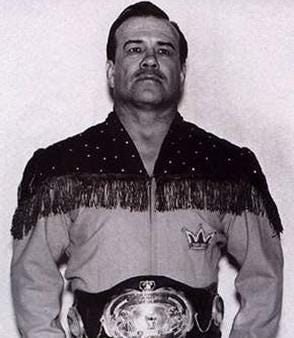
Salvador Quesada, known to wrestling fans by his ring "work" name, Guererro originally debuted under the very American name of "Joe Morgan". After a bit, he changed his name to "Gory Guerrero", the Gory first name referencing his often-bloody matches. He was EMLL's Rookie of the Year in 1943. Guerrero also appeared in movies with his tag team partner, El Santo not only being a huge wrestling star but enormous film star as well. Guererro also held the Middleweight and Welterweight titles but the World Light Heavyweight Championship as well and had several title defenses in Texas, California and Tennessee among others for two different runs with the belt in the early 1960s. In the second half of the 60's, Guerrero moved into the promotion end of the business, obtaining the right to promote El Paso for the Amarillo office after Don Curtis moved to Jacksonville, Florida to join the team of Promoters for Cowboy Luttrall and Eddie Graham in Florida. After Guerrero won the NWA World Welterweight Championship in today's match flashback, he had a very successful title run, holding the belt for almost three years before losing it in July 1951.
50-Year Flashback 4-29-1975: Ken Mantell (CH) vs Ronnie Garvin for the NWA World Junior Heavyweight Championship ended without a winner as a double count out at the Municipal Auditorium in Shreveport, Louisiana
*Tony Note: On December 19, 1973, in a babyface versus babyface match for the title, Danny Hodge dropped the belt to Ken Mantell. Born Ken Lusk from Fort Worth, Texas, Mantell established himself first as a tag team wrestler, working with his brother Johnny. Ken Mantell got a push from Eddie Graham in Florida in 1970, before coming into working for the Tulsa office, wrestling for McGuirk’s company, Tri-State Championship Wrestling. In the 1940s and 50s, when pure wrestling was more of the emphasis, it was not unusual to see competitors as tag team partners one night and taking on each other the next night, but in the 1970s, this was becoming more and more rare. Ken Mantell became a popular champion within the National Wrestling Alliance, with both the bookers and promoters and also, the ticket-purchasing fans. He defended the title over the next 18 months, traveling between the offices and territories throughout the Alliance including the All-Japan Pro Wrestling office in Tokyo, Japan.

Mantell's most memorable program was against masked wrestler, The Wrestling Pro (Ed Baxter) which was booked in the Gulf Coast Championship Wrestling office in Mobile, Alabama. During one of their matches, the referee was knocked out and Wrestling Pro won the match, but a second referee come to the ring, reversed the decision and gave the title back to Mantell. Booker and Promoter Bob Kelly declared The Wrestling Pro as the new champion and awarded him a new title belt. This resulted in NWA President Sam Muchnick sending recorded interviews into the Gulf Coast television show demanding the Gulf Coast office and The Pro stop calling himself the World Junior titleholder. The Wrestling Pro was recognized only as champion in Gulf Coast and did not receive recognition by the NWA. In the next few weeks, the story was laid out that Muchnick was booking wrestlers from other offices to come in to defeat The Pro, which culminated in Mantell returning to defeat The Wrestling Pro claiming both versions of the title. In 1975, this program, without the disputed title angle was brought into Oklahoma and Louisiana, with references made to the conflict between the two in Gulf Coast and The Wrestling Pro wanting revenge.
The Pro, who is also getting assistance and support in tag matches from Buck Robley. One interesting long forgotten angle and title change took place on April 19th of 1975 on Championship Wrestling, where on the previous weekend’s television show, Mantell defended the title and was defeated by Ronnie Garvin. In Baton Rouge, Louisiana that Wednesday night, April 23rd, The Wrestling Pro showed up thinking he was getting a match for the title with Mantell. Officials informed The Pro of the title switch and ordered him to a chair at ringside due to Mantell having an on-demand return clause in his contract for the title. Mantell beat Garvin in the match and re-claimed the NWA World Junior Heavyweight crown ending Garvin’s short days-only fun with the Championship but setting up a "title could switch again" at any time kind of aura with fans. Unlike today, where fans already know, titles are not going to change at house shows where cameras are not present, they are probably not going to change on PLEs or PPVs that are secondary on the slate. The way this angle and title change was worked was brilliant, instantly giving credibility to an unpredictable kind of situation and was one of the first pieces of business orchestrated by new booker Bill Watts upon his return, utilizing his new piece if talent he had used during his run as booker in Florida and Georgia, Ronnie Garvin, who was only days in the area at the time. This is the kind of booking and storytelling Watts would become very noted for in Oklahoma and particularly when he broke away from McGuirk in a few years to launch Mid-South Wrestling.

This kind of angle and unpredictable title switch could be pulled off because LeRoy McGuirk, who had been one of the greatest World Junior Champions both before and after the formation of the NWA, was the an influential member of the NWA Championship Committee, but in reality, the committee stopped spending much time at all on the selection and discussion of the Junior title and left all that up to McGuirk, so he did what he wanted with the title. Like Savoldi, Hodge and Matsuda before him, Mantell was McGuirk's hand-picked champion and doesn't get the credit he deserves for the great title run he had. Mantell would continue this great program with Garvin, which drew well, until dropping the title to Matsuda in June, who would get his second run with the belt. I would give an eye-tooth to have this angle from the video tape of that studio show match between Mantell and Garvin, as Garvin isn’t really very notable or recognized universally as having held the belt for those days in 1975. But, I think it’s historically significant that Garvin would be the only wrestler to hold both the NWA World Heavyweight and NWA World Junior Heavyweight Championship in history.
One Thing I Learned Today About Pro Wrestling History:
Al Costello, real name Giacomo Costa and the inventor of the tag team, The Fabulous Kangaroos, was a native of Italy, born there near Sicily. His family relocated to Australia when he was just six years old, so he never really developed an Italian-type accent and his Aussie-bent on language developed naturally from six onward.3
Thank You for Reading
I'm Tony Richards, Pro Wrestling Historian, Author and Storyteller. I share pro wrestling historical items in each issue of the Time Tunnel Pro Wrestling History Newsletter. Thanks for reading! If you enjoy my information on select events, matches and insights, please share it with folks you think might like to be a subscriber!
Remember, paid subscribers get access to exclusive and special content such as to commemorate his induction to the WWE Hall of Fame, I'll be publishing some special issues including a multi-part career retrospective on Dory Funk, Sr, a multi-part flashback on the Tennessee Territory in April 1975 including all the recorded cards for the month, some special audio and video interviews and more.
Catch Wrestling by Mark S. Hewitt
St Louis Post Dispatch, April 30th, 1926
The Pro Wrestling Hall of Fame: The Tag Teams by Greg Oliver and Steven Johnson