


August 4th in the Time Tunnel:
Happy Birthday to those who have passed on and to those great wrestlers still with us:
In Memoriam:
The Original "Masked Marvel\Mort Henderson 1879
Tiger Conway, Sr 193Mort Henderson The Original Masked Marvel 1915
"The Alaskan" Jay York 1938
"The Lawman" Don Slatton 1938
Happy Birthday:
Dean Simon\Malenko (65)
Kensuke Sasaki (59)
Frankie Kazarian (48)
Sam Stoker\Kit Wilson (31)
RIP Memorial: We stop & remember those who have passed on this day and gave themselves to the business for us, the fans. We salute you and thank you.
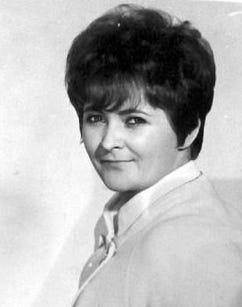
Jean Antone 8-4-2016 at the age of 73
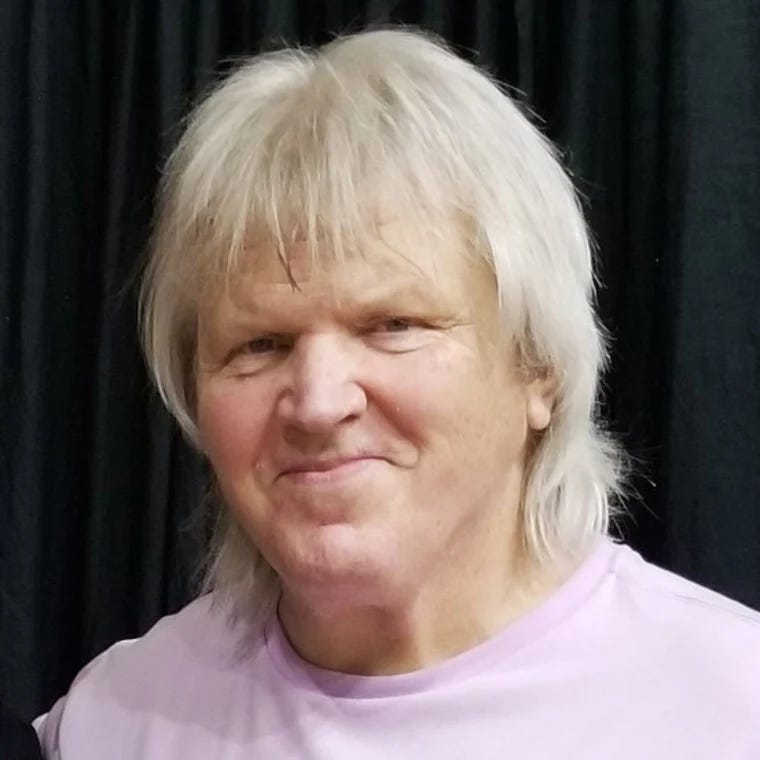
"Beautiful Bobby Eaton 8-4-2021 at the age of 62
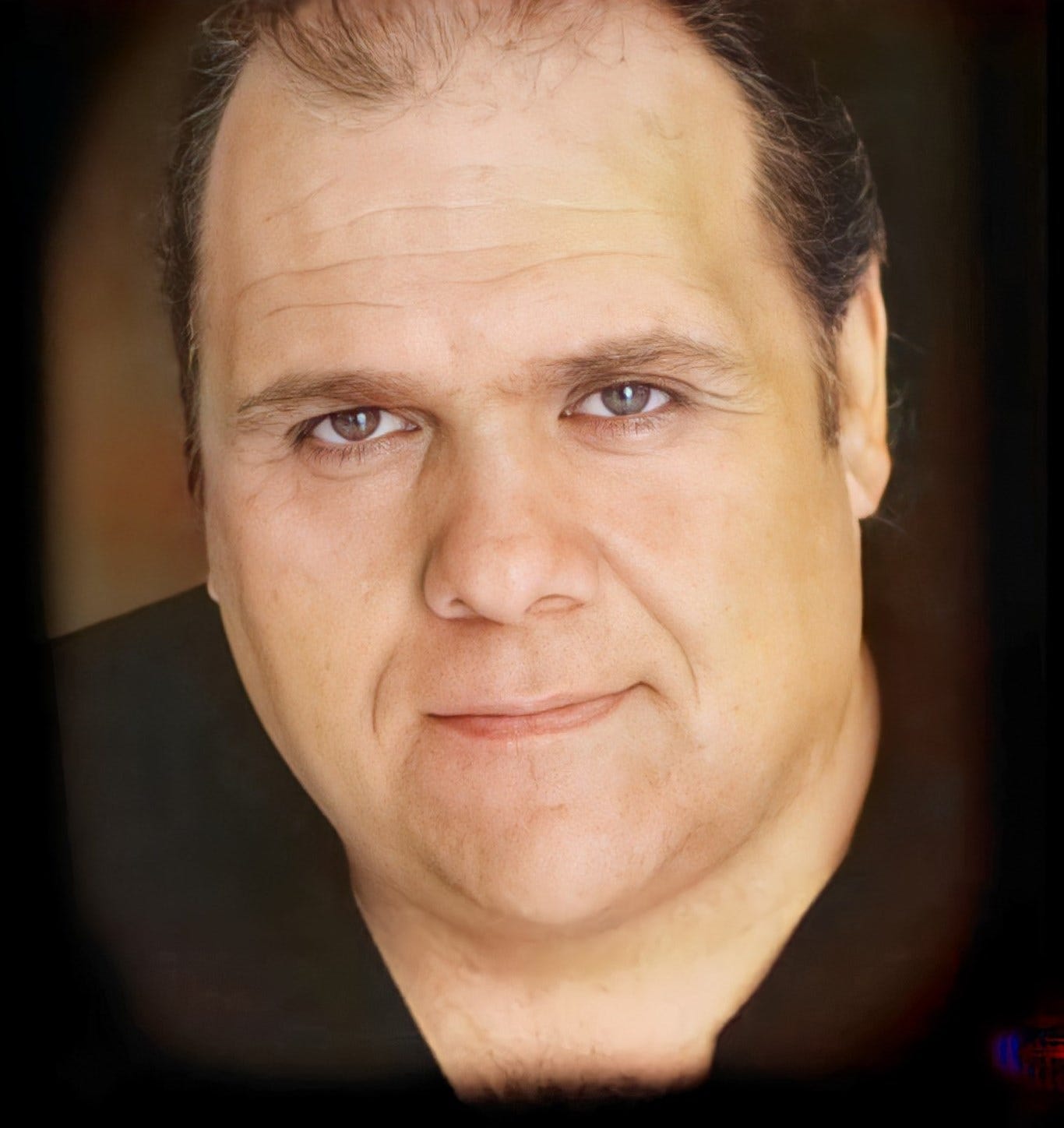
Bert Prentice 8-4-2021 at the age of 63
The Evolution of Pro Wrestling 1955
70 Year Flashback
Live Network Television Wrestling
August 4th, 1955, The Debut Show from the Dumont Telecenter Studio 5 in New York City, New York
The DuMont Television Network, one of the United States' earliest commercial television networks operated from 1942 to 1956, featured professional wrestling as a main attraction in its programming, particularly from 1949 through the first part of the 1950s.
Initially, DuMont broadcast matches live from Chicago's Marigold Arena starting in September 1949 with announcer Jack Brickhouse, which helped popularize the sport nationally and boosted Fred Kohler's NWA-affiliated territory. Kohler, one of the founding members of the National Wrestling Alliance was the kingpin of television within the Alliance membership.
However, amid financial struggles and rising costs of production, DuMont abruptly canceled the "Wrestling from the Marigold" program in March of 1955, marking the end of its semi-national wrestling broadcasts and contributing to a temporary decline in the sport's TV visibility.
Strategically trying to fill the gap in its programming, DuMont then shifted the focus to New York City, debuting a studio-based professional wrestling show. This was the first time a pro wrestling program was done in a studio-setting in New York City, rather than an arena, following a format pioneered by Kohler's Jim Barnett in Cincinnati, Ohio on WLW-TV. The DuMont New York studio was located at 205 East 67th Street.
During the show, a special interview was done with Virginia Gray and in attendance was New York State Athletic Deputy Commissioner, Jack Dauberstein and the show was directed by Jimmy Saunders. The show was carried locally by DuMont's New York affiliate, WABD-TV and was shown for two hours from 9pm to 11pm on Thursday nights.
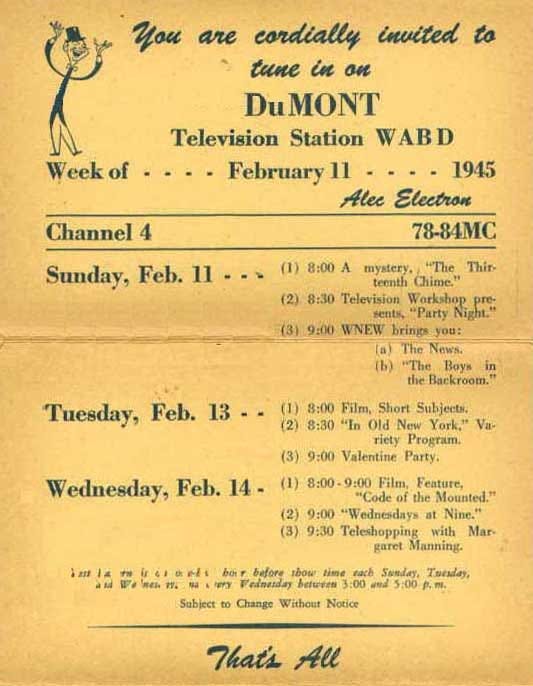
Pictured: WABD-TV Ad and schedule for February 1945
Haskell Cohen was the publicity director for the National Basketball Association and was involved to some extent as a producer for DuMont and acted as the official Eastern Sports Enterprises representative on these weekly pro wrestling shows according to an article in 3/18/1956 Syracuse Herald-American. Cohen was named as a producer of the shows on WABD-TV and also as being involved with Sunnyside Arena owner Manny Heicklen promoting boxing matches.
The play-by-play announcer was Marty Glickman, who was also noted for his work in basketball and football. The show also featured talent booked by Vince J. McMahon's Capitol Wrestling Corporation, an NWA booking office with talent such as Pat O'Connor, Don Leo Jonathan, Tiny Mills, Yukon Eric and others.
Eastern Sports Enterprises
The show was presented with talent by the Eastern Sports Enterprises company, a New York-based booking office that handled promotions for wrestling, boxing, and other sporting events. Eastern Sports Enterprises was an NWA-affiliated office who booked talent like Angelo Savoldi, Jim Austeri, Abe Coleman and Gino Garibaldi in the years leading up to and around 1955. It was owned by one of the noted Dusek Brothers, Rudy, who had it as an active NWA booking office from 1950 to 1957. Rudy's brothers Ernie, Emil and Joe were also part of the wrestling operations, often referred to collectively as the Dusek Clan from Nebraska, where they dominated the wrestling scene in Omaha and the remainder of the state. Rudy was the primary promoter and operator of the Eastern Sports Enterprises office.

Pictured: Rudy Dusek, majority owner and promoter of Eastern Sports Enterpises, New York City, New York
He had close ties with the Johnston family, who possibly were co-promoters in some capacities earlier, though Rudy remained the primary operator through the mid-50s in New York. James Joy Johnston had immigrated to the US as a child from England and transitioned to management around `1912. In 1931, he became the manager of Madison Square Garden, where he promoted 35 world championship fights until 1937. Charlie Johnston, a brother of James, managed notable boxers, including names like Archie Moore and Sandy Saddler. He handled wrestling bookings across the state of New York and promoted events at Madison Square Garden for the last 15 years of his career until his death in 1969. Another brother, Bill Johnson and after James' death, he held the promotional license that allowed Toots Mondt to reopen Madison Square Garden for pro wrestling in 1949. Bill primarily promoted at Jamaica Arena. The Johnston Family had several legal challenges while operating including tax withholding discrepancies, but their collective efforts helped sustain pro wrestling in New York post-WWII.
Eastern Sports Enterprises promoted wrestling in buildings like Convention Hall in Camden, New Jersey, Broadway Arena in Brooklyn, New York and the aforementioned Sunnyside Gardens. Unfortunately, by 1957, Rudy Dusek was frozen out of major arenas due to conflicts with rival promoters, Toots Mondt and Vincent J. McMahon, which led to the end of his NWA membership with his New York office. Dusek had always run the smaller buildings in the New York area while Mondt's Manhattan Booking Agency handled the major venues like Madison Square Garden and Ridgewood Grove.
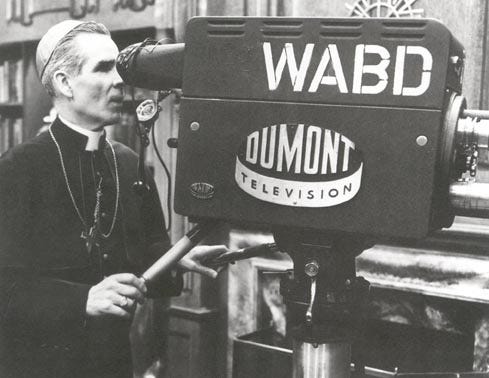
Pictured: An early studio camera operator at WABD-TV, on the DuMont Network in New York City, New York
8-4-1955 DuMont New York Studio Show
Here are the matches and results on that debut show:
Ernie Natale vs Sailor Berry ended in a time limit draw
"Spider" Al Galento defeated Lou Abrams
Hassen Bey defeated Count Gagliano
Don Leo Jonathan defeated George Babich
Pat O'Connor defeated Antone Leone
Despite its innovative studio format, the show was short-lived due to DuMont's ongoing financial issues in trying to figure out the new television business media model. The newspaper model was successful having two revenue streams both in selling commercial time and also offering subscriptions for access to the content. Radio was free to access and relied on commercial ad time for revenue but was very inexpensive to operate and produce. Television was a new animal, commercial time was generating revenue, but viewers accessed it for free like radio, however, television programming was more expensive to produce and DuMont had not yet figured out how to make the numbers work. This 1955 DuMont New York-based studio show was the last attempt of a television network trying to produce pro wrestling content until 1985's Saturday Night's Main Event for the WWF.
Less than a year later on June 8th, 1956, the promoter for the National Wrestling Alliance in. Washington, DC, Vince J. McMahon, announced that beginning on June 21st, his local show was going to be shown in New York City on WADB-TV, replacing the cancelled DuMont Telecenter Show.
Pro wrestling booking offices and local town promoters were starting to figure out that television was a great tool to sell their product to the fans, but if television was going to be done, they were going to have to figure out how to produce it themselves or accept Fred Kohler and Jim Barnett's "Wrestling From the Marigold" show which was being placed in syndication on television stations in some of their markets, giving Kohler and Barnett even more control over the talent that was seeing in the markets they were promoting. There was also a fear that Fred Kohler Enterprises might decide to expand not only their television penetration in their markets, but promotional efforts as well.
This, along with the recent knowledge of the DOJ-investigation and possible Grand Jury indictments would dominate the upcoming NWA Convention in a few weeks in 1955.
Complete coverage of this situation in my article for Paid Subscribers, The Evolution of Pro Wrestling 1955: July, A Pressure-Filled Month for the NWA's Sam Muchnick coming soon.
Golden Age Wrestler Profile
Karl Gotch
Yesterday was the date (August 3rd, 1922) that Karl Gotch was born. You should check out this article by my friend, Allan Blackstock on the life and career of Karl Gotch:
The God of Wrestling: Karl Gotch and the Discipline That Built An Empire
One Thing I Learned Today About Pro Wrestling History
Jean Antone was affectionately nicknamed as "Little Miss Dynamite".
Thank You for Reading
I'm Tony Richards, Pro Wrestling Historian, Author and Storyteller. I share pro wrestling historical items in each issue of the Time Tunnel Pro Wrestling History Newsletter. Thanks for reading! If you enjoy my information on select events, matches and insights, please share it with folks you think might like to be a subscriber!
Remember, paid subscribers get access to exclusive and special content such as some special issues including a multi-part deep dives on wrestling territories, wrestler bios and championship title histories, special audio and video interviews on territory pro wrestling and more available in the Pro Wrestling Time Tunnel for Paid Subscribers.
Really enjoyed todays 70 Year Flashback section, very interesting! How much of Rudy Dusek’s ouster from the New York territory was due to financial pressures versus direct manoeuvring by Toots Mondt and Vince J. McMahon?
Thanks also for plugging my Gotch piece, I appreciate that!
I was raised not very far from Sunnyside Gardens in the Woodside/Sunnyside section of Queens NYC.
I first discovered wrestling on channel 5, an independent station in NYC around 1963 when I was going on 8. My maternal grandfather took me to my first live card in Sunnyside in May of 1964. i was mesmerized. I remember some of the matches most notably Wahoo McDaniel and Chief White Owl over magnificent Maurice and Steve Stanlee and Bobo Brazil and Gorilla Monsoon fighting to a time limit draw.
Sadly my grandfather died the following Wednesday of cardiac issues.
Sunnyside Gardens was a historically old building that in addition to wrestling held regular boxing matches, the occasional roller derby and musical events. By the 60s it wasn't pretty but it held about 3500 people for wrestling. Tickets were $4 for ringside ie first three rows, $3 for the rest of the floor and $2 for bleachers which still gave a decent view. Autographs were doable if you were persistent and polite. The first wrestler who terrified me was Smasher Sloane who was bigger and meaner than I thought. bus fare to the arena was 20 cents each way.
FAST FORWARD to the fall of 1977 when I started studying at Memphis State University/the University of Memphis. Tickets at Mid South Coliseum were the same as I paid at Sunnyside except being increased by a dollar for world championship matches like Flair or Bockwinkel or the 50 wrestler battle royal. Sometimes you could meet a wrestler a few hours before the matches at a local fast food place. Also we once bought a piece of furniture from a local store so my late wife could have her picture taken with Lawler.