


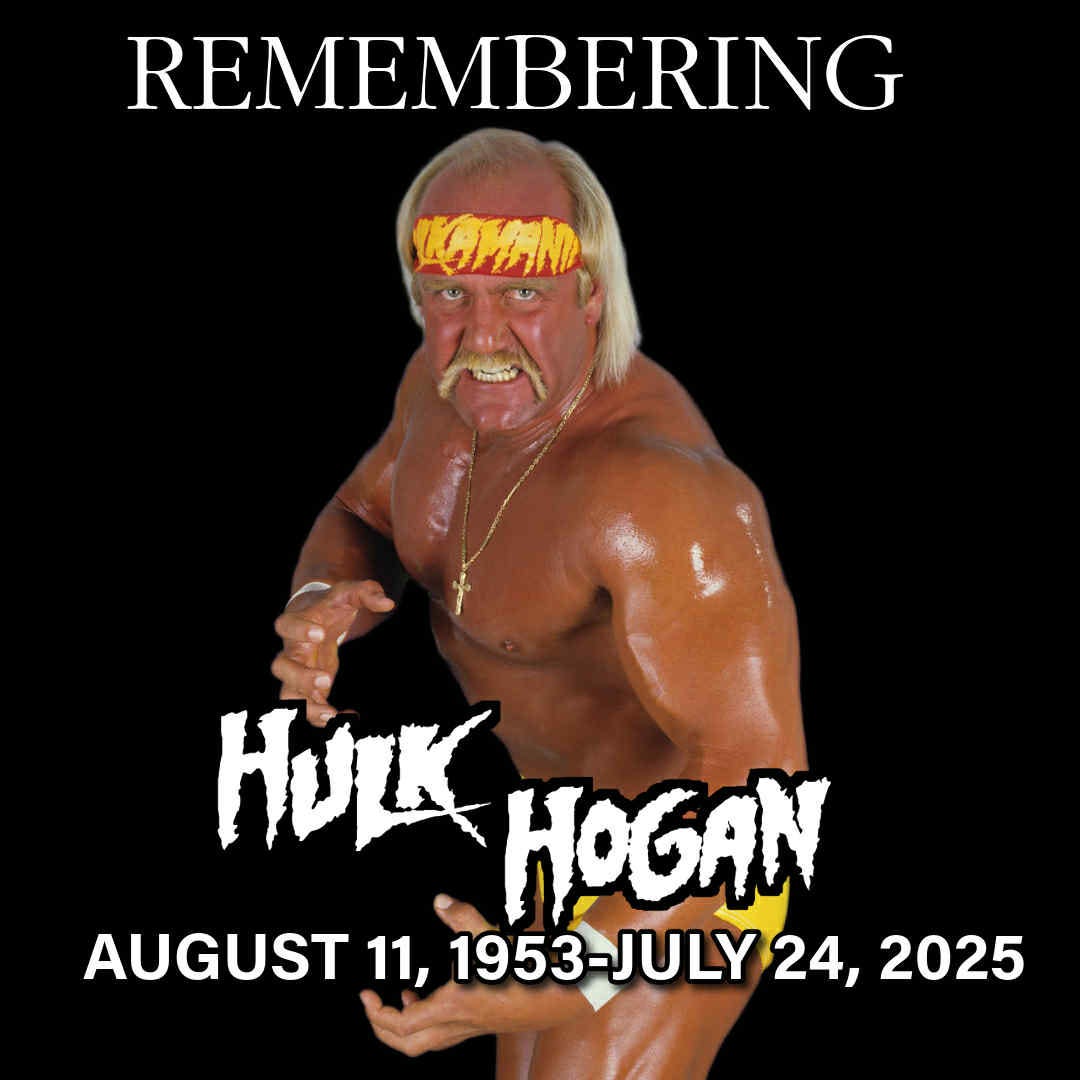
Good morning, yesterday we were all shocked to get the news late morning about the passing of Terry Bollea, Hulk Hogan, one of the most important pro wrestlers in history.
in today's Chronicle, I'm going to take the road less traveled and review Hogan's first 7 years in pro wrestling, just before the rise of Hulkamania.
But first, let's look at our daily pro wrestler tributes.
July 25th in the Time Tunnel:
Happy Birthday to those who have passed on and to those great wrestlers still with us:
In Memoriam:
Original Dutch Mantell 1881
Woody Strode 1914
Whipper Billy Watson 1917
Enrique Torres 1922
Bob Clay 1924
Norman Frederick Charles III 1941
Happy Birthday:
Jaguar Yokota (64)
Kenzo Suzuki (51)
Fergal Devitt\Finn Balor (44)
RIP Memorial: We stop & remember those who have passed on this day and gave themselves to the business for us, the fans. We salute you and thank you.
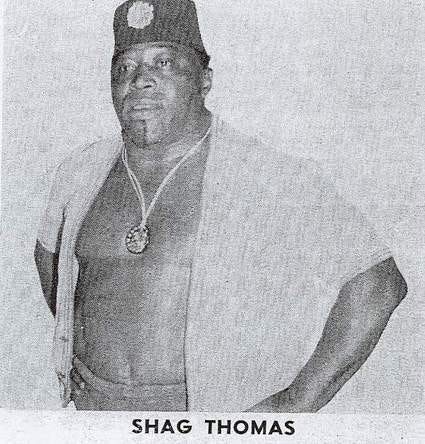
Shag Thomas 7-25-1982 at the age of 57
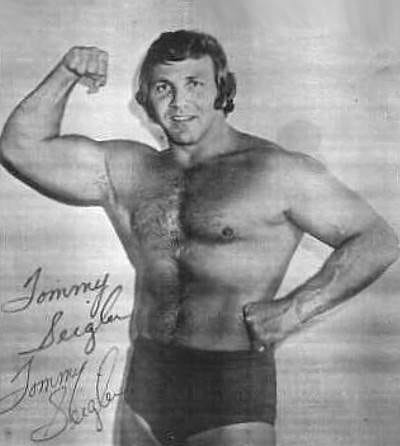
Tommy Siegler 7-25-2023 at the age of 85
Hulk Hogan, former World Champion, Dead at 71 Years Old
The Pro Wrestling Time Tunnel has been established to research, review and revisit pro wrestling history from its beginnings through the year of 1990. I picked that year because that's the even-numbered year I believe that territorial pro wrestling died, and national expansion sports entertainment took over. With that in mind today in writing about the passing of one of the greats, I won’t be discussing any of his WCW run, his effect on the Monday Night Wars, any of his Wrestlemania comeback appearances nor any of his extracurricular beyond pro wrestling comments or situations.
This may upset some people but let me tell you something. I can enjoy an actors' performance regardless of their political belief or comments. I separate it, to me, it has nothing to do with performance. Same in pro wrestling. Its caused some to be edgy with me about postings I have made about Grizzly Smith, for example. In my mind, Grizzly had those matches, he sold those tickets, and he drew that money in the business. He is accused of doing other things as well, of which, I just won’t comment on. I don't know if that's right or wrong, in my mind, it’s a choice on my part to stick with the wrestling part and let people far smarter than me make commentary on the rest of it.
That's how I'm handling Hulk Hogan. I frankly don't know a lot about the other stuff, and I am not going to spend any energy finding out, so I can write about it. I'm simply going to stick to my 1990 cutoff date and Hogan's best days as a pro wrestler.
Hulk Hogan influenced an entire generation to become pro wrestling fans. A generation being 20 years in length, it would have been the generation after mine that he had the most affect. When Hogan began to make his greatest impact in 1982 and into 83, I was going on 20 years old and my pro wrestling tastes had already been shaped by Southern Wrestling in general and Tennessee wrestling in particular. I was a long-time (actually around 11 years) NWA wrestling fan who valued a variety of wrestling styles and found Hulk's matches by the time he entered the WWF to be simple, methodical and somewhat boring. What I mean by that, is that I never had any doubt what the finish was going to be. That was only my perspective though and it’s ironic that two of the NWA's most decorated and honored World Champions would be responsible for Hulk Hogan being in the wrestling business. However, no matter how much I tried to educate my little brother on "serious" pro wrestling, he succumbed to being a little "Hulkamaniac". He was 7 years old when Hulk started his WWF run. My brother had Dusty Rhodes and Ric Flair posters in his room, but there was also a measure of red and yellow in there as well.
Let’s go back to how this all started for perhaps the biggest star in pro wrestling history.
Florida
Jack and Gerry Brisco, working in their adopted home state of Florida during the second half of the 1970s spotted Hogan (then Terry Bollea) playing the bass guitar in a band called Ruckus. He was impressive due to his physical stature compared to the other band members. After continuing to run into him and his band at the bars on the Florida circuit, the Briscos approached noted trainer Hiro Matsuda about potentially training him to be in the business. The initial training lasted for a while before Matsuda broke Hogan's leg. Hogan underwent ten weeks of rehab and returned to Matsuda’s training facility to resume the program and according to Hogan, Matsuda attempted to break his leg a second time. After more than a year's time and armed with a new and tougher mindset, the second go around when the Briscos stopped in to check on how things were going and seeing Hogan work out, Jack Brisco threw a pair of wrestling boots at him and told him he was booked the following week.
In those days, Championship Wrestling from Florida ran two towns a night during the week and Tampa, the home office town ran on Tuesday nights, the other Tuesday night town was Fort Myers and that's where Hogan was booked to debut. He did have one match the night before. He was booked to work on a spot show in Fort Pierce, Florida on August 9th under a mask as the Super Destroyer. He lost his first match to Don Serrano. Not anywhere near ready for an A-town appearance, he was booked on the B-Town as Terry Bollea to work with Brian Blair, the current President of the Cauliflower Alley Club on August 10th, 1977. There are no results available for that match.
When I spoke to Gerry Brisco briefly tonight about this period of time, he told me that he booked those matches with Hogan's first appearances. He had one of the last times he saw Hogan, he remarked "Brisco, I'm just recovering from another surgery, you never told me about this part of the business." Safe to say, without Jack and Gerry Brisco, there never would have been a Hulk Hogan, and that's some serious wrestling history.
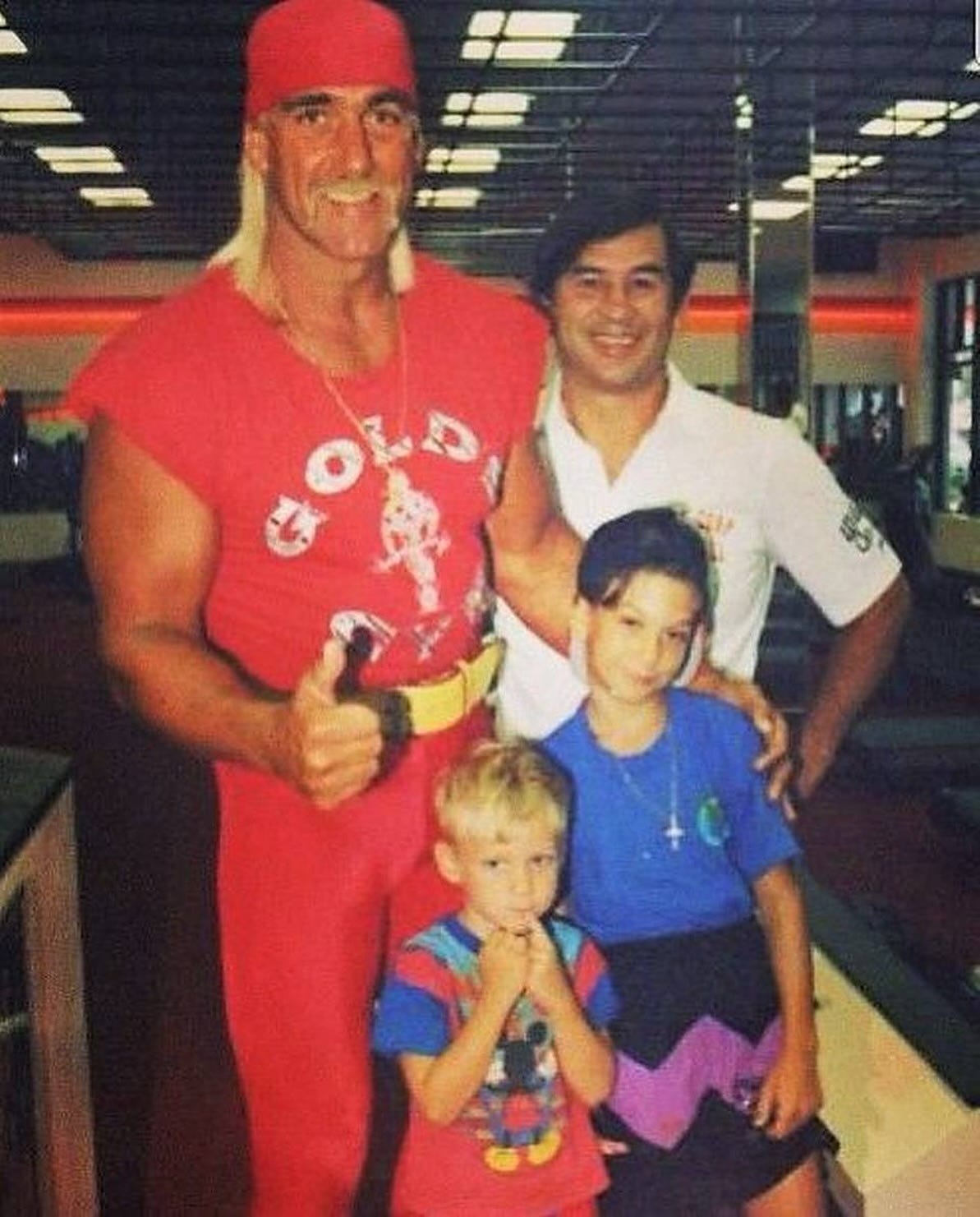
Pictured: Gerry Brisco, his sons, Wesley and Joseph with Hulk Hogan
Hogan continued to work the rest of October of 1977 as the Super Destroyer under the mask until he could no longer work with Matsuda and not being satisfied with how things were going, he left the business to start managing a private club called The Anchor Club for a man named Whitey Bridges, this led to a close association which resulted in the opening of a gym known as Whitey and Terry's Olympic Gym.
Pensacola Territory
Hogan was out of the wrestling business for all of 1978 but during the year he met Ed Leslie who he had a hand in helping with his weightlifting training. During the process of that, Hogan became convinced the two of them could make it in wrestling as tag team partners and he contacted Super star Billy Graham about helping them get booked as such. Graham put them in touch with Louis Tillet, who was booking for the Southeastern Territory in based in Pensacola and owned by Ron Fuller at the time. Hogan's first appearance for Southeastern was on March 22nd, 1979, in Panama City as Terry Boulder.
After only being in Pensacola for a few weeks, Tillet booked Hogan out to Jerry Jarrett in the Nashville office. This was not the first time I saw Hulk Hogan, even though I lived in the territory. Jarrett booked Hogan to be Jerry Lawler's tag team partner in a program with The Mongolian Stomper and Gorgeous George, Jr. Hogan was supposed to be Lawler's equalizer to the Stomper. They worked a match in Memphis on May 21st that Lawler and Terry Boulder won, then the next night in Louisville, Lawler and Boulder won the match by count out. They brought the program back in Louisville the next Tuesday night on May 29th with the four squaring off in a cage match.
Terry Boulder returned to Pensacola and was on a pretty fast track. He beat Ox Baker for the Southeastern Heavyweight Title and by the end of June, he was wrestling Harley Race for the NWA World Heavyweight Championship. He defeated Race by DQ in Dothan, Alabama at a big outdoors show on June 22nd, 1979, where they filled up the Rip Hewes High School Football Stadium. If you know anything about football, you know in Alabama, they don’t build little football fields. That was about the end of Hogan's run in Alabama due to his appeal during the three shots he made in Tennessee working for Jarrett.
Tennessee Territory
Jarrett looked at Hogan and saw money. According to Hogan, Jarrett paid him almost six times what Tillet had been paying him to main event in Pensacola and Jarrett also was going to attempt to use Ed Leslie as Hogan's tag partner billing them as The Boulder Brothers, Terry and Ed. They made their big debut in Jonesboro, Arkansas at the American Legion Arena on July 14th, 1979, where they beat the unknown masked Destroyer (kind of ironic) and veteran Buddy Wayne.
The first I saw of Eddie Boulder was on the July 14th, 1979, Championship Wrestling show on WTVW_TV7 in Evansville, Indiana. looking back now Eddie Boulder's interview was beyond rough, it was really bad. That being said, in those days, when Jerry Lawler had a curly perm in his hair, watching wrestling in the territory days, especially in the 1970s, fans were not nearly so critical about things like that. You could break a guy in and give him "on the job" training without fans totally rejecting them because kayfabe was strong and critical analysis was low. I didn't think Eddie Boulder was that bad in real time and when Terry Boulder came out, I just remember being so impressed with how big he was, just like everyone else who saw him in those days.
After seeing Boulder appear on a local Memphis television talk show alongside Lou Ferrigno, who was starring as The Incredible Hulk at the time and Jerry Jarrett noticing how much bigger Boulder was than Ferrigno. Jarrett thought to himself, "he's bigger than The Incredible Hulk". So, Jarrett started billing him as Terry "The Hulk" Boulder", complete with a video camera shot from the feet upward with narration included. "He is not a figment of your imagination" with reverb added for effect. Jarrett started Terry Boulder off with a program with Ron Bass for the NWA Southern Title, with tag matches mixed in with he and Eddie against Bass and Sonny King.
At the end of the year, Terry had a run in Georgia where Ole Anderson put the "Sterling Golden" handle on him.
New York and WWF Debut
In the Territory days, guys used to talk about "going to New York". This was a phrase which meant being booked into the WWWF or WWF and especially into a Madison Square Garden card. In many ways, this was your validation in the wrestling business. In a conversation he had with Eddie Graham, JJ Dillon mentioned that in his entire wrestling career, he had one regret, that especially growing up in the Northeastern part of the country, he never wrestled in Madison Square Garden. Eddie Graham picked up the phone, made a call to Vince J. McMahon and got Dillon booked on an MSG show. This was the mindset and viewpoint of most wrestlers in the business.
Hulk Hogan was no exception. He had been around the business long enough at this point to have heard stories about "getting to New York." In the Fall of 1979, Terry Funk introduced Hogan to Vince J. McMahon, who like Louis Tillet and Jerry Jarrett, saw dollar signs in Hogan's charisma and physique. He was the booker for Andre the Giant's appearances, and he immediately saw a money match between the two huge performers.
This should give you an indication of just how special Hogan was. In previous years, McMahon the elder had always taken very special care to not book Andre in any matches or situations where Andre height would be exposed as less than "giant-size". He had been very upset at an NWA Convention two years prior when one of the national wrestling magazines had published a photo of Jerry Lawler slamming Andre with a caption of "Midget slams Andre" or something to that effect. He did not want other tall wrestlers being photographed with Andre giving fans any perspective on Andre's size. What makes this amazing is he is about to book a program with a wrestler of somewhat equal size and stature to Andre, which is very unique in McMahon and Andre's history.
Contrast to Hogan's very over babyface persona later in the decade, McMahon saw money in Hogan as a heel juxtaposed against Andre's babyface personality. Amazingly, the first Hulk Hogan and Andre Match didn't take place in the WWF, it actually happened in Knoxville on December 7th, 1979, at the big venue in town for the territory, the General James White Memorial Civic Auditorium and Coliseum where Sterling Golden defeated Andre the Giant by a disqualification.
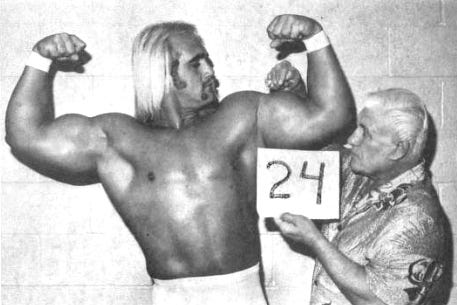
Pictured: Hulk Hogan and his manager Freddie Blassie
Hogan made his debut on Championship Wrestling on the November 17th, 1979, episode and wrestled his first match in Madison Square Garden on December 17th defeating Ted DiBiase with a bearhug submission.
Bollea started off the year of 1980 in the WWF with television tapings and some houses show matches with Andre, the first one taking place on January 5th, 1980, at the Civic Center in Baltimore, Maryland. In the other houses on the circuit, now called Hulk Hogan, he was matched up with Tito Santana and an occasional match with Gorilla Monsoon to get him over as a "giant-killer". At the February 12th television taping in Allentown, Pennsylvania, Hogan was put over in one of Andre's signature gimmick matches, a 2-on-1 Handicap Match where Hogan defeated Paul Mauret and Paul Figueroa. The matches around the horn continued with Hogan beating Santana and Dominic DeNucci, who like Monsoon, was a long-time loyal worker whose role was snow to get other, younger stars over.
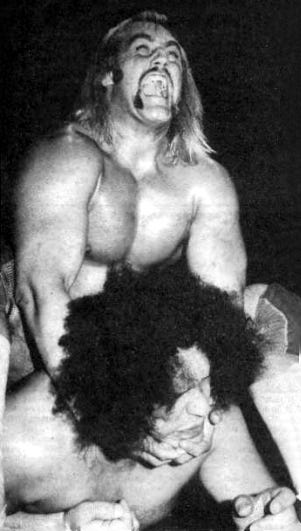
Pictured: Hulk Hogan and Andre The Giant
This basically continued until finally culminating with the big Hulk Hogan and Andre the Giant match in Shea Stadium in New York City with Andre beating Hogan in just under eight minutes. I also wanted to mention there were other Andre and Hogan matches around the towns all with Andre going over. The Hulk Hogan and Andre the Giant match was also booked out to Bill Watts for his Superdome show on August 2nd in New Orleans with Hogan and Andre essentially doing the same match with the Giant winning the match in thirteen minutes. Overall, most of their matches during this program ran somewhere between twelve and sixteen minutes.
Japan and the IWGP Title
At the end of 1980, Hogan made his first tour for Antonio Inoki and New Japan Pro Wrestling. He debuted on the Fighting Spirit Series Tour on the first night tagging with Ron Starr against Inoki and Kengo Kimura kicking off at Koraakuen Hall in Tokyo. On the 4th show of the tour, Hogan was put over one of the New Japan legends of the time, Seiji Sakaguchi in Niigata. Then, on Day 6, he beat a young Riki Choshu, then on Day 7 he defeated Strong Kobayashi. Hogan was going through the New Japan talent both young and veteran, working to the eventual showdown with the local legend, Inoki. This match took place on Day 20 of the Fighting Spirit tour with Inoki taking the match on Hogan and retaining the NWF World Title.
Hulk Hogan stayed for another tour, the inaugural MSG Tag League Series in which his partner was Stan Hansen, the man who had broken Bruno Sammartino's neck in the United States. Hogan mentions in his memoir "My Life Outside the Ring" that at this time he was in a serious relationship with a Japanese woman who ran a modeling agency there and he basically moved his home to Japan. Hogan and Hansen would go to the finals of the Tag League, but they would lose to the team of Inoki and Bob Backlund on December 10th in Osaka.
At the end of 1980 was about the time Hogan made his deal with Sylvester Stallone's production company to appear in Rocky III. When he returned to the WWF at the start of 1981, Vince McMahon was none too happy with the movie deal. He threatened to make sure that Hogan didn't work again if he did the movie rather than wrestling. Defiant, Hogan left the WWF and headed for Hollywood.
It was also around this time that Hulk Hogan met his future wife, Linda.
In his Japanese wrestling tours, Hulk Hogan was much more of a technical wrestler than he had shown or would show in future years in the United States. Through 1981, 82 and the first part of 1983, Hogan would use something called the Axe Bomber, a crooked arm lariat move as his finisher rather than the iconic leg drop, we have all seen so many times.
I should also mention, as it pertains to my personal fan history with Hogan, he came back to Jerry Jarrett one more time in January of 1981 with that video tape production Jarrett and his production team had made for one of the series of big-time heels Jarrett set up to face Jerry Lawler. after Lawler had missed almost all of 1980 due to a flag football injury. Lawler defeated Hogan in the Mid-South Coliseum on February 9th, 1981.
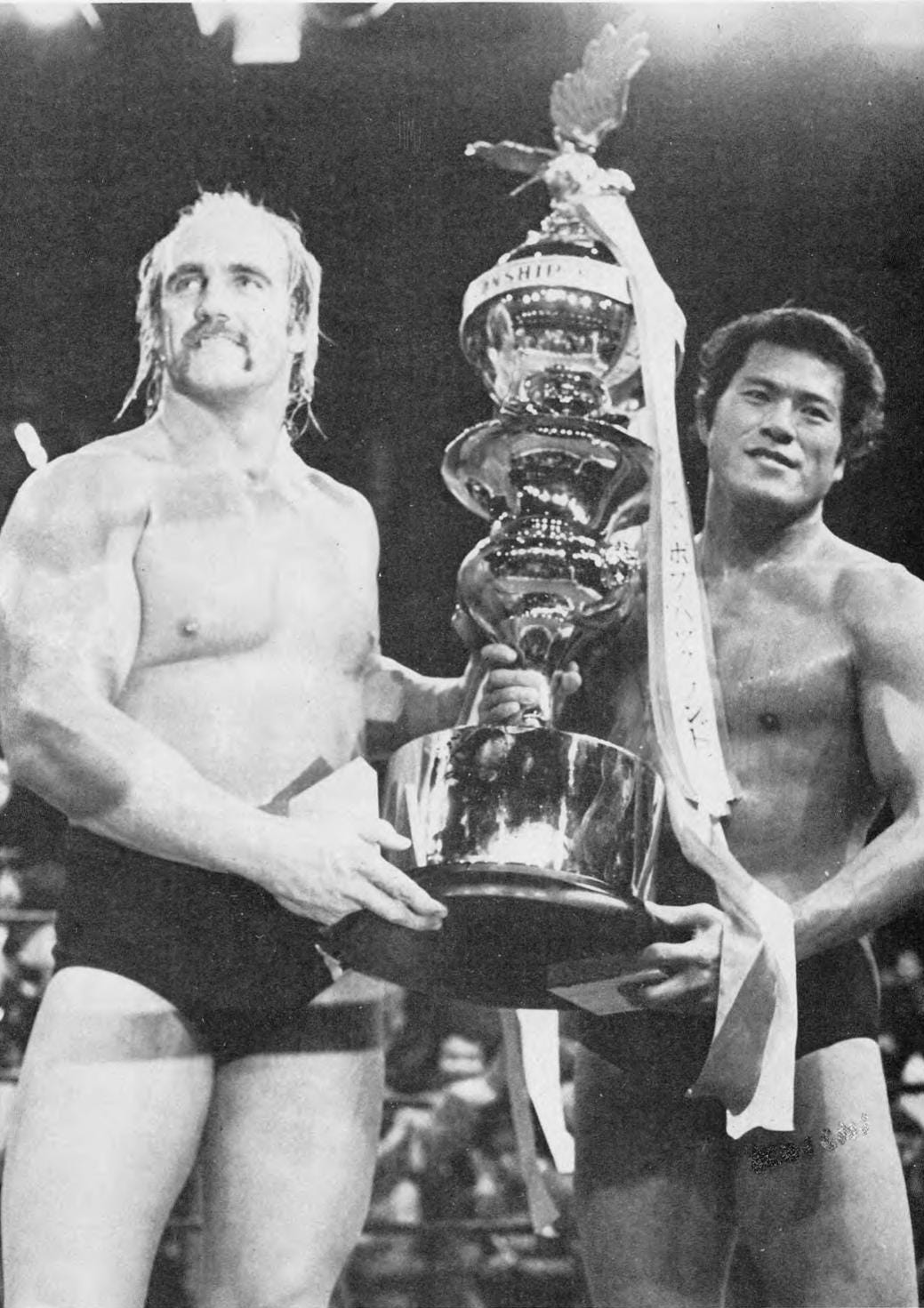
Pictured: Hulk Hogan, Antonio Inoki and IWGP Trophy
Hogan continued his success working for the AWA and New Japan Pro Wrestling in 1982 and through the first half of 1983, making pro wrestling history by becoming the very first IWGP (international Wrestling Grand Prix) Tournament Winner and the first holder of that championship. He finally defeated Antonio Inoki by knockout in the finals of the 10-man historic tournament.
Hogan continued to wrestle for Inoki in New Japan through 1984.
AWA
Ironically, Hogan's mainstream mass appeal didn't begin in New York with the WWF. He had accepted an opportunity to be featured in Sylvester Stallone's 3rd entry in the "Rocky" movie franchise series totally ignoring the threats of Vince J. McMahon. Calling on the 1976 Muhammad Ali and Antonio Inoki boxer vs wrestler match that was heavily promoted and publicized in 1976, Stallone worked the same booking into his Rocky III script with Rocky, the current world boxing heavyweight champion being involved in a charity match with the world heavyweight champion in pro wrestling. The movie's character list called for this wrestler's name to be Thunderlips and the casting had been done, and Terry Bollea was offered the part.
Hogan made easy and short work of Rocky in the movie and Hogan lit up the screen. Formerly only being known to fans regionally and through the wrestling magazines, now he was exposed to the mass audience in a major hit movie franchise and wrestling crowds embraced him as their first popular mass media superstar. Finally, one of the wrestlers the fans cheered or booed, it didn't matter, was now in a major motion picture. This immediately impacted the AWA as Hogan had originally debuted in 1981 for the Gagne federation as a hated heel, but the crowds actually always rejected that booking and cheered Hogan regardless.
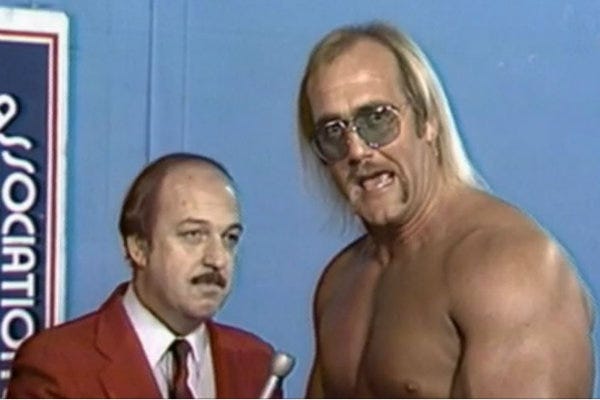
Pictured: Hulk Hogan and Gene Okerlund in the AWA
Hogan turned babyface when in July of 1981, Crusher Blackwell was about to end Greg Gagne's career when Hogan ran in to make the save and start up a program with Blackwell over the next few months. By the end of 1981, Hogan was being booked as the popular challenger for Nick Biockwinkel's AWA World Championship. In March of 1982, as a way to delay a Bockwinkel and Hogan finish decision, they booked the manager, Booby Heenan to be the roadblock for Hogan to Bockwinkel's belt and of course, it was no problem for Heenan to do the job to satisfy the fans lust for a Hogan victory, at least momentarily.
Then, as was the usual booking form in those days, Bockwinkel and Hogan's matches ended in a series of Hogan victories by disqualification with the title not changing hands. In April of 1982 in front of a raucous crowd in the St Paul Civic Center, Hogan beat Bockwinkel for the AWA World Heavyweight Championship, only to have the AWA President, Stanley Blackburn overturn the referee decision and give the title back to Bockwinkel on television the next weekend. Many fans and historians consider this the catalyst for the final death of the AWA.
Why didn't Verne Gagne put his world title on Hulk Hogan? Who knows? It defies all reasonable logic, but we may never know.
By the end of November of 1983, Hogan had received several overtures from Vince K McMahon to come and join the WWF. The story is that Hogan accepted McMahon's offer while being booked to appear for the AWA. Hogan sent a letter informing Gagne that he would not be coming back and would not be appearing going forward. According to some, this was after several weeks of television had been shot and several local inserts promoting Hogan had been circulated giving the perception that the AWA was false advertising a talent they knew would not appear.
WWF Return
After his purchase of Capitol Wrestling from his father in 1982, Vince McMhon had plan for national expansion beyond his traditional northwest territory. He knew he wanted a change from the world champion of his father, Bob Backlund and with his media plans and public relations strategies he needed a charismatic personality that would be mass appeal across demographics and national regions. He especially wanted to appeal to children and The Hulkster, fresh off his Rocky III appearance seemed to fit the bill.
While the Hulk Hogan as WWF World Champion character was only a piece of the national expansion puzzle, it was, in fact, a huge cornerstone of that strategy. McMahon wanted someone who could work interviews like a Dusty Rhodes but have the look of an Austin Idol. He saw that in Hulk Hogan.
In a little remembered event but what I consider to be a very significant and symbolic one, Hogan made his return to the WWF in the former headquarters of the National Wrestling Alliance. Debuting at a television taping at the historic Chase Hotel, where for so many years, Wrestling At The Chase was recorded, on December 27th, 1983, Hulk Hogan emerged from backstage to go to the ring and easily defeat Bill Dixon. The National Wrestling Alliance, which had ruled the sport of professional wrestling for all intents and purposes for the previous, almost forty years, was under full assault and the first shots were fired in St Louis.

Pictured: Hulk Hogan 1983
Taking into consideration that my Evolution of Pro Wrestling Series is going to go into deep detail about the national expansion on all sides and the death of the territories, I won’t expound on those subjects here in this retrospective look at the career of Hulk Hogan. But suffice to say that, while at the time, I was somewhat rooting against Hogan and the WWF expansion at the time, as the years have gone by, I have learned to very much appreciate his impact on the wrestling business at a time that it was transforming.
I have probably come to appreciate even more his impact on the generations of fans that succeeded me that would have never been interested in the sport if not for Hulk Hogan. As corny as it may sound now, the whole "Hulkamaniacs" brand strategy was very powerful and had sustained itself through today and well into the future.
I have to give my honor and respect to Terry Bollea, a true catalyst and revolutionary in professional wrestling. Thank you, Hulkster for all you did for me and for the multitude of fans you created.
RIP, Brother.
One Thing I Learned Today About Pro Wrestling History
Terry Bollea was six foot eight inches tall and weighed two hundred and seventy-five pounds.
Thank You for Reading
I'm Tony Richards, Pro Wrestling Historian, Author and Storyteller. I share pro wrestling historical items in each issue of the Time Tunnel Pro Wrestling History Newsletter. Thanks for reading! If you enjoy my information on select events, matches and insights, please share it with folks you think might like to be a subscriber!
Remember, paid subscribers get access to exclusive and special content such as some special issues including a multi-part deep dives on wrestling territories, wrestler bios and championship title histories, special audio and video interviews on territory pro wrestling and more available in the Pro Wrestling Time Tunnel for Paid Subscribers.