


The Orton Family
Barry Orton:
In the rich tapestry of the Orton wrestling dynasty—spanning generations from Bob Orton Sr. (“The Big O”) through “Cowboy” Bob Orton Jr. to the modern apex predator Randy Orton—Barry Orton often stands as one of the more enigmatic and overlooked figures. Born Randal Berry Orton on May 28, 1958, in Amarillo, Texas, he carried the family name and bloodline into the squared circle, yet his heart was never fully committed to the grappling game. A talented musician at his core, Barry entered wrestling almost by necessity after a near-miss record deal, treating it as a temporary detour rather than a lifelong calling. His career, marked by solid journeyman work, memorable gimmicks, championship wins in the territories, a high-profile role in one of wrestling’s darkest scandals, and a later pivot to acting, embodies the complex realities of second-generation wrestlers navigating family legacy, personal demons, and industry pitfalls.

Pictured: Bob Orton, Sr., Bob Orton, Jr. and Barry Orton
Barry was the younger son of Bob Orton Sr. and Rita Orton, born into a family already steeped in pro wrestling. The family moved to Kansas City, Missouri, shortly after his birth. Named after the legendary Wild Red Berry, young Barry showed early promise in music, performing in nightclubs and bands. He dreamed of stardom on that stage, not in the ring. A disappointing brush with a record deal in 1976 redirected him toward the family trade. Trained by his father, Bob Roop, and Tully Blanchard, Barry debuted that same year.
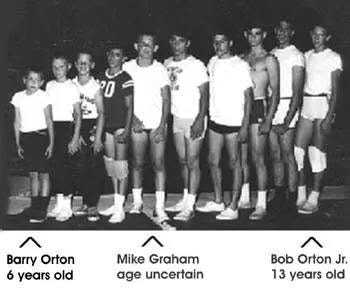
Unlike his more enthusiastic brother Bob Jr. or his superstar nephew Randy, Barry was candid about his ambivalence: “I was always struggling because I wanted to be a musician. I never saw myself as a professional wrestler.” This internal conflict colored much of his in-ring tenure, where he performed reliably but lacked the fire that defined other Ortons.
