


Profile 9: Lord Athol Layton
Born Allan Layton on August 20, 1919, in England, Layton emigrated to Australia before establishing himself as a formidable wrestler in North America and beyond. His career as a grappler spanned nearly three decades, marked by championship reigns, high-profile feuds, and a commanding presence that drew crowds in territories across Canada and the United States. However, it was his transition to the announcer’s booth that cemented his legacy as one of wrestling’s most articulate and enduring voices. Retiring from active competition in 1976 due to an eye injury, Layton continued to captivate audiences through his commentary until his passing on January 18, 1984.
Layton’s foray into commentary was not a abrupt shift but rather an organic extension of his wrestling persona. While still an active competitor, he began dabbling in broadcasting as early as June 1961, leveraging his eloquent speech and insider knowledge to enhance televised events. His early wrestling days, which started in 1948 after a background in amateur boxing, had already honed his ability to engage audiences. Known for his imposing 6’5” frame and 260-pound physique, Layton wrestled as a heel (villain) in promotions like Frank Tunney’s Maple Leaf Wrestling in Toronto, where he feuded with legends such as Whipper Billy Watson and The Sheik (Ed Farhat). These experiences provided him with a wealth of anecdotes and technical insights that would later enrich his commentary. By the mid-1960s, as his in-ring schedule allowed, Layton began overlapping roles, serving as both a performer and a voice behind the microphone—a common practice in territorial wrestling but one he executed with particular finesse.
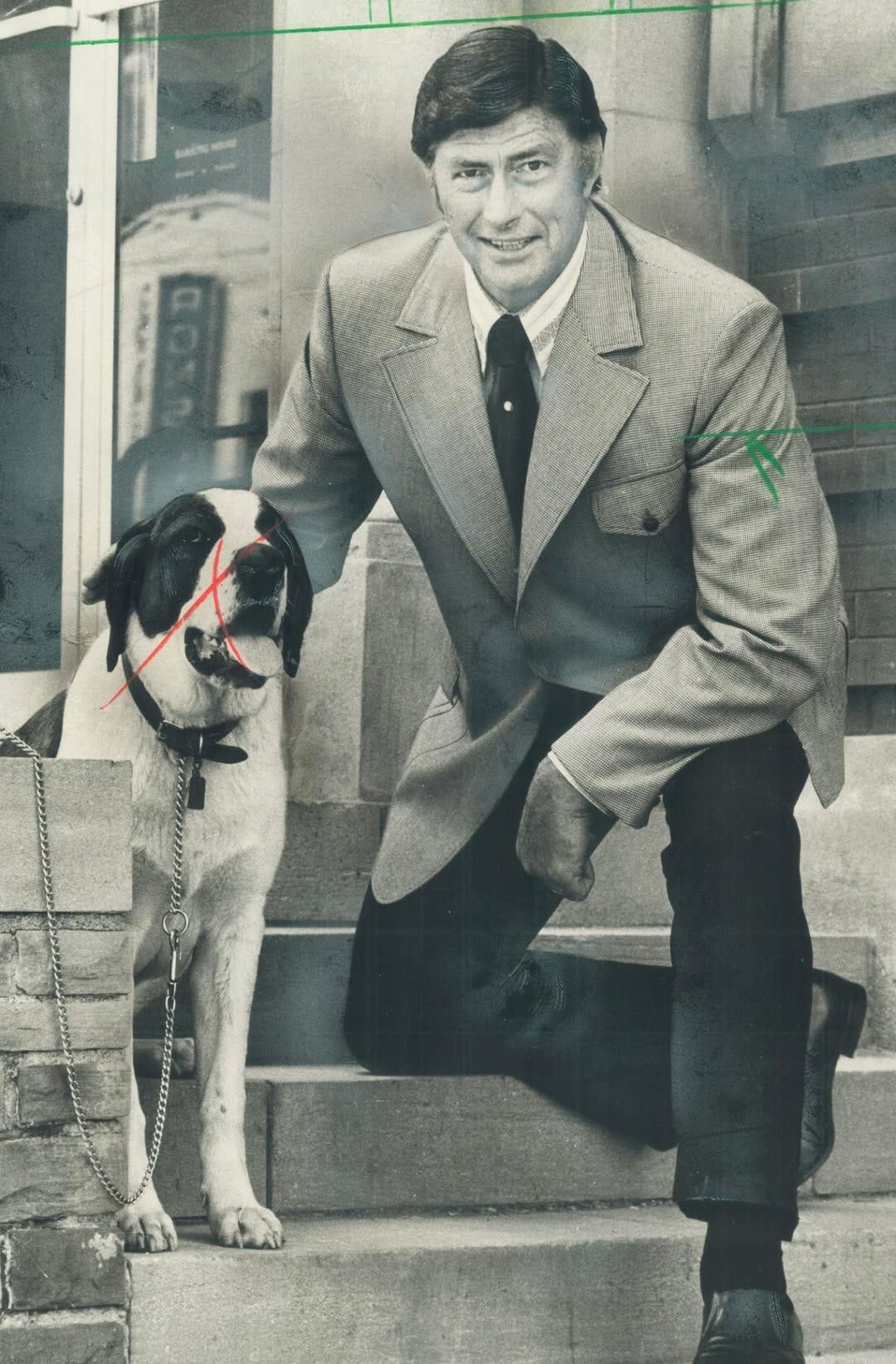
The heart of Layton’s commentary career was rooted in the vibrant wrestling scene of Toronto, where he became a staple for Frank Tunney’s promotion. Starting in 1961, he worked as a color commentator for live TV wrestling broadcasts on CBLT, Toronto’s CBC affiliate, providing play-by-play analysis and colorful insights that complemented the action. Later, his role expanded to CHCH in Hamilton, Ontario, where he continued to deliver commentary for Maple Leaf Wrestling events. This position allowed Layton to remain a fixture in the Ontario territory, often appearing on weekly shows that aired to enthusiastic local audiences. His work in Toronto overlapped with his wrestling commitments, enabling him to offer authentic, firsthand perspectives on matches. For instance, he could draw from his own tag-team successes with partners like Lord James Blears, with whom he held titles such as the International TV Tag Team Championship, to explain strategies and rivalries to viewers. Layton’s tenure in Toronto extended into the 1970s and early 1980s, making him a beloved figure in Canadian wrestling media. His articulate delivery, informed by an extensive vocabulary honed from his worldly travels, set him apart from more bombastic announcers of the era.
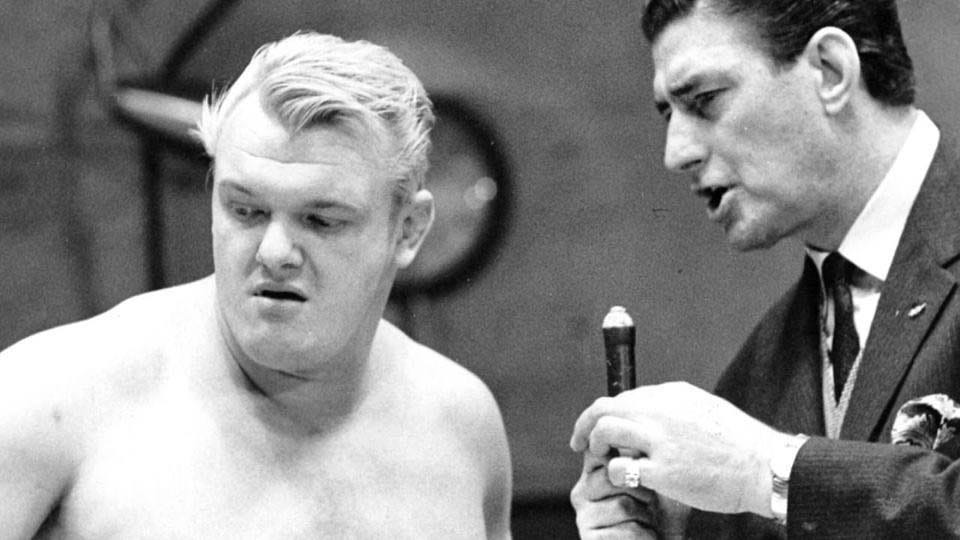
Pictured: Lord Layton interviews Johnny Valentine
Beyond Toronto, Layton’s commentary talents took him to Detroit, a hotbed for intense, hardcore wrestling under promoter Ed Farhat (The Sheik). Here, Layton served as a color commentator for Big Time Wrestling, Farhat’s promotion, throughout the 1960s and 1970s. He contributed to broadcasts on stations like CKLW in Windsor, Ontario (which served the Detroit market), and possibly WXON, blending radio and television formats to reach fans across the border. In Detroit, Layton’s role often involved interviewing wrestlers and providing context for high-stakes matches, such as those involving his former rivals like Dick the Bruiser or Fritz Von Erich. A memorable 1966 segment on Big Time Wrestling saw Layton interviewing Dr. Jerry Graham, showcasing his ability to build drama and hype through pointed questions and charismatic banter. His work in this territory was particularly impactful, as Detroit’s wrestling scene was known for its rowdy crowds and violent storylines; Layton’s refined, British-accented commentary provided a sophisticated counterpoint, earning him praise as a “highly sought-after” voice. He continued in this capacity post-retirement, remaining involved for several years and helping to narrate the promotion’s evolution until its decline in the late 1970s.
Layton’s influence extended to Cleveland and other Midwestern territories, including parts of Ohio, New York, and Michigan, where he provided color commentary for various promotions. In Cleveland, he worked on local TV broadcasts, often for events tied to the National Wrestling Alliance (NWA) affiliates. His roles in these areas were similar to those in Toronto and Detroit—offering expert analysis, hyping upcoming cards, and drawing on his vast experience to educate viewers. Notably, Layton’s commentary career also had an international dimension. As an English-Australian talent, he toured Australia in 1971 and 1972, and is remembered as one of the key voices for World Championship Wrestling (WCW), the Australian promotion that aired nationally from 1964 to 1978. In this capacity, he brought his North American expertise to Australian audiences, commentating on matches featuring local and imported stars. This phase highlighted his versatility, adapting his style to different cultural contexts while maintaining his signature eloquence.
What distinguished Layton as a commentator was his polished, intellectual approach in an industry often dominated by hype and exaggeration. Described as having an “articulate style” and praised for his “extensive vocabulary,” Layton elevated wrestling broadcasts by providing thoughtful breakdowns of moves, psychology, and history. Unlike many contemporaries who relied on bombast, Layton drew from his real-life adventures—including stints as a boxer in Malaya and Indonesia—to infuse authenticity into his calls. Colleagues like Frank Tunney and Ed Farhat valued his dual expertise, often pairing him with play-by-play announcers to create balanced teams. His impact was evident in fan recollections; many “old-timers” in Toronto and Detroit remember him more for his announcing than his wrestling, crediting him with making complex storylines accessible and entertaining. Layton’s work helped bridge wrestling’s territorial era to its more televised future, influencing how promotions presented their product.
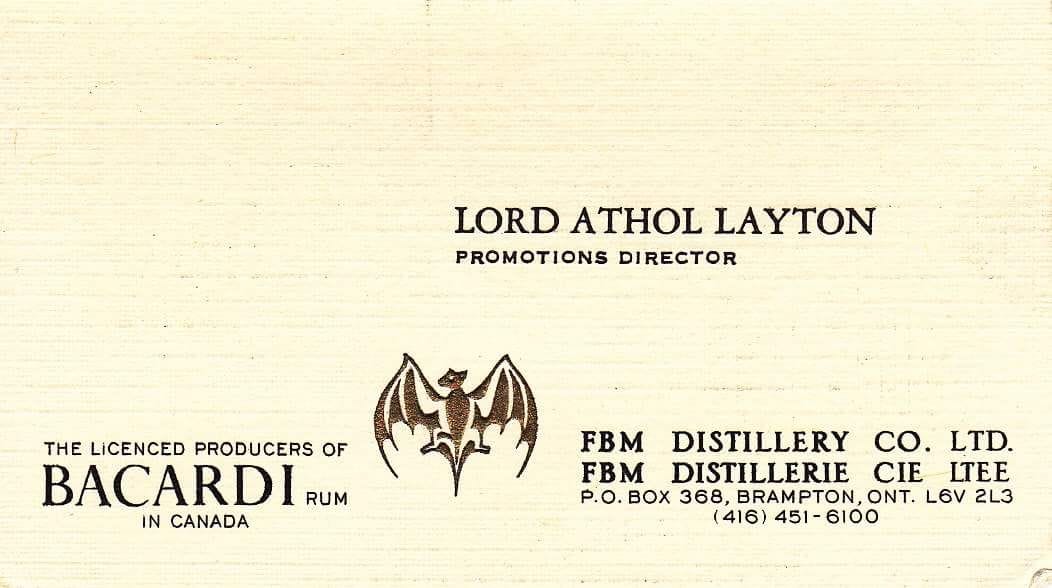
In his later years, following his 1976 retirement, Layton focused exclusively on commentary, contributing to shows in Toronto, Detroit, and Cleveland until health issues curtailed his involvement in the early 1980s. His contributions were recognized posthumously, with tributes highlighting his role in preserving wrestling’s oral history through broadcasts. In 1983, he received the Ontario Medal for Good Citizenship, acknowledging his community involvement alongside his professional achievements. He also worked for a time as the Promotions Director for a distributor of Bacardi Rum in Canada.
Lord Athol Layton’s career as a wrestling announcer and commentator exemplifies the multifaceted nature of the sport’s pioneers. From his early TV gigs in Toronto to his enduring presence in Detroit and beyond, Layton transformed from a dastardly heel in the ring to a respected authority at the desk. His articulate insights not only entertained but educated generations of fans, ensuring his place as a cornerstone of wrestling’s broadcast history.
31 Great Territory Era Television Announcers
Profile 1: Larry Matysik, Wrestling At The Chase, St. Louis, Missouri
Profile 2: Sam Menacker, World Wrestling Association, Indianapolis, Indiana
Profile 3: Bob Caudle, Mid-Atlantic Championship Wrestling, Raleigh, North Carolina
Profile 5: Ed Whalen, Stampede Wrestling, Calgary, Alberta, Canada
Profile 6: Paul Boesch, Houston Wrestling, Houston, Texas
Profile 7: Ray Morgan, WWWF Washington, D.C.
Profile 8: Bill Mercer, Big Time & World Class Championship Wrestling, Dallas, Texas
Thank You for Reading
I’m Tony Richards, Pro Wrestling Historian, Author and Storyteller. I share pro wrestling historical items in each issue of the Time Tunnel Pro Wrestling History Newsletter. Thanks for reading! If you enjoy my information on select events, matches and insights, please share it with folks you think might like to be a subscriber!
Remember, paid subscribers get access to exclusive and special content such as The Evolution of Pro Wrestling special issues including a multi-part deep dives on wrestling territories, wrestler bios and championship title histories, special audio and video interviews on territory pro wrestling and more available in the Pro Wrestling Time Tunnel for Premium Investors.