


Profile 12: Boyd Pierce

Boyd Anderson Pierce stands as one of the most memorable and endearing figures from professional wrestling’s territorial era. For more than three decades, his booming southern drawl, flamboyant suits, and folksy charm introduced fans across Texas, Oklahoma, Louisiana, and beyond to the rough-and-tumble world of “rasslin’.” While never a national superstar like Gordon Solie or later Jim Ross, Pierce embodied the grassroots authenticity that defined regional wrestling in the 1960s through the 1980s. He served as both ring announcer and play-by-play commentator for major promotions including NWA Big Time Wrestling (the forerunner of World Class Championship Wrestling), Leroy McGuirk’s Tri-State Wrestling, Mid-South Wrestling under “Cowboy” Bill Watts, and the short-lived Universal Wrestling Federation. Known for his bold, colorful attire and verbal jousts with heels, Pierce became a fan favorite whose catchphrases and earnest delivery made him feel like one of their own.
Born on October 19, 1928, in Venus, Johnson County, Texas (in the greater Fort Worth area), Pierce grew up in a time when professional wrestling was still a regional spectacle broadcast on local television and staged in coliseums and armories. Some sources list Fort Worth itself as his birthplace, reflecting the close-knit Texas-Oklahoma wrestling corridor where he spent nearly his entire life. Details of his pre-wrestling years remain sparse—he was already a young man when he married on September 12, 1947—but by the 1960s he had entered the business as a ring announcer for NWA-sanctioned Big Time Wrestling in Dallas. He quickly became a fixture at iconic venues: the Dallas Sportatorium, the Fort Worth Coliseum (often working for Fritz Von Erich), and Paul Boesch’s shows at the Sam Houston Coliseum in Houston. For years he also served as the backup television announcer in Fort Worth when the legendary Bill Mercer was unavailable, appearing on KTVT Saturday-night broadcasts as early as 1976.
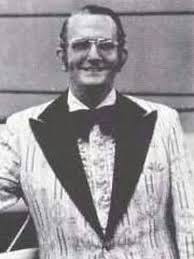
Pierce’s early career was not limited to ringside introductions. In the 1960s he even stepped into the ring for a memorable gimmick match against the notorious Killer Karl Kox in Fort Worth. Billed as “Country Boy Pierce,” he refused to fully “job” in the finish, preserving his dignity while still giving Kox the necessary heat—an anecdote that illustrated both his pride and his understanding of territorial booking psychology. Off-camera, he was known to assert himself physically when provoked; one story recounts him bopping a disrespectful heel over the head with his microphone hard enough to draw blood after the wrestler tried to generate unscripted cheap heat. He also owned a clothing store and supplemented his wrestling income by running souvenir tables at arenas, selling photos and memorabilia through a post-office box in Burleson, Texas, where he lived just outside Fort Worth. His wife played an active behind-the-scenes role, sewing many of his flashy suits (complete with matching socks) as well as robes for wrestlers in Texas and Mid-South.

The turning point in Pierce’s career came in 1974–1975 when he became the primary announcer for Leroy McGuirk’s Tri-State Wrestling promotion. Late into the 1970s, when Bill Watts acquired the territory and rebranded it Mid-South Wrestling, he brought Pierce along as the voice of the new syndicated television program. From 1979 to 1984, Pierce served as the main host, delivering the now-iconic opening: “How do you like yer rasslin’? Rough n’ rugged? Wild n’ woolly? We’ve got it here on Mid-South Wrestling!” He would then quickly hand the microphone to Watts for color commentary, reappearing only at the show’s close. Fans remember his folksy charm, heavy use of wrestling clichés (“He asks no quarter and he gives no quarter,” “He is one tough hombre”), and genuine outrage at rule-breaking heels such as Ernie Ladd or Frank Dusek. His style was never polished like Solie’s or Lance Russell’s; instead, he sounded like the fans themselves—enthusiastic, down-home, and unpretentious.
When Watts sought a more “slick” national presentation in the mid-1980s to compete with Vince McMahon’s expanding WWF, he gradually phased Pierce out in favor of a young Jim Ross (and occasionally his own son Joel). Pierce and Ross alternated duties for roughly two years before tapings moved from Shreveport, Louisiana, to Tulsa, Oklahoma. Pierce retired from regular announcing around 1986 but made occasional guest appearances as ring announcer on the UWF’s secondary program, Power Pro Wrestling, taped at the Cowtown Coliseum in Fort Worth. One final one-shot return came in the fall of 1986. Even after stepping away, his legacy endured; one of his outlandish suits is preserved in the Pro Wrestling Hall of Fame Museum in Amsterdam, New York.

Off the air, Pierce was remembered by colleagues and fans as “one hell of a character and one hell of a man.” He maintained friendships with wrestlers across the spectrum, from Kamala to Ed Farhat (The Sheik), and was described as a genuinely nice guy who once handed out business cards featuring pictures of wrestling toddlers. Forum veterans from the territory days recall his booming voice in arena commercials and his ability to connect with audiences through sheer authenticity rather than broadcasting polish. While some later critics noted his outfits could border on tacky, they perfectly fit the larger-than-life aesthetic of 1970s and 1980s wrestling television.
Boyd Pierce passed away on May 18, 1999, at age 70 in Tarrant County, Texas, from natural causes. He is buried in Rendon Cemetery near his longtime home. His death was mourned quietly by the territory faithful who had grown up hearing his unmistakable voice every Saturday afternoon. In an era when announcers were often afterthoughts or mere conduits for promoters’ narratives, Pierce carved out a distinctive niche as the everyman champion of “rough n’ rugged” wrestling. He never sought the spotlight for himself, yet his colorful persona, southern drawl, and unwavering enthusiasm left an indelible mark on fans who still quote his opening lines decades later.
Today, Boyd Pierce is largely a footnote outside dedicated territory historians and Mid-South or World Class video completists. Yet for those who remember sitting in front of a television in Texas or Louisiana in the 1970s and 1980s, he remains the definitive voice that welcomed them each week to a world that was, indeed, rough, rugged, wild, and woolly.
In the long list of great wrestling announcers, he may not rank among the technical masters, but few captured the heart and soul of the territories quite like the man in the loud suits with the even louder personality.
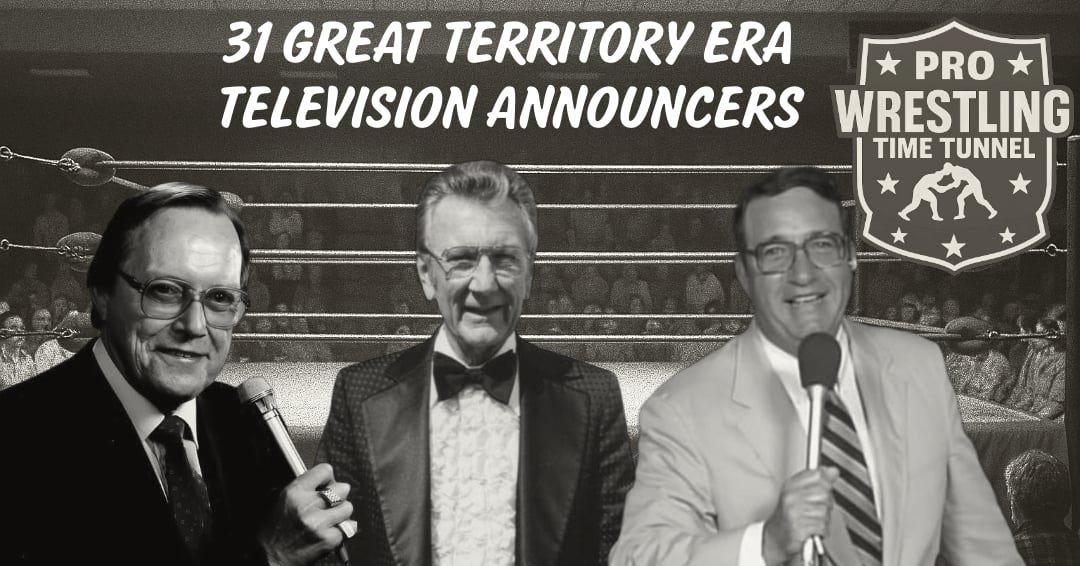
31 Great Territory Era Television Announcers Series
Profile 1: Larry Matysik, Wrestling At The Chase, St. Louis, Missouri
Profile 2: Sam Menacker, World Wrestling Association, Indianapolis, Indiana
Profile 3: Bob Caudle, Mid-Atlantic Championship Wrestling, Raleigh, North Carolina
Profile 5: Ed Whalen, Stampede Wrestling, Calgary, Alberta, Canada
Profile 6: Paul Boesch, Houston Wrestling, Houston, Texas
Profile 7: Ray Morgan, WWWF Washington, D.C.
Profile 8: Bill Mercer, Big Time & World Class Championship Wrestling, Dallas, Texas
Profile 9: Lord Athol Layton, Toronto, Detroit & Australia
Profile 10: Dick Lane, NWA Hollywood, Los Angeles, California
Profile 11: Marty O'Neill AWA Minneapolis, Minnesota
Thank You for Reading
I’m Tony Richards, Pro Wrestling Historian, Author and Storyteller. I share pro wrestling historical items in each issue of the Time Tunnel Pro Wrestling History Newsletter. Thanks for reading! If you enjoy my information on select events, matches and insights, please share it with folks you think might like to be a subscriber!
Remember, paid subscribers get access to exclusive and special content such as The Evolution of Pro Wrestling special issues including a multi-part deep dives on wrestling territories, wrestler bios and championship title histories, special audio and video interviews on territory pro wrestling and more available in the Pro Wrestling Time Tunnel for Premium Investors.
Thanks Tony for another great article.