


Harry Thornton was a quintessential larger-than-life figure in mid-20th-century Southern media and professional wrestling. A radio pioneer who became a television innovator, co-promoter, and the unmistakable voice of live wrestling in Chattanooga, Tennessee, Thornton embodied the golden era of local broadcasting.
His career spanned from the late 1930s into the early 1980s, influencing generations through his sharp wit, controversial style, and deep community ties. While not a national superstar like some of his wrestling contemporaries, Thornton’s impact on Chattanooga’s cultural landscape was profound—he helped popularize professional wrestling in the region, invented a successful local morning talk format, and became a polarizing yet beloved personality who “knew how to push all your buttons.”
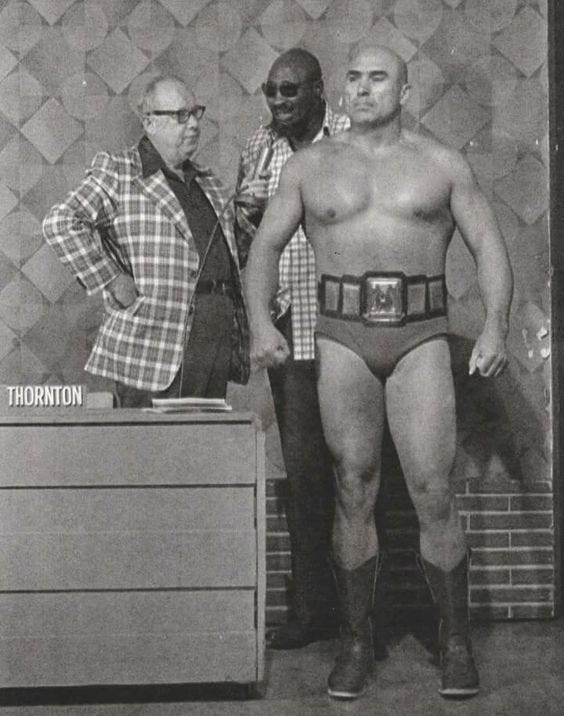
Pictured: Harry Thornton interviewing Bearcat Wright with his man, The Mongolian Stomper at WDEF-TV in Chattanooga, Tennessee
Born in 1918, Harry Thornton grew up in Highland Park, a modest neighborhood that he later referenced humbly in reflections on his remarkable rise. As a teenager, he hustled into broadcasting. In his junior and senior years of high school, he worked as a “go-fer” at WDOD radio, running errands for figures like Archie Campbell. He made his on-air debut with opening and closing announcements.
World War II interrupted his early career—he was signed up for the army—but upon returning, he played a foundational role in local radio. He was the first announcer on WDEF radio when it launched. Afterward, Art Campbell hired him as chief announcer at the new WAGC station. There, he hosted a popular early-morning show, branding himself “The Milkman” because it aired at the hour when milk deliveries occurred. This folksy, relatable persona resonated with listeners and foreshadowed his later television success.
Thornton also engaged in sports broadcasting, including announcing Rossville High Football and covering Golden Gloves boxing. His radio work built a strong local following and connections that proved invaluable.
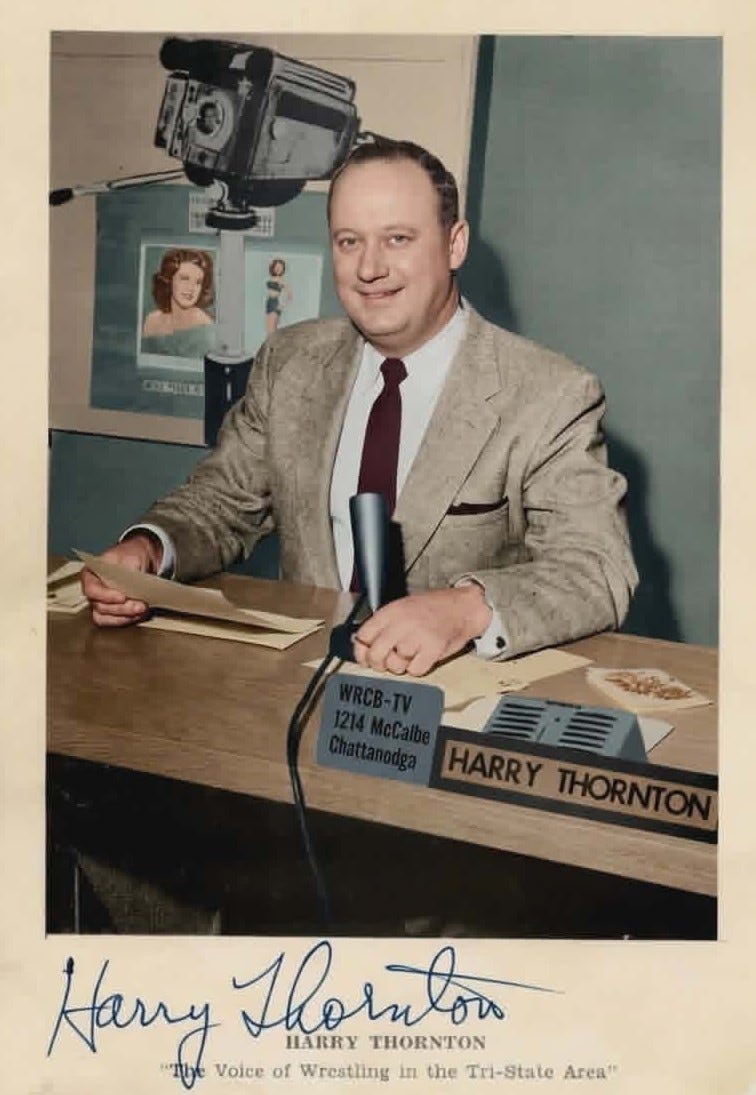
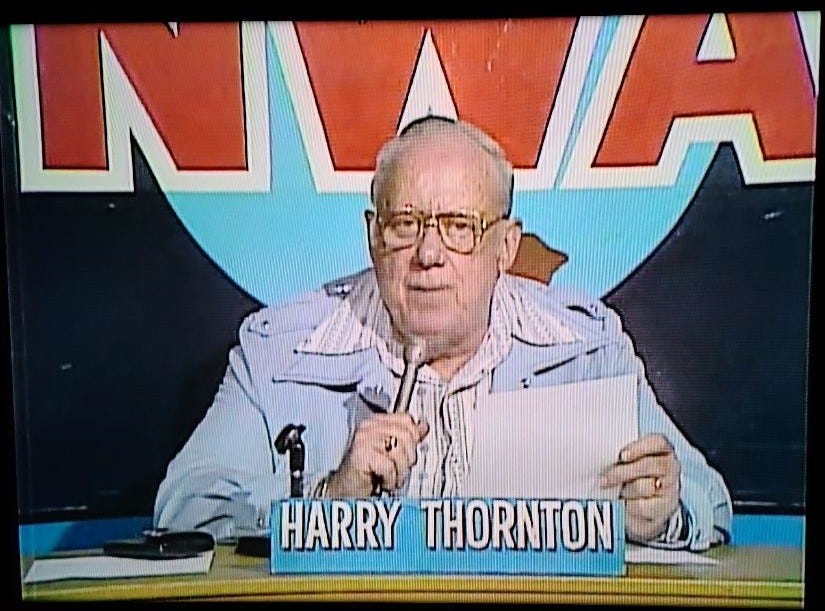
Pictured: Harry Thornton obtained one-third of interest in the Wrestling Promotion owned by Promoters Nick Gulas & Roy Welch, May 17, 1961.
In the early development of the Gulas-Welch wrestling enterprise (commonly referred to as the Tennessee Territory), Chattanooga emerged as a vital pillar alongside Nashville and Birmingham. This trio formed the core revenue-generating hubs during the territory’s formative years in the 1950s, prior to the major expansion into Memphis in 1956. The addition of Chattanooga in the early 1950s strengthened the operation’s stability and helped establish a sustainable regional model based on consistent live events, local partnerships, and audience loyalty in key Southern markets.
Roy Welch and Nick Gulas began their formal partnership in the late 1940s, with Nashville serving as an early anchor after Gulas gained promoting rights there. Welch had roots in Tennessee wrestling, while Gulas brought experience from Alabama.
The Big 3 Cities of The Tennessee Territory
• Nashville: The flagship “big town,” where the promotion gained significant traction in the 1940s. It provided a central hub for talent booking and larger arena shows.
• Birmingham: Added through Gulas’s connections and Welch’s expansion into Alabama around 1952 (after purchasing rights from Joe Gunther). Gulas personally oversaw much of the Alabama operations due to his familiarity with the region.
• Chattanooga: Brought online in 1950. This move into Southeast Tennessee marked a strategic eastward expansion, tapping into a growing industrial city with a strong blue-collar fan base and the historic Memorial Auditorium as a prime venue.
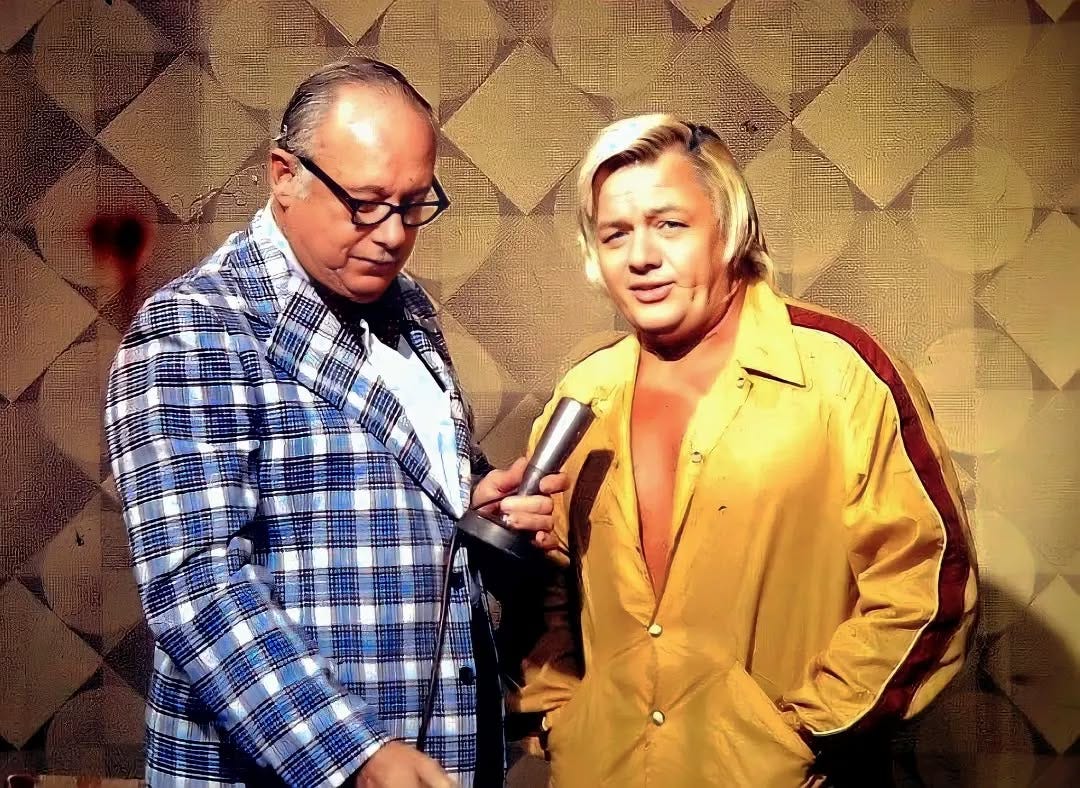
Pictured: Harry Thornton interviewing “The Fabulous” Jackie Fargo on the set of Live Wrestling during 1974.
Before the July 1956 acquisition of Memphis booking rights from Charlie Rentrop (involving coordination with St. Louis and Tulsa offices), the Tennessee Territory relied heavily on these three markets for financial viability. Memphis’s addition later transformed the operation by adding another major population center, but the pre-1956 era demonstrated the resilience of the Nashville-Birmingham-Chattanooga triangle.
Chattanooga’s inclusion was not merely geographic filler—it delivered consistent gate receipts and helped balance the territory’s schedule:
• Venue and Audience Strength: Memorial Auditorium became a reliable draw for weekly or bi-weekly cards. Its capacity and central location attracted fans from Southeast Tennessee and Northwest Georgia, creating a regional stronghold.
• Demographic Fit: As a manufacturing and railroad hub in the 1950s, Chattanooga had a working-class population that responded well to wrestling’s blend of athleticism, storytelling, and escapism. This mirrored the audiences in industrial Nashville and Birmingham.
• Operational Synergy: Weekly shows in the Big 3 allowed for efficient talent routing. Wrestlers could move between cities with manageable travel, maximizing appearances and minimizing downtime—a key efficiency in the pre-interstate highway era.
• Local Partnerships: The later involvement of figures like Harry Thornton (who joined as announcer and co-promoter in the late 1950s) built on this foundation. Thornton’s established radio presence added local credibility and cross-promotion power, though his biggest impact came slightly after the initial “Big 3” phase.
Revenue from these three cities funded talent contracts, travel, and further expansion. In an era when territories operated as semi-independent businesses, steady income from proven markets like these reduced risk and supported growth into secondary towns.
The pre-1960s focus on Nashville, Birmingham, and Chattanooga created a compact, manageable territory with several strengths:
Geographic Balance: The cities formed a rough triangle across Tennessee and Alabama, allowing for logical booking loops and reducing long-haul travel costs.
Diverse Market Appeal: Nashville offered music-city crossover potential, Birmingham brought Alabama’s wrestling tradition, and Chattanooga added a border-state flavor with Georgia proximity.
Risk Mitigation: Dependence on three strong hubs (rather than one dominant city) provided stability. A poor week in one market could be offset by strong gates in the others.
Talent Development: Consistent exposure in these markets helped build regional stars and test new talent before broader pushes. This model exemplified the territorial system’s emphasis on localized control and community connection—qualities that defined wrestling’s golden age before national expansions and television syndication changed the landscape.
Thornton’s entry into professional wrestling came when promoters Nick Gulas and Roy Welch, who controlled much of the wrestling territory in the South, approached him to announce events at Chattanooga’s Memorial Auditorium. He quickly expanded the scope: “Why don’t we do a TV show?” The result was a live Saturday afternoon wrestling program that became must-see TV in the limited-channel era of the 1960s and 1970s.
The show, often called Championship Studio Wrestling or similar, aired on stations like WRGP (later WRCB, Channel 3) before moving to WDEF-TV (Channel 12). It featured stars like Jackie Fargo (a major babyface), the villainous Tojo Yamamoto (real name Harold Watanabe), the Scuffin’ Hillbillies, Bearcat Brown, and others. Thornton’s energetic, opinionated announcing—mixing play-by-play with interviews and hype for live arena events—drove attendance at the Memorial Auditorium. “Grudge matches” teased on TV routinely sold out the venue.
As co-promoter alongside Gulas and Welch, Thornton handled logistics, talent relations, and TV production. Norman Veazey, a former minor-league baseball player, served as his ring announcer and road agent, managing wrestlers on the road. Thornton even published autograph books to engage young fans.
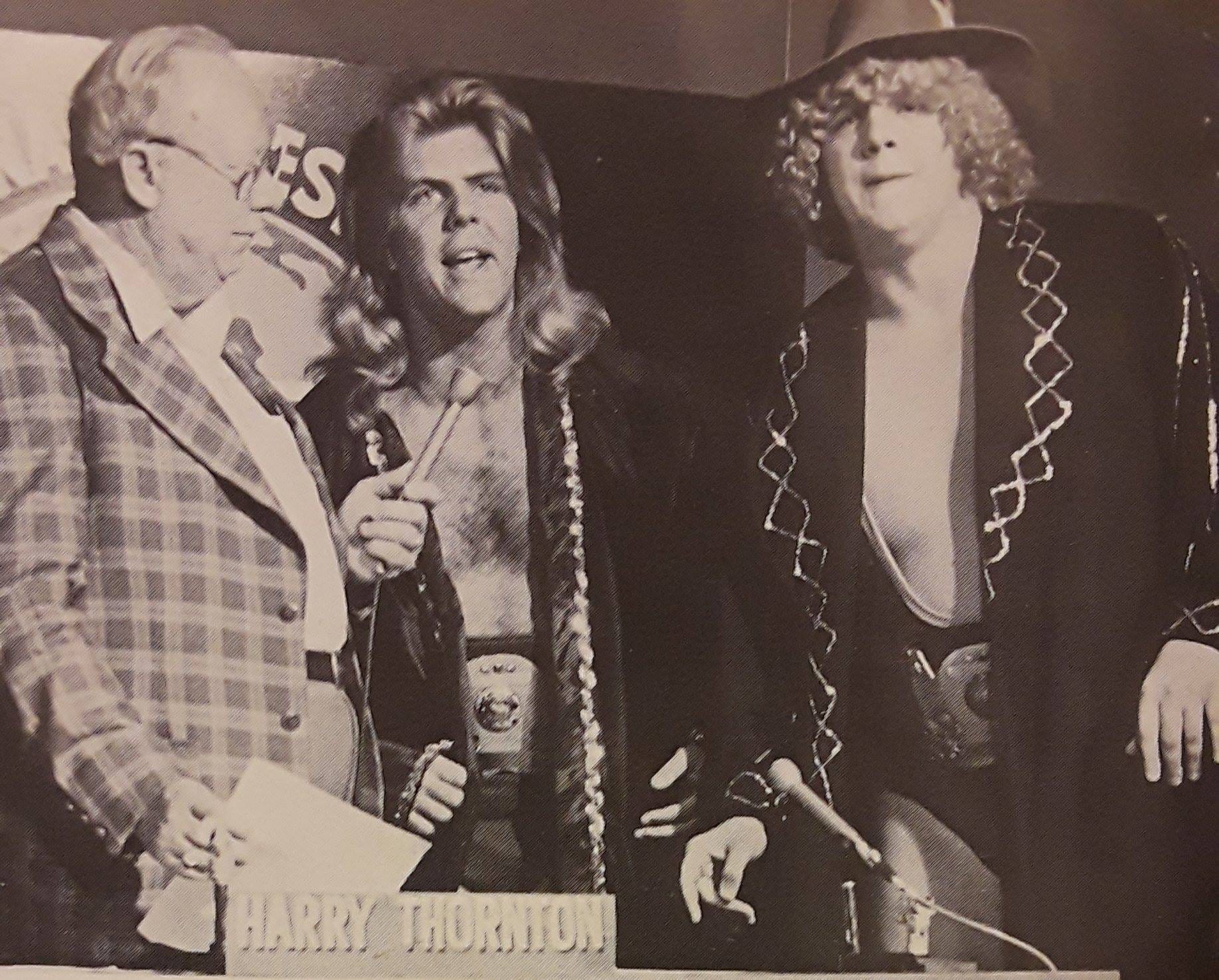
Pictured: Harry Thornton interviews The Fabulous Freebirds, Michael Hayes and Terry Gordy, early in their careers
Wrestling in this era blended athleticism, theater, and regional storytelling. Heroes and villains were clearly defined, and the live studio audience (including memorable characters like the woman who swung her purse at Tojo) added authenticity and chaos. Thornton thrived in this environment, using his radio-honed voice to build rivalries and draw crowds. His involvement extended to smaller towns in the territory, cementing wrestling’s popularity across Southeast Tennessee and Northwest Georgia.
Harry Thornton’s Primary Role In Chattanooga

Television Production and Hype: Thornton hosted and produced live Saturday afternoon wrestling shows, initially on channels like WRGP/WRCB (Channel 3) and later WDEF-TV (Channel 12). These studio programs—often called Championship Studio Wrestling—featured matches, interviews, and promos that built storylines for the live arena cards. His energetic, opinionated style (mixing play-by-play with hype) was central to driving attendance. Grudge matches teased on TV frequently sold out the Memorial Auditorium.
The show, often called Championship Studio Wrestling or similar, aired on stations like WRGP (later WRCB, Channel 3) before moving to WDEF-TV (Channel 12). It featured stars like Jackie Fargo (a major babyface), the villainous Tojo Yamamoto (real name Harold Watanabe), the Scuffin’ Hillbillies, Bearcat Brown, and others. Thornton’s energetic, opinionated announcing—mixing play-by-play with interviews and hype for live arena events—drove attendance at the Memorial Auditorium. “Grudge matches” teased on TV routinely sold out the venue.
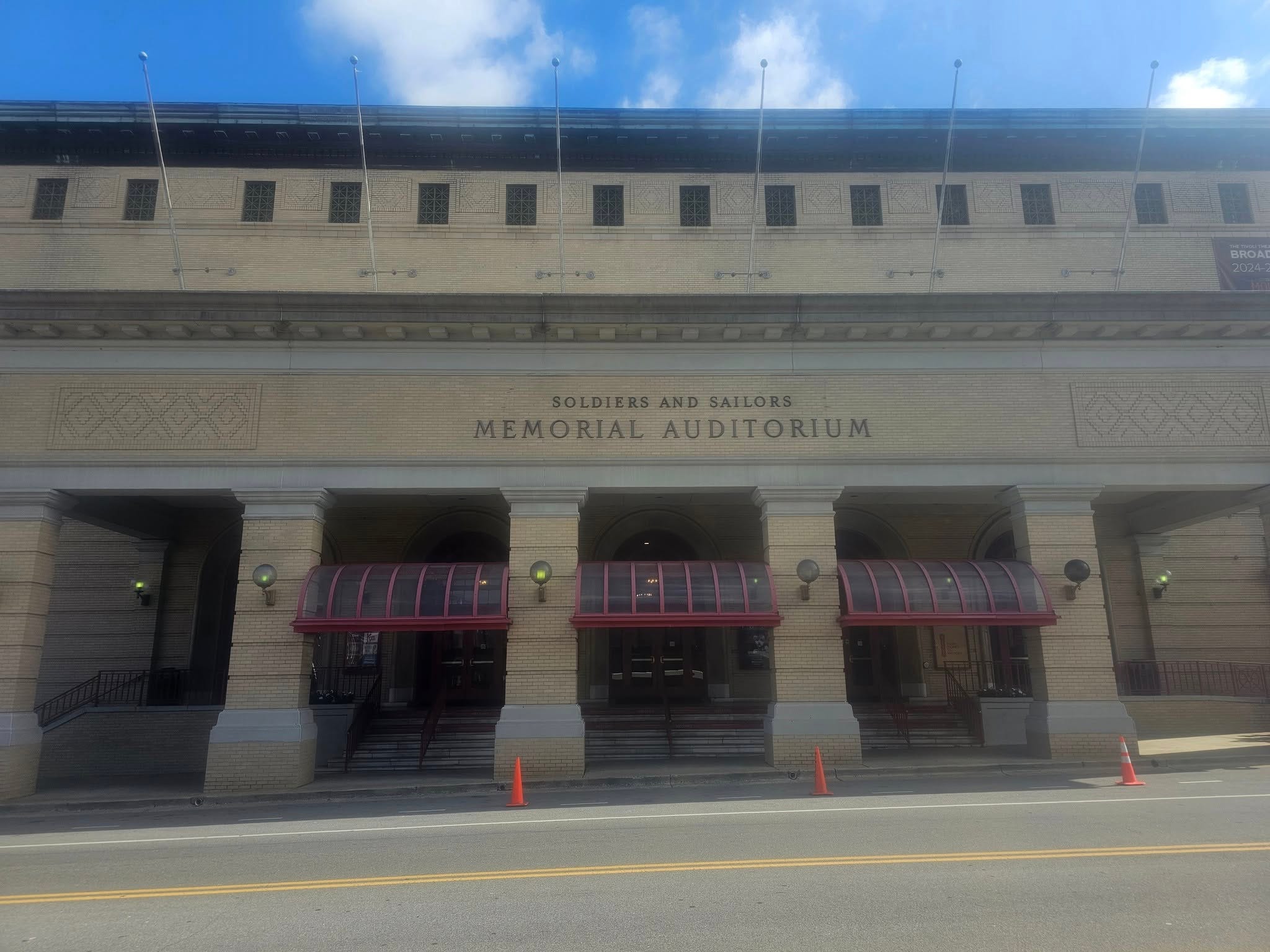
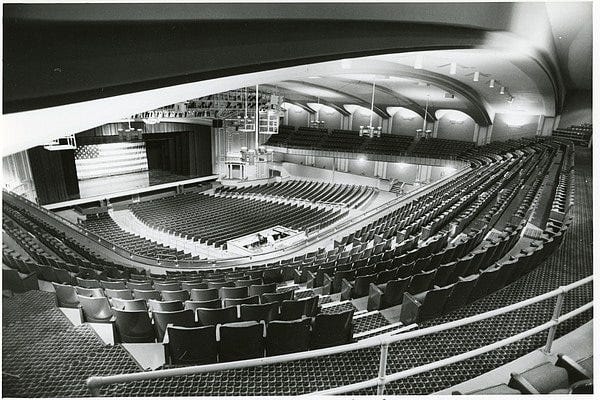
Pictured: The exterior and interior of Memorial Auditorium in Chattanooga, Tennessee
• Live Events at Memorial Auditorium: Weekly or near-weekly cards were the promotion’s backbone. Thornton helped book talent, manage logistics, and promote these Thursday or Saturday night shows. The venue became a hotspot, drawing families and rowdy crowds. Memorable audience interactions, like a regular fan swinging her purse at villain Tojo Yamamoto, added to the chaotic, authentic atmosphere.
• Merchandise and Fan Engagement: Thornton published and distributed autograph books in the 1960s featuring stars of the era. These helped connect young fans with wrestlers and boosted loyalty. He also leveraged his morning TV/radio presence to cross-promote wrestling events.
• Road Operations: Norman Veazey, a former minor-league baseball player, served as ring announcer and road agent under Thornton. Veazey traveled with the wrestlers, ensuring payments, behavior, and logistics—critical in a territory that included smaller towns in Southeast Tennessee and Northwest Georgia.
Talent and Storylines
The Chattanooga Product Presentation featured a mix of national NWA stars and regional favorites:
• Babyfaces (Heroes): Jackie Fargo (a major draw), Bearcat Brown, and others.
• Heels (Villains): Tojo Yamamoto (Harold Watanabe), The Great Togo, and tag teams like the Scuffin’ Hillbillies.
• Later stars included Bobby Eaton, Terry Gordy, Michael Hayes, and even Thornton’s own son, Harry “Butch” Thornton Jr., who wrestled briefly in the territory.
Storylines relied on clear hero-villain dynamics, with Thornton’s interviews amplifying rivalries. The territorial system allowed for long-term feuds that built anticipation for big arena matches.
Scale and Business Model
Chattanooga was a key hub in the Gulas-Welch territory, which spanned much of the South. While not as large as the Memphis operation (which later evolved into the Continental Wrestling Association), Chattanooga provided steady revenue through ticket sales, TV sponsorships, and concessions. Thornton’s dual role as popular local broadcaster gave the promotion a significant home-field advantage in a pre-cable era when only a few channels existed.
Promotions were often billed with all three names: “Nick Gulas, Roy Welch & Harry Thornton present NWA Wrestling.” Events drew from the shared talent pool while tailoring to local tastes.
In 1969, after a period of semi-retirement (including farming interests), WDEF-TV lured Thornton back for a morning program. What began as an experiment became a Chattanooga institution: The Morning Show, co-hosted initially with Ruth Bloyer and later with others, most notably Judy Corn. It blended news, weather, sports, interviews, and audience call-ins—a precursor to modern talk TV and even talk radio.
Thornton’s style was engaging and provocative. He wasn’t afraid of controversy; the show often tackled local politics, sparking debates and even influencing public opinion. At its peak with Judy Corn, it reportedly captured an astonishing 62% audience share, outperforming national programs like Good Morning America and The Today Show. Celebrities visiting Chattanooga sought appearances, and sponsors flocked to it. His wife, Helen (“Mrs. Tee”), occasionally filled in, adding a personal touch.
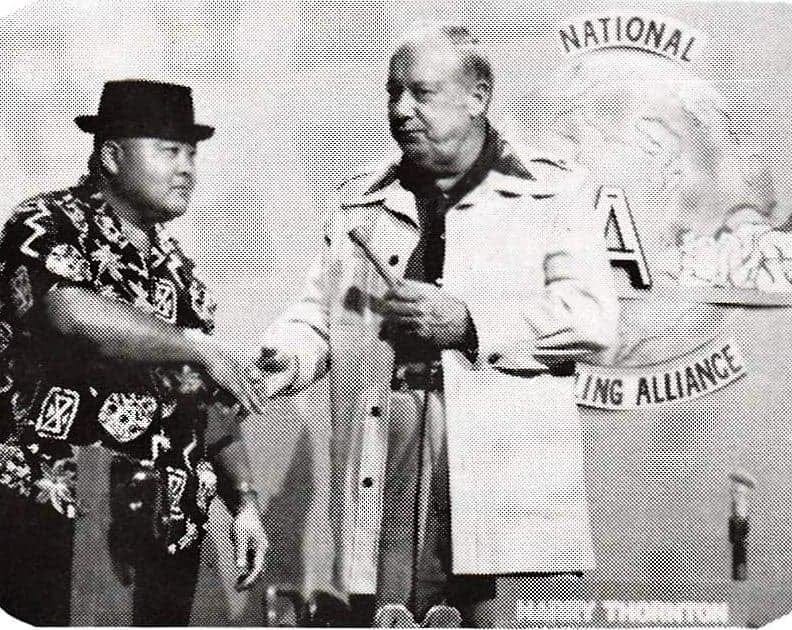
Pictured: Occasionally, Thornton would fill in on the Nashville, Tennessee studio show at WNGE-TV Channel 2 seen here interviewing Tojo Yamamoto
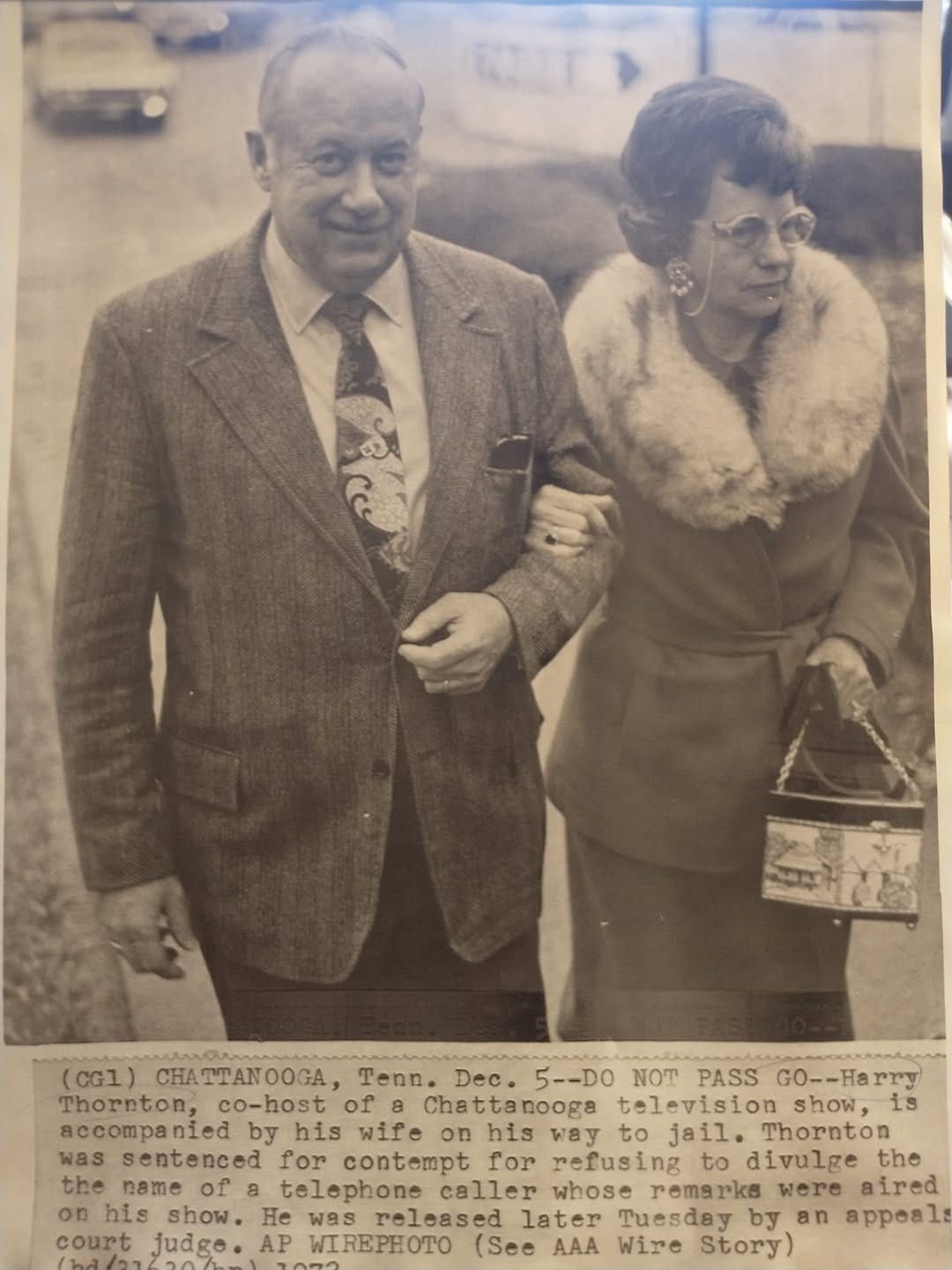
The program’s success stemmed from Thornton’s authenticity and willingness to connect directly with viewers. He once spent time in jail rather than reveal a caller’s identity, further burnishing his reputation as a defender of principles (or at least a showman). His humble self-assessment—“I can’t imagine how a no-name person from Highland Park could go so far”—endearing him to audiences.
While Thornton was primarily the face of Chattanooga’s Championship Studio Wrestling on WDEF (where he was already a huge local TV/radio star with his morning show), Thornton would step in on the Nashville tapings when needed—most notably in the late ’70s, like his memorable interview with Tojo Yamamoto. (Pictured above)
His gruff, heat-drawing, “grumpy but lovable” on-air style (part announcer, part promoter) brought a distinct personality and cross-market familiarity that the regular Nashville host didn’t always have. It helped unify the TV product between the two cities, gave the Nashville show an extra dose of character-driven energy, and reminded viewers this was all one cohesive Gulas-Welch Tennessee territory.
Harry Thornton succeeded because he understood his audience in a small-to-mid-sized Southern market. In an era before national syndication dominated, local personalities like him filled living rooms with familiarity, excitement, and debate. His wrestling work helped sustain the territorial system of pro wrestling, providing a platform for talent and affordable family entertainment. His morning show demonstrated that local TV could compete with networks through personality and relevance.
Critics might note his provocative style occasionally veered into controversy, but this was part of his appeal in a less polished media age. He was a bridge between radio’s golden era and television’s maturation, a promoter who blurred lines between announcer, host, and businessman. He once went to jail for refusing to disclose the name of an irate caller to his radio show in 1972.
In Chattanooga today, Thornton is remembered fondly through archival clips, fan groups, and tributes on WDEF. His career exemplifies how dedicated local broadcasters shaped community identity. From Highland Park to the airwaves, Harry Thornton’s voice—energetic, opinionated, and unmistakably his own—echoed for decades and still resonates in the memories of those who grew up with “The Milkman,” the wrestling announcer, and the morning TV pioneer.
Health issues forced Thornton’s early retirement. His final broadcast on July 2, 1982, was emotional; longtime colleague Luther Masingill presented him with the microphone used to sign on WDEF radio years earlier.
Four months later, on November 15, 1982, Harry Thornton passed away at age 64.
His wife Helen shared warm memories in later interviews, noting the physical toll of wrestling on participants and the couple’s travels. She emphasized his kindness off-air, despite his on-air persona. Thornton’s influence lingered: successors like David Carroll hosted the same morning slot, and wrestling fans continued reminiscing about his era.
31 Great Territory Era Television Announcers Series
Profile 1: Larry Matysik, Wrestling At The Chase, St. Louis, Missouri
Profile 2: Sam Menacker, World Wrestling Association, Indianapolis, Indiana
Profile 3: Bob Caudle, Mid-Atlantic Championship Wrestling, Raleigh, North Carolina
Profile 5: Ed Whalen, Stampede Wrestling, Calgary, Alberta, Canada
Profile 6: Paul Boesch, Houston Wrestling, Houston, Texas
Profile 7: Ray Morgan, WWWF Washington, D.C.
Profile 8: Bill Mercer, Big Time & World Class Championship Wrestling, Dallas, Texas
Profile 9: Lord Athol Layton, Toronto, Detroit & Australia
Profile 10: Dick Lane, NWA Hollywood, Los Angeles, California
Profile 11: Marty O’Neill AWA Minneapolis, Minnesota
Profile 13: Bill Kersten, All-Star Wrestling, Kansas City, Missouri
Thank You for Reading
I’m Tony Richards, Pro Wrestling Historian, Author and Storyteller. I share pro wrestling historical items in each issue of the Time Tunnel Pro Wrestling History Newsletter. Thanks for reading! If you enjoy my information on select events, matches and insights, please share it with folks you think might like to be a subscriber!
Remember, premium investors get access to exclusive and special content such as some special issues including a multi-part deep dives on wrestling territories, wrestler bios and championship title histories, special audio and video interviews on territory pro wrestling and more available in the Pro Wrestling Time Tunnel for Premium Investors.
This is great- there is such limited info about territories and I love reading things like this
Have I missed the commentary on Charlie Platt?