


Written and Produced by Tony Richards
Profile 8: Bill Mercer
Bill Mercer, often hailed as the “Godfather of DFW sports broadcasting,” was a legendary figure whose career spanned over seven decades, encompassing news reporting, sports play-by-play, professional wrestling announcement, and education. Born on February 13, 1926, in Muskogee, Oklahoma, Mercer became synonymous with the Dallas-Fort Worth media landscape, particularly through his iconic role as the television announcer for World Class Championship Wrestling (WCCW) in Dallas. His measured, professional style brought legitimacy to wrestling broadcasts, while his broader work in sports and news left an indelible mark on North Texas. Mercer passed away on March 23, 2025, at the age of 99, leaving behind a legacy as a mentor to generations of broadcasters and a pioneer in televised sports entertainment.
William A. “Bill” Mercer was born to Frank Mercer, a physician’s assistant, and Maynie Mercer, a homemaker, in Muskogee, Oklahoma. He spent much of his childhood in the area, developing an early interest in storytelling and communication. World War II interrupted his youth; Mercer enlisted in the U.S. Navy in 1943 at age 17, serving until 1946 and participating in five Pacific invasions. This experience instilled discipline and resilience that would define his professional ethos.
After his discharge, Mercer pursued higher education under the GI Bill. He studied at Northeastern State University in Oklahoma before transferring to the University of Denver, where he earned a degree in broadcasting in 1949. His academic foundation emphasized clear communication and narrative building—skills that would prove essential in his varied career paths.
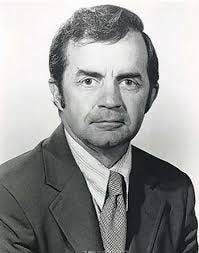
Mercer’s entry into broadcasting began modestly in his hometown. In 1951, he landed his first job at radio station KMUS in Muskogee, Oklahoma, where he covered general sports beats. It was here that he first dipped into wrestling announcement, stepping in during an emergency in the early 1950s to call matches. Mercer treated wrestling with the same gravity as traditional sports, avoiding hype and focusing on the athleticism and drama, a style that set him apart even then. By 1958, Mercer relocated to the Dallas-Fort Worth area, joining KRLD radio and television. This move marked the beginning of his ascent in a major market. He quickly became a versatile voice, handling everything from news to sports.
While building his sports portfolio, Mercer excelled in news journalism. As a reporter for KRLD-TV in Dallas, he was thrust into one of the most pivotal moments in American history: the assassination of President John F. Kennedy on November 22, 1963. Mercer provided live coverage of the event and its aftermath, including the chaos at Parkland Hospital and the subsequent shooting of Lee Harvey Oswald. His calm, factual reporting earned widespread acclaim, and he later chronicled the experience in his 2004 book, When the News Went Live. This episode highlighted Mercer’s ability to handle high-pressure situations with professionalism, a trait that translated seamlessly to his sports and wrestling work.

Mercer’s sports announcing career was prolific and diverse. In 1959, he began calling games for the Dallas Rangers of the American Association, continuing through their transition to the Dallas-Fort Worth Spurs in the Texas League until 1971. His big break came in 1972 when he joined the broadcast team for the newly relocated Texas Rangers in their inaugural MLB season, partnering with Don Drysdale. Mercer mentored Drysdale in play-by-play techniques, and together they navigated the team’s early struggles on KRLD and later WBAP radio. Notable calls included the 1973 debut of pitcher David Clyde.
Beyond baseball, Mercer was the radio voice for the Dallas Cowboys in the 1960s, covering landmark games like the 1967 Ice Bowl against the Green Bay Packers alongside Blackie Sherrod and the 1972 Super Bowl with Verne Lundquist. He also broadcast Southwest Conference football and basketball, and briefly called games for the Chicago White Sox from 1974 to 1975, teaming with Harry Caray. At the University of North Texas (UNT), Mercer served as the play-by-play announcer for Mean Green athletics from 1969 to 1988, including the era when Abner Haynes and Leon King integrated college football in Texas. He also managed UNT’s campus radio station and broadcast hundreds of events.

Mercer’s most enduring pop culture legacy may be his role in professional wrestling, particularly with WCCW in Dallas. In early 1976, he took over announcing duties for the long-running Saturday Night Wrestling program on KTVT Channel 11 in Fort Worth, broadcasting from the famed Sportatorium. Building on his early Muskogee experience, Mercer approached wrestling as a serious sport, delivering measured commentary that built narratives around rivalries, personal struggles, and athletic feats rather than sensationalism.
Collaborating with producer Mickey Grant, Mercer revolutionized wrestling television. They introduced handheld cameras for intimate close-ups, multiple ring angles, enhanced audio, personality profiles, and vignettes—innovations that transformed static broadcasts into dynamic storytelling. Signature elements included an opening sequence with a satellite beam from space, emphasizing WCCW’s global reach. Mercer called matches involving the Von Erich family, whose tragic story he later reflected on with nuance. He had a close but complex relationship with promoter Fritz Von Erich, admiring his business acumen while critiquing his controlling influence over his sons, which Mercer believed contributed to their hardships.His broadcasts filled living rooms across America, influencing the industry’s shift toward entertainment-focused programming and inspiring fans to engage deeply with the product.
From 1966 to 2006, Mercer taught sports broadcasting at UNT for 35 years, influencing over 700 students. Known as the founder of the “Mercer Mafia,” he mentored luminaries like George Dunham, Craig Miller, Dave Barnett, Mark Followill, Craig Way, and Ted Emrich, providing hands-on experience in classrooms, stadiums, and arenas. Students recalled his detailed feedback on voice modulation, score updates, and storytelling, with one comparing him to a lifelong coach. Mercer remained engaged even in his 90s, guest-announcing for the Rangers in 2016 and staying sharp in memory and enthusiasm.
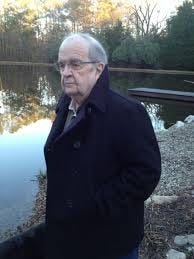
In retirement, Mercer authored two books: When the News Went Live (2004) and Play-by-Play: Tales from a Sportscasting Insider (2007), sharing anecdotes from his Rangers days, Cotton Bowl classics, and Von Erich wrestling matches. He was a sought-after speaker and held leadership roles, such as past president of the Dallas-Fort Worth SAG-AFTRA in the 1960s. Personally, Mercer took pride in his family, including granddaughter Emma Tiedemann, who followed in his footsteps as a play-by-play announcer.
Mercer’s contributions earned him numerous honors: induction into the Texas Radio Hall of Fame (2002), Texas Intercollegiate Press Association Hall of Fame (2009), UNT Athletic Hall of Fame (1990), UT Dallas Athletics Hall of Honors (2011), and Texas Sports Hall of Fame (2020). Colleagues remembered him as perpetually positive, with Barnett noting, “I never saw Bill in a bad mood,” and Way praising his enduring engagement.
31 Great Territory Era Television Announcers
Profile 1: Larry Matysik, Wrestling At The Chase, St. Louis, Missouri
Profile 2: Sam Menacker, World Wrestling Association, Indianapolis, Indiana
Profile 3: Bob Caudle, Mid-Atlantic Championship Wrestling, Raleigh, North Carolina
Profile 5: Ed Whalen, Stampede Wrestling, Calgary, Alberta, Canada
Profile 6: Paul Boesch, Houston Wrestling, Houston, Texas
Profile 7: Ray Morgan, WWWF Washington, D.C.
Thank You for Reading
I’m Tony Richards, Pro Wrestling Historian, Author and Storyteller. I share pro wrestling historical items in each issue of the Time Tunnel Pro Wrestling History Newsletter. Thanks for reading! If you enjoy my information on select events, matches and insights, please share it with folks you think might like to be a subscriber!
Remember, paid subscribers get access to exclusive and special content such as The Evolution of Pro Wrestling special issues including a multi-part deep dives on wrestling territories, wrestler bios and championship title histories, special audio and video interviews on territory pro wrestling and more available in the Pro Wrestling Time Tunnel for Premium Investors.