


Profile 13: Bill Kersten
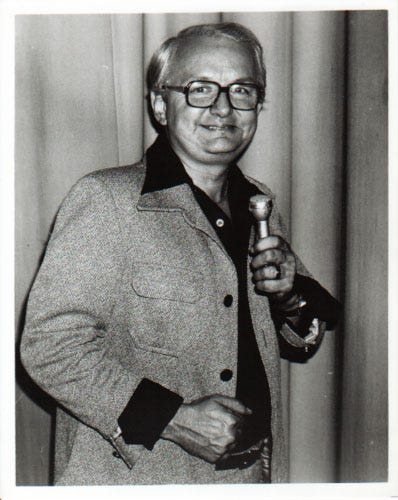
William Joseph “Bill” Kersten (June 21, 1933 – October 20, 2017) remains one of the most beloved and enduring figures in the history of territorial professional wrestling. For more than three decades, his enthusiastic delivery, signature catchphrase “Hellloooooooooooo, wrestling fans!”, and working-class everyman persona defined All-Star Wrestling (also known as Central States Wrestling or Heart of America Sports Attractions) in Kansas City. He served as ring announcer, play-by-play commentator, interviewer, timekeeper, and occasional in-ring participant from the late 1950s through the early-to-mid 1980s. Even after the territory’s decline and eventual closure, Kersten’s influence lingered in the memories of fans across the Midwest, who continued to greet him with his own famous line for decades.
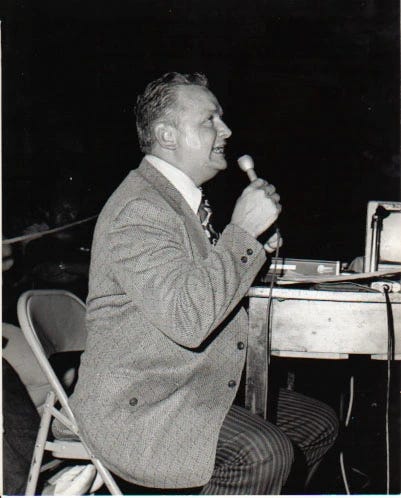
Born in Kansas City, Kansas, on June 21, 1933, Kersten grew up in a wrestling household. At age eight in 1941, he attended his first wrestling event with his father at Memorial Hall in Kansas City—an experience that left a lasting impression. As a 14-year-old freshman at Bishop Ward High School in 1947, he began working as an usher at those same Memorial Hall shows. He served in the U.S. Army during the Korean Conflict before returning to civilian life and a 28-year career with Kansas City Power & Light Company. Yet wrestling never left him. In 1956 he stepped into the role of public-address and ring announcer, succeeding Bill Grigsby and Owen Bush. From that point forward, he became a fixture at live events, handling introductions, interviews, and match timing while occasionally inserting himself into storylines for dramatic effect.
Kersten’s transition to television came in 1965 when he began doing play-by-play for the promotion’s weekly syndicated program. The following year, 1966, he introduced the elongated greeting that would define his career and become part of the lexicon of Central States wrestling: “Hellloooooooooooo, wrestling fans!” The show, taped initially at WDAF studios and later at KBMA/KSHB (Channel 41) or live from Memorial Hall, aired across Missouri, Kansas, Iowa, Nebraska, and parts of Illinois. It was, for a time, the longest-running local television program in Kansas City history—15 years by the late 1970s and reportedly continuing in some form until around 1985. Kersten’s warm, relatable style resonated with blue-collar audiences. Promoter Bob Geigel later praised him for “talk[ing] the language of the working class people… because he was a working class person” and for having “a nice personality.” Kersten himself credited his success to simple “enthusiasm as an announcer.” In a 1979 newspaper interview, he noted that fans greeted him with the catchphrase “practically every day, in shopping centers, movies, and so on,” calling it “a sign of success.”
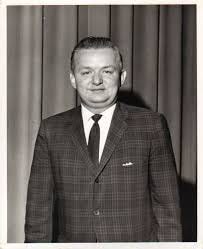
Beyond the microphone, Kersten was deeply embedded in the territory’s storylines and its community. He knew future NWA World Champion Harley Race before Race ever entered the business and proudly announced Race’s title victory over Dory Funk Jr. He was also famously spit on by Bulldog Bob Brown. Off-camera, he collected countless behind-the-scenes tales: a streaker stunt orchestrated by Geigel and Race to draw attention (Kersten was instructed to point dramatically toward the stage at the right moment); cherry-bomb pranks and a goat released into a hotel turnstile by Dick Murdoch and Dusty Rhodes; and live-TV chaos when Rufus R. Jones knocked out a skeptical interviewer during a commercial break after the man doubted wrestling’s legitimacy. “Pow! He was out cold,” Kersten remembered. “It took us a good four minutes to wake the guy up.”
One notable distinction in Kersten’s on-screen persona was his willingness to take physical bumps and become an active participant in storylines, a level of involvement that set him apart from many of his most celebrated territorial contemporaries. Unlike Gordon Solie, Lance Russell, or Bob Caudle—who maintained a more detached, journalistic presence and almost never inserted themselves into in-ring action or took bumps on the set—Kersten blurred the lines between announcer and performer to heighten the drama for Central States fans.
By contrast, Gordon Solie—widely regarded as the greatest territorial announcer and often called “The Dean” or “the Walter Cronkite of Wrestling”—brought a scholarly, sports-like gravitas to Championship Wrestling from Florida, Georgia Championship Wrestling, and later Continental and WCW. His gravelly voice, precise terminology (“su-play” for suplex, “pier-six brawl” for a wild fight, “crimson mask” for bleeding), and measured delivery made wrestling feel legitimate and athletic. Solie studied holds in libraries, interviewed wrestlers while in their submissions to describe them accurately, and largely stayed out of angles to maintain credibility. Where Kersten enthused, Solie informed and elevated.
Lance Russell, the longtime voice of Memphis wrestling (NWA Mid-America/Continental Wrestling Association, 1959–1997), occupied a middle ground. Described as earnest, smooth, and folksy, he excelled as a straight man to the territory’s wild chaos—selling angles with genuine shock (such as Jos LeDuc’s blood oath) and drawing compelling promos from wrestlers. His calm Southern drawl paired perfectly with partner Dave Brown, creating a relaxed yet dramatic vibe that fit Memphis’s wild, blood-and-brawls style. Russell was deeply embedded in programming decisions and even appeared in major angles (flour dumped on him by Jimmy Hart, attacks by the Road Warriors). Like Kersten, he felt like “one of the guys,” but his interviewing prowess gave him an edge in building storylines.
Bob Caudle (Mid-Atlantic Championship Wrestling / Jim Crockett Promotions, 1970s–1980s) was the ultimate professional straight announcer. His trademark greeting—“Hello wrestling fans…”—and gentle sign-off “That’ll do it for this week… so long for now” framed shows without stealing focus. Caudle never advocated for faces or heels, rarely entered angles, and let the wrestlers (Dusty Rhodes, Ric Flair, the Four Horsemen) be the stars. His steady, no-frills delivery suited Mid-Atlantic’s hard-hitting, athletic product and made him a reassuring constant across decades.
Bill Mercer (Texas/Big Time Wrestling and World Class Championship Wrestling) brought a serious, measured Texas drawl that pronounced “wrestling” as “rastlin’.” Less theatrical than Kersten but more authoritative than many peers, Mercer’s style emphasized storytelling and production innovation in Dallas. He called landmark moments involving the Von Erichs and helped pioneer WCCW’s national syndication feel.
Longevity varied but was impressive across the board. Kersten called Central States action for roughly 17–25 years (play-by-play from ~1965–1982, with some involvement into the mid-1980s). Solie announced for over 25 years in Florida alone and decades more nationally. Russell spanned nearly 40 years in Memphis. Caudle was Mid-Atlantic’s voice for three decades. These men outlasted many wrestlers and promotions because their voices were the territories.
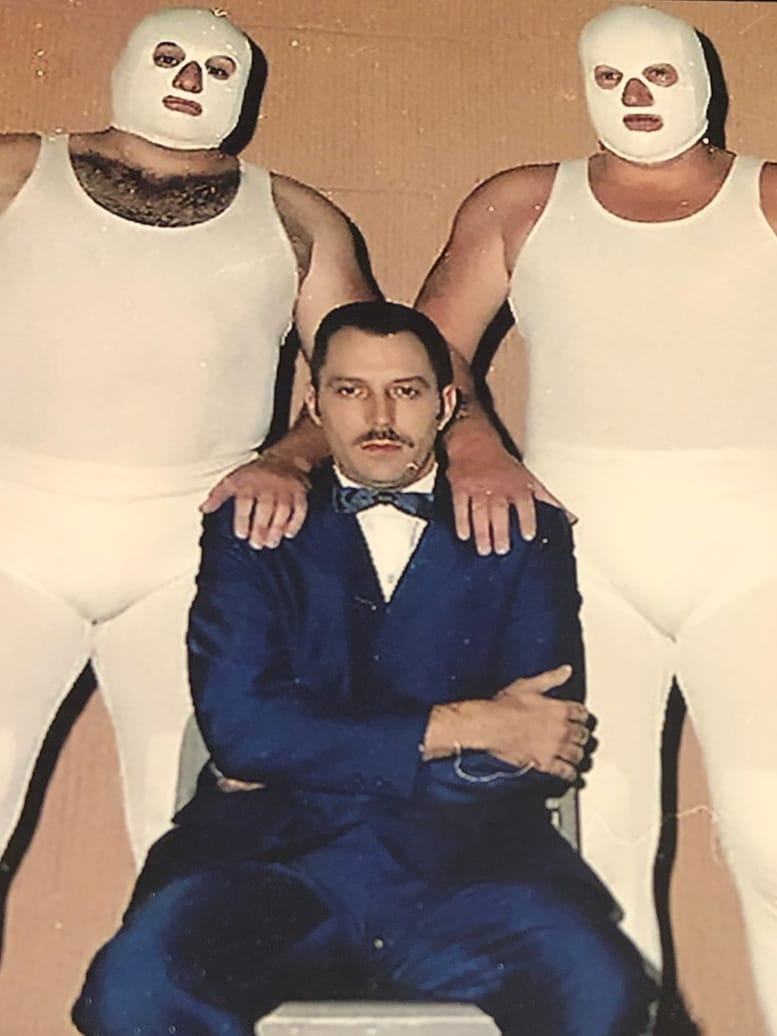
Pictured: Dr. Ken Ramey and The Interns
One of the most memorable and physically demanding angles of Bill Kersten’s career unfolded in late 1974 and peaked throughout the first half of 1975, when the longtime Kansas City announcer was thrust into an in-ring babyface role against the villainous Dr. Ken Ramey and his masked heel tag team, The Interns. Ramey—a sneering heel manager and occasional wrestler—frequently targeted Kersten on television interviews and at ringside, mocking the everyman announcer and goading him into physical confrontations that blurred the lines between broadcast personality and active participant.
This “hot” personal feud fit the gritty, blue-collar style of Central States Wrestling perfectly, turning Kersten into a relatable hometown hero who was willing to take real bumps and fight back against the heels. The angle regularly featured six-man tag team matches in which Kersten teamed with top babyface tag champions Mike George and Jerry Oates (sometimes joined by Haystack Calhoun or Ted Oates) against Ramey and The Masked Interns. Key documented bouts included:
February 3, 1975, in Topeka, Kansas (Municipal Auditorium): Mike George, Haystack Calhoun, and Bill Kersten vs. Intern #1, Dr. Ken Ramey, and Intern #2.
February 16, 1975, in Cedar Rapids, Iowa (Memorial Coliseum): Mike George, Jerry Oates, and announcer Bill Kersten defeated The Interns and Dr. Ken Ramey.
February 20, 1975, at Memorial Hall in Kansas City: Mike George, Jerry Oates, and Bill Kersten defeated Intern #1, Intern #2, and Dr. Ken Ramey.
February 21, 1975, in St. Joseph, Missouri: Haystack Calhoun and Bill Kersten defeated Intern #1 and Dr. Ken Ramey.
March 1, 1975, in Salina, Kansas (Memorial Hall): A special “K-O or pin only” gimmick match pitting Dr. Ken Ramey directly against Bill Kersten (on the same card as a lights-out boxing-gloves match).
March 3, 1975, in Jefferson City, Missouri (Helias High School Gym): The Masked Interns and Dr. Ken Ramey vs. Jerry Oates, Mike George, and Bill Kersten.
Additional mixed-tag action saw Kersten pair with Jean Antone against Ramey and Betty Niccoli, further escalating the personal stakes. The feud also incorporated earlier Texas Death Matches and back-alley brawls in late 1974 that spilled into the new year. Kersten took legitimate punishment in these encounters—most notably stiff bumps and slams that left him sore for weeks—yet always returned to the booth the following Saturday with his signature enthusiasm intact.
The angle ultimately helped elevate the territory’s mid-card storylines while reinforcing Kersten’s credibility with fans, who saw their trusted voice literally putting his body on the line. By mid-1975 the intense six-man program began to wind down as The Interns moved into other title defenses, but the 1975 Ramey-Kersten program remains one of the clearest examples of Kersten’s rare willingness to step inside the ropes, setting him apart from more detached territorial announcers of the era.
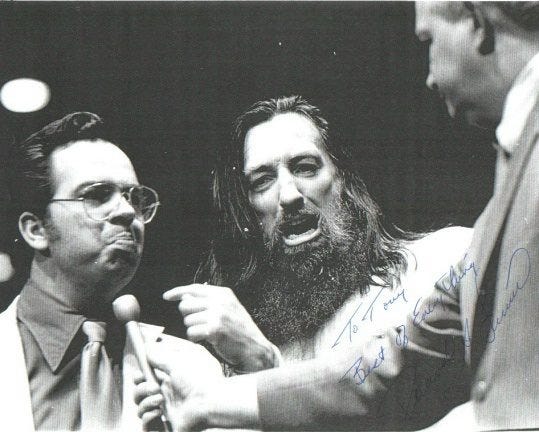
Pictured: Bill Kersten interviews Percival A. Friend and Black Angus Campbell
Another of the most physically punishing of these angles occurred in the early-to-mid 1970s when the massive heel “Black Angus” Campbell (real name Carl Campbell) targeted the announcer during a television interview or ringside segment. Campbell, managed by the aristocratic Percival A. Friend, brutally attacked Kersten by scooping him up by the head with no bracing and slamming him head-first into the mat. Kersten later recalled in interviews, “An amazingly strong man. He was nobody to mess with… I was sore for three months.” The assault directly led to a grudge tag-team match in which Kersten teamed with promoter Bob Geigel against Campbell and Friend. Some accounts also reference a related six-man tag in which Kersten joined forces with Rufus R. Jones and Omar Atlas to face Campbell, Roger Kirby, and Friend, further escalating the personal stakes for Kansas City fans. This angle showcased Kersten’s willingness to take legitimate bumps to sell the storyline and drew strong heat for the heels while elevating the promotion’s mid-card drama.
Another notable (though briefer) heat-building moment involved longtime Central States heel Bulldog Bob Brown, who famously spit on Kersten during a ringside confrontation or interview segment. The incident—described in multiple wrestler and fan recollections as more than just a throwaway spot—served as classic territory-style humiliation, turning Brown into an even more despised villain while positioning Kersten as the sympathetic victim who absorbed the indignity without immediate retaliation. Like the Campbell program, it blurred the line between broadcaster and participant just enough to heighten viewer investment without derailing Kersten’s primary role behind the microphone.
These isolated angles, along with occasional mixed-tag appearances (such as teaming with Jean Antone against heels in the orbit of the Ramey feud), represented the extent of Kersten’s in-ring work. Unlike some announcers who stayed strictly neutral, his rare but authentic physical commitments reinforced his “one of the fans” persona and contributed to the gritty, personal feel that defined Central States Wrestling throughout the 1970s.
Kersten’s contributions extended far beyond wrestling. A dedicated community servant, he logged thousands of volunteer hours with civic groups. He served on the Board of Directors of the Clay County Health Department, was active in the Liberty Chamber of Commerce and Sertoma Club, and belonged to Hosanna! Lutheran Church. He later hosted a radio program called Circle of Friends well into his 80s. In the 1990s he entered politics, serving as mayor of Liberty, Missouri, from 1995 to 1997. After retiring from Kansas City Power & Light and wrestling television, he worked as a ticket-taker at the B&B movie theater in Liberty starting around 1988; fans would still shout his catchphrase at him there.
he specifics of Kersten’s departure from the television booth remain gradual and uncontroversial—no public firing, scandal, or dramatic on-air farewell is documented. He served as the primary commentator from 1965/1966 through approximately 1982 (described by the National Wrestling Hall of Fame as a 17-year TV run), though some fan histories and local recollections extend his on-air presence (possibly including ring announcing or occasional appearances) through 1985. By the early 1980s, Central States Wrestling, under Bob Geigel (who co-owned the ill-fated St. Louis promotion purchased from Sam Muchnick alongside Pat O’Connor, Harley Race, and Verne Gagne), faced mounting financial difficulties. The St. Louis venture’s failure left the Kansas City office strapped for cash, leading to a noticeable decline in talent quality. Familiar stars gave way to lesser-known performers such as Mr. Pogo and Gypsy Joe. Live attendance and TV production values suffered accordingly.
A new voice—Rick Stuart (real name Robert Rhodes, sometimes credited as Ric Stewart)—took over as primary play-by-play man from 1984 until the territory’s closure in 1988, often paired with color commentator Kevin Wahl/Wall (1984–1986). Additional voices included Jay French (1987–1988) and Marty Goldstein (1988). The promotion briefly rebranded as the World Wrestling Alliance before Geigel sold to Jim Crockett Jr. in 1988, effectively folding the historic Kansas City office. Fan recollections from the era sometimes express simple disappointment—“replaced Bill. I was so Mad!!!”—but Kersten himself showed no bitterness. He remained on excellent terms with Geigel, continuing to attend Cauliflower Alley Club reunions together years later. The change appears to have been a pragmatic response to the territory’s broader decline rather than any personal or professional conflict.
After wrestling television ended, Kersten embraced retirement and public service with the same enthusiasm he once brought to the ring. In 2009 he received the Lou Thesz Award from the National Wrestling Hall of Fame in Waterloo, Iowa, for his community contributions and charitable works. That same year, the Cauliflower Alley Club surprised him with an honor onstage—presented by Harley Race himself. Kersten responded, naturally, with a booming “Hello-o-o-o-o-o-o-o-o-o-o-o-o-o wrestlling fans!” He was also inducted into multiple wrestling halls of fame.
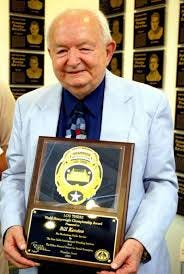
Kersten passed away on October 20, 2017, in hospice care at age 84. Memorial services were held at Hosanna! Lutheran Church in Liberty. He was survived by his daughter Lori J. Sheddrick; son Doug Kersten; step-son Steve Larson; brothers Don (LaDonna) Kersten and George Eugene Kersten; four grandchildren; 12 great-grandchildren; five great-great-grandchildren; and many friends in both the wrestling and Liberty communities. Tributes poured in from fans and wrestlers alike, remembering not only the catchphrase but the man who embodied the blue-collar spirit of Kansas City wrestling.
In an industry often defined by larger-than-life characters and fleeting fame, Bill Kersten stood apart as the steady, enthusiastic voice that welcomed generations of fans week after week. His “Hellloooooooooooo, wrestling fans!” was more than a greeting—it was an invitation into a shared world of heroes, villains, and unforgettable Saturday nights at Memorial Hall. Though the territory folded and new announcers took the microphone, Kersten’s place in wrestling history—and in the hearts of those who heard him—is secure. He didn’t just announce the matches; he was Kansas City wrestling.
31 Great Territory Era Television Announcers Series
Profile 1: Larry Matysik, Wrestling At The Chase, St. Louis, Missouri
Profile 2: Sam Menacker, World Wrestling Association, Indianapolis, Indiana
Profile 3: Bob Caudle, Mid-Atlantic Championship Wrestling, Raleigh, North Carolina
Profile 5: Ed Whalen, Stampede Wrestling, Calgary, Alberta, Canada
Profile 6: Paul Boesch, Houston Wrestling, Houston, Texas
Profile 7: Ray Morgan, WWWF Washington, D.C.
Profile 8: Bill Mercer, Big Time & World Class Championship Wrestling, Dallas, Texas
Profile 9: Lord Athol Layton, Toronto, Detroit & Australia
Profile 10: Dick Lane, NWA Hollywood, Los Angeles, California
Profile 11: Marty O’Neill AWA Minneapolis, Minnesota
Thank You for Reading
I’m Tony Richards, Pro Wrestling Historian, Author and Storyteller. I share pro wrestling historical items in each issue of the Time Tunnel Pro Wrestling History Newsletter. Thanks for reading! If you enjoy my information on select events, matches and insights, please share it with folks you think might like to be a subscriber!
Remember, paid subscribers get access to exclusive and special content such as The Evolution of Pro Wrestling special issues including a multi-part deep dives on wrestling territories, wrestler bios and championship title histories, special audio and video interviews on territory pro wrestling and more available in the Pro Wrestling Time Tunnel for Premium Investors.