


Profile 10: Dick Lane
Richard Lane, better known as Dick Lane, was a quintessential figure of mid-20th-century American entertainment, whose career spanned vaudeville stages, radio broadcasts, Hollywood films, and the pioneering days of television. Born at the dawn of the century and active until the late 1970s, Lane embodied the versatility required to thrive in an evolving media landscape. He is perhaps most remembered as the booming voice behind professional wrestling and roller derby broadcasts in Los Angeles, where his signature exclamation “Whoa, Nellie!” became synonymous with thrilling action. Yet, his contributions extended far beyond the announcer’s booth, encompassing over 150 film roles, radio performances, and television hosting gigs that made him a household name in Southern California. This essay explores Lane’s life and career in depth, tracing his journey from humble beginnings to becoming an icon of broadcast sports and entertainment.
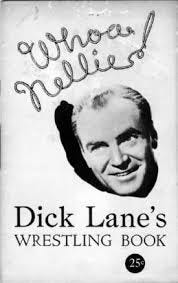
Richard Lane was born on May 28, 1899, in Rice Lake, Wisconsin, into a modest farm family. From a young age, he displayed a natural flair for performance, reciting poetry and engaging in song-and-dance routines that hinted at his future in entertainment. As a teenager, Lane ventured far from his rural roots, touring Europe with circuses where he performed an “iron jaw” act—a daring stunt involving suspending weights or people from his teeth. He also worked as a drummer in a band that took him to Australia, broadening his horizons and honing his skills in live performance. These early experiences in vaudeville and circus life instilled in him a resilience and adaptability that would define his career.
After studying briefly at the University of Wisconsin, Lane fully committed to show business. By the 1920s, he had made his way to Broadway, debuting in the 1928 comedy Present Arms, which enjoyed a long run. In 1930, he appeared in the Vanderbilt Revue alongside comedian Joe Penner, marking the beginning of a fruitful collaboration that would extend into radio and film. Lane’s early career was marked by his gift for gab—a rapid-fire delivery that made him ideal for roles requiring quick wit and charisma. He also served as an emcee and announcer in various venues, including circuses and early radio spots, laying the groundwork for his later broadcasting success.
The decline of vaudeville in the 1930s pushed Lane toward new mediums. He began appearing in short films, starting with uncredited roles that showcased his talent for dialogue. His first notable film credit came in the 1932 Vitaphone short Speaking of Operations, followed by a string of comedy shorts in the mid-1930s, including collaborations with Bob Hope, Joe Palooka, and Leon Errol. Lane’s shrewd business sense shone through; he negotiated two-week guarantees for assignments, allowing him to juggle multiple projects and invest wisely. In one six-month period, he appeared in 29 feature films, a testament to his work ethic.

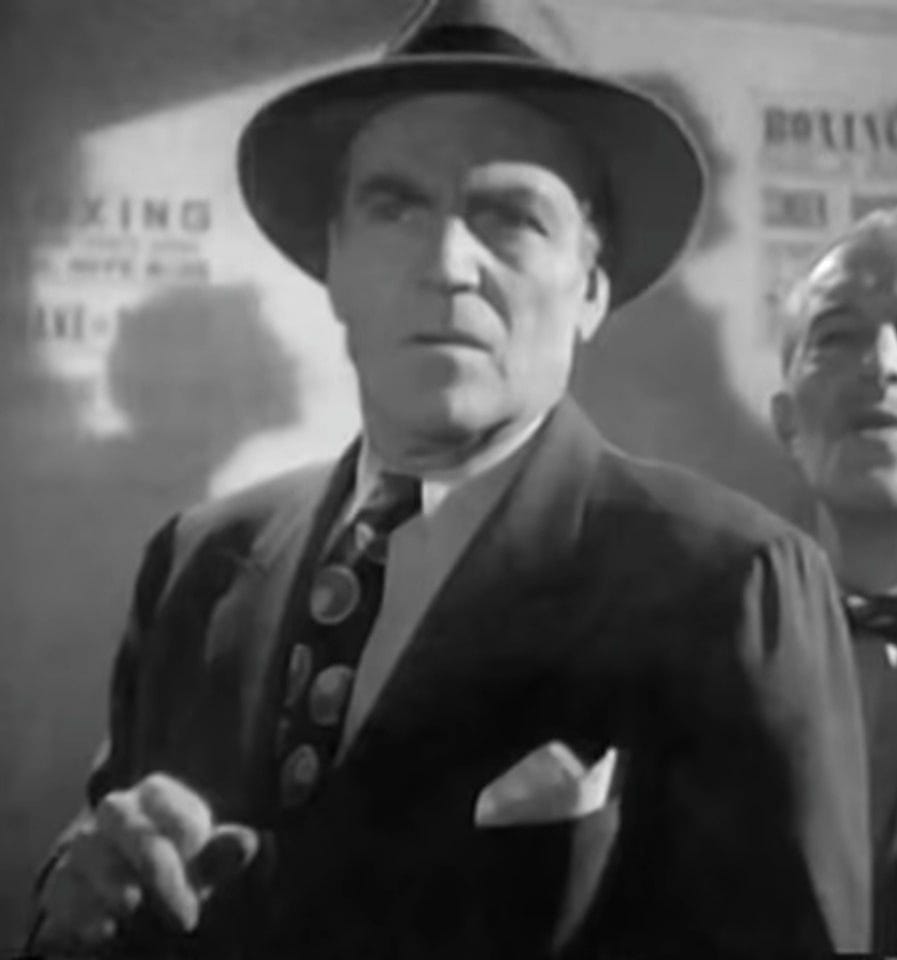
Pictured: Dick Lane as Inpector John Farraday in “Boston Blackie’s Rendezvous” in 1945
On radio, Lane found steady work. He portrayed Inspector John Farraday in the 1944 NBC series Boston Blackie, a role he would reprise in films. From 1950, he played ‘Milligan,’ a fast-talking burlesque producer, on The Phil Harris-Alice Faye Show, and occasionally ‘Grogan,’ a helpful criminal thug. In 1947-48, he starred in his own syndicated series, The Anderson Family, as Oliver Anderson. These roles highlighted his versatility, blending comedy with dramatic elements.
Lane’s film career truly took off in the late 1930s. Between 1937 and 1951, he appeared in over 150 movies, often as slick, fast-talking characters like press agents, detectives, or con men. Notable films include Bringing Up Baby (1938) with Cary Grant and Katharine Hepburn, Union Pacific (1939), Boom Town (1940), and comedies with Abbott and Costello (Ride ‘Em Cowboy, 1942) and Laurel and Hardy (A-Haunting We Will Go, 1942). He became iconic as Inspector Farraday in the Boston Blackie series, appearing in 13 films from 1941 to 1949. Lane also starred in the Schilling and Lane comedy shorts (1945-1950), second only to The Three Stooges in popularity at Columbia Pictures, and led the feature Devil Ship (1947) as tough captain “Biff Brown.” During World War II, he toured with the USO as an emcee, entertaining troops and boosting morale.
In westerns and musicals, Lane’s range was evident. He played a tale-spinning windbag in Everybody’s Dancin’ (1950) with Spade Cooley, which transitioned into a TV role as “Leather Britches” on Cooley’s KTLA series. Other highlights include The Babe Ruth Story (1948), The Jackie Robinson Story (1950) as Robinson’s manager, and Mighty Joe Young (1949).
By the late 1940s, television beckoned. Lane joined KTLA in Los Angeles in 1947, one of the first commercial stations west of the Mississippi. He started as a news reporter, covering historic events like the first televised atomic explosion from Mt. Wilson in 1952. His early TV work included hard-sell used-car commercials, where he famously dented hoods to emphasize durability, and hosting the variety show Dixieland Showboat as master of ceremonies, earning an Emmy nomination in 1951.
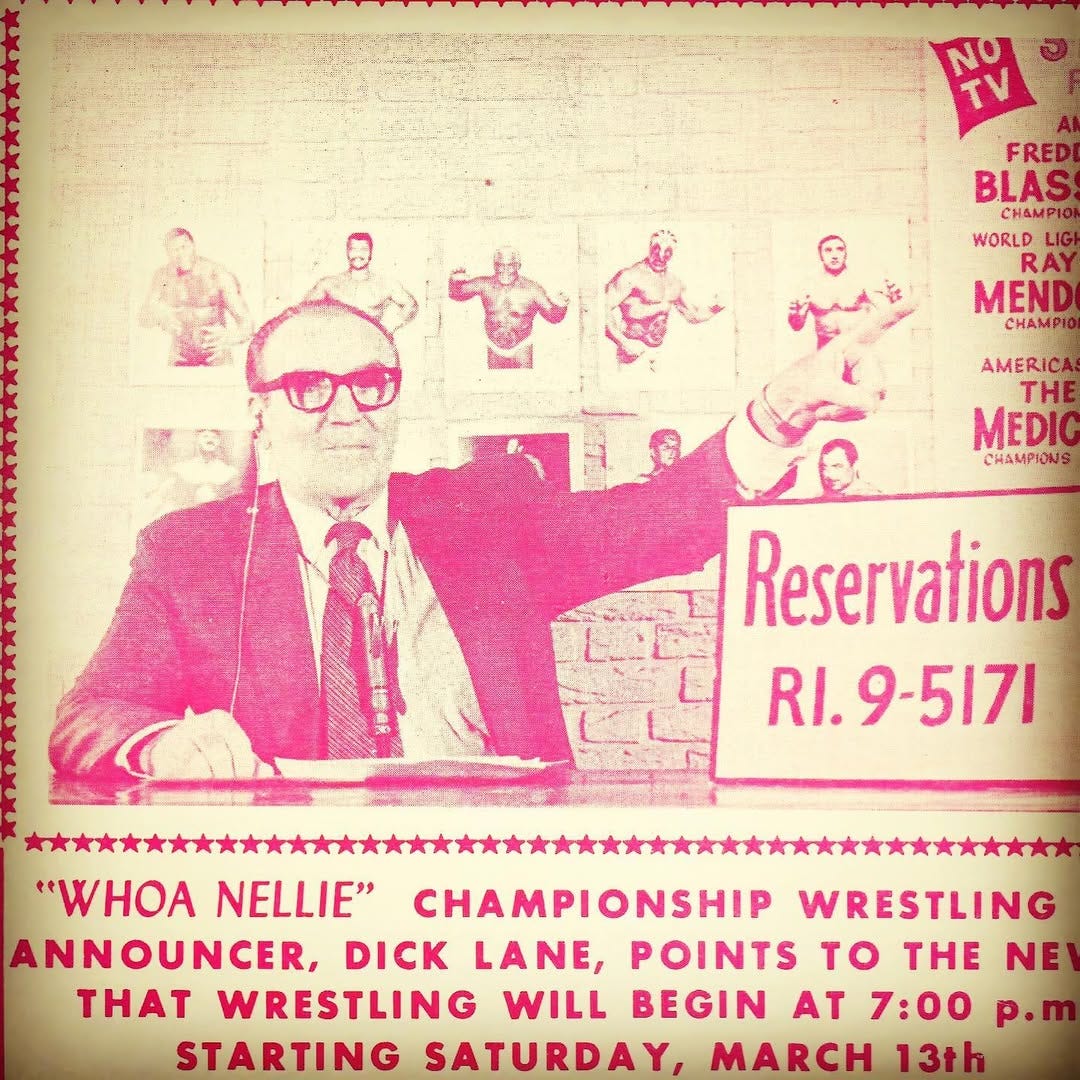
Lane’s true television legacy lies in sports announcing. In 1946, he began weekly wrestling broadcasts from the Olympic Auditorium, promoting stars like Gorgeous George, Mr. Moto, and Dr. Lee Grable. His improvisational style—coining names like “the Boston land-crab” for holds and shouting “Meat on the table!” for dramatic bites—added flair to the spectacle. In 1951, he added roller derby, becoming the voice of the Los Angeles Thunderbirds for 15 years starting in 1961. Broadcasting from trackside with a cigarette in hand, Lane lent Hollywood credibility to these fringe sports, making them must-watch TV on KTLA.
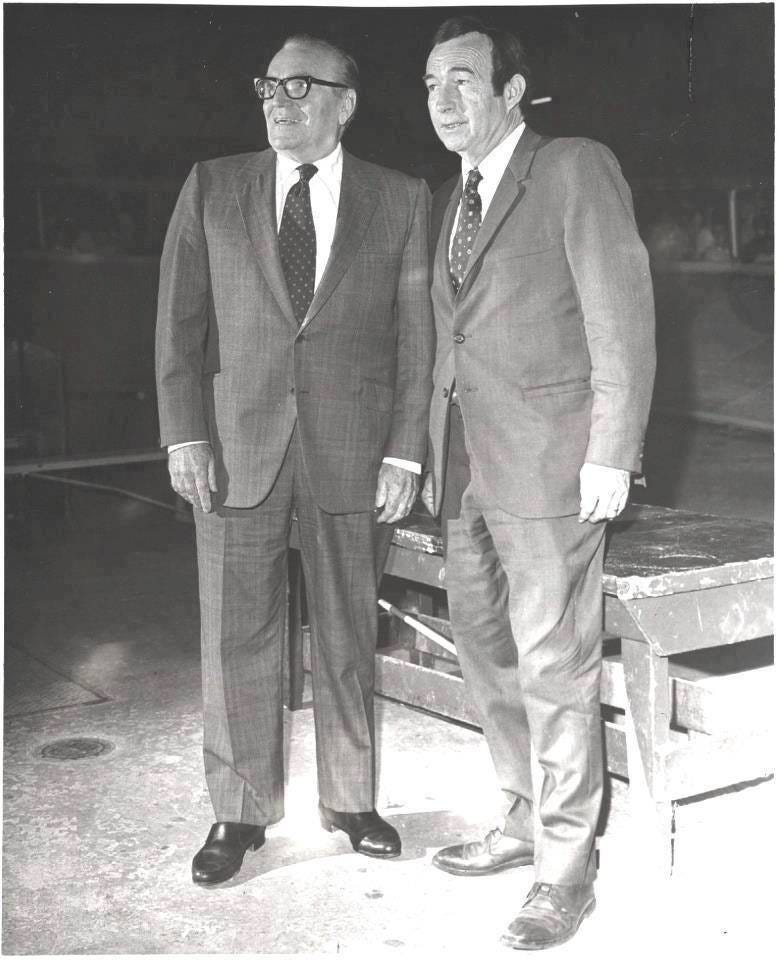
Pictured: Dick Lane with his roller derby sidekick Hoppy Haupt
His catchphrase “Whoa, Nellie!”—uttered during exciting moments in wrestling, roller derby, midget car racing, and demolition derbies—became legendary. Contrary to myth, Lane originated it, not sportscaster Keith Jackson, who later adopted it. Lane also announced jalopy derbies at Ascot Park, hyping drivers like A.J. Foyt and Parnelli Jones, and even motorcycle races. His oversized personality and enthusiastic calls like “Wow, what action!” before commercials kept audiences engaged.
Beyond sports, Lane hosted shows like The Spade Cooley Show, where he donned cowboy chaps as “Leather Britches” to pitch Chevrolets. He appeared in guest spots on series like Leave It to Beaver (1959) as Marshal Moran, The Munsters (1965) as an announcer, and films where he played versions of himself, such as Visit to a Small Planet (1960).
As a 9-year old kid, I had seen One Million Years B.C. on television as a re-run and I had the Raquel Welch famous fur bikini poster on my wall. So it was exciting and one of my fondest memories as a kid going to the local drive-n to see Raquel in Kansas City Bomber (1972) which featured Dick Lane as a roller derby commentator.
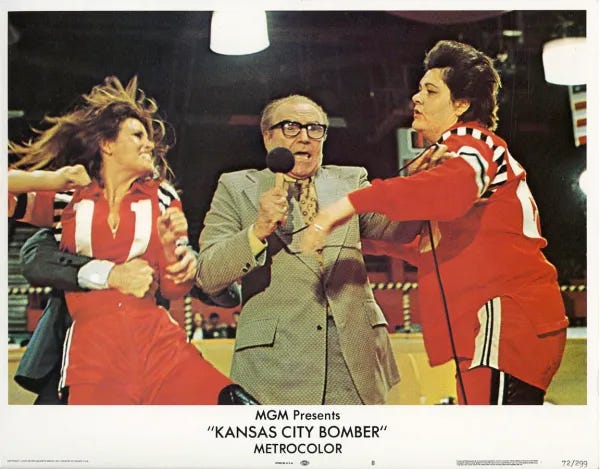
Lane also appeared in the family-oriented movie, The Shaggy D.A. (1976), and his final role in The One and Only (1978).
Lane retired from full-time television in 1972 but remained semi-active until 1976. In 1974, he moved to Palm Springs, California, with his wife Esther, enjoying a quieter life. He passed away on September 5, 1982, in Newport Beach, California, at age 83, and was buried in Pacific View Memorial Park.
Lane’s legacy endures. He received a star on the Hollywood Walk of Fame in 1960, was inducted into the Wrestling Observer Newsletter Hall of Fame in 1996, the Southern California Pro Wrestling Hall of Fame in 2002, and the Roller Derby Hall of Fame’s Announcers Wing in 2008. His innovative announcing elevated wrestling and roller derby, influencing generations of broadcasters. Personal anecdotes from fans and colleagues highlight his generosity, such as helping struggling performers during his vaudeville days.
31 Great Territory Era Television Announcers Series
Profile 1: Larry Matysik, Wrestling At The Chase, St. Louis, Missouri
Profile 2: Sam Menacker, World Wrestling Association, Indianapolis, Indiana
Profile 3: Bob Caudle, Mid-Atlantic Championship Wrestling, Raleigh, North Carolina
Profile 5: Ed Whalen, Stampede Wrestling, Calgary, Alberta, Canada
Profile 6: Paul Boesch, Houston Wrestling, Houston, Texas
Profile 7: Ray Morgan, WWWF Washington, D.C.
Profile 8: Bill Mercer, Big Time & World Class Championship Wrestling, Dallas, Texas
Profile 9: Lord Athol Layton, Toronto, Detroit & Australia
Thank You for Reading
I’m Tony Richards, Pro Wrestling Historian, Author and Storyteller. I share pro wrestling historical items in each issue of the Time Tunnel Pro Wrestling History Newsletter. Thanks for reading! If you enjoy my information on select events, matches and insights, please share it with folks you think might like to be a subscriber!
Remember, paid subscribers get access to exclusive and special content such as The Evolution of Pro Wrestling special issues including a multi-part deep dives on wrestling territories, wrestler bios and championship title histories, special audio and video interviews on territory pro wrestling and more available in the Pro Wrestling Time Tunnel for Premium Investors.