


Written and Produced by Tony Richards
**Tony Note: This is being released on December 4th, 2025 as a commemoration of the day Ed Whalen passed away on December 4th, 2001, 4 years ago today.
Ed Whalen, Wildcat Wrestling and Stampede Wrestling, Calgary, Alberta Canada
Ed Whalen, often affectionately known as “Wailin’ Ed” for his distinctive nasal voice, was a pioneering figure in Canadian sports broadcasting. Born on July 8, 1927, in Saskatoon, Saskatchewan, Whalen rose to prominence as the iconic voice of Stampede Wrestling and later the Calgary Flames, captivating audiences across Canada and beyond with his enthusiastic commentary and memorable catchphrases. His career spanned over five decades, blending radio, television, and journalism, while his personal charisma made him a beloved ambassador for Calgary sports. Whalen’s journey from aspiring medical student to international wrestling celebrity exemplifies the unpredictable paths of passion-driven success, leaving an indelible mark on professional wrestling and hockey broadcasting in Canada.
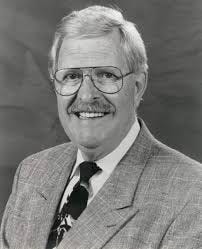
Whalen’s early life was rooted in the prairies of Saskatchewan. Raised in Saskatoon, he pursued higher education at the University of Saskatchewan, where he studied medicine with the intention of becoming a doctor. However, in 1948, at the age of 21, his trajectory shifted dramatically when he auditioned for a part-time job at local radio station CFQC. Captivated by the excitement of broadcasting, he dropped out of medical school to join the station full-time just three months later, much to his parents’ disappointment. This decision marked the beginning of a lifelong commitment to media. Whalen spent seven years honing his skills in radio before transitioning to television, viewing it as a natural evolution in the industry. In 1955, he relocated to Calgary, Alberta, where he became the News and Sports Director for CHCT-TV (later rebranded as part of the Global Television Network). His early work laid the foundation for a versatile career that would encompass news, sports, and entertainment.
Getting Into Pro Wrestling: A Ring-a-Ding-Dong-Dandy
Whalen’s entry into professional wrestling announcing came serendipitously and became the cornerstone of his fame. In 1949, while still in Saskatchewan, he was introduced to wrestling promoter Stu Hart, patriarch of the renowned Hart wrestling family. By 1957, Hart recruited Whalen to host Wildcat Wrestling, initially alongside Henry Viney, offering him better pay than his television gig. Whalen took over as the primary host in 1962, renaming the program Stampede Wrestling in 1975. For 27 years, off and on, he served as the show’s anchor without a formal contract, providing stability amid the revolving door of wrestling talent. His commentary brought dignity and excitement to the often chaotic world of wrestling, with catchphrases like “It’s going to be a ring-a-ding-dong dandy!” for thrilling matches, “Malfunction at the junction” for botched maneuvers, and his signature sign-off: “In the meantime and in-between time, that’s it for another edition of Stampede Wrestling.”

His commentary brought dignity and excitement to the often chaotic world of wrestling, with catchphrases like “It’s going to be a ring-a-ding-dong dandy!” for thrilling matches, “Malfunction at the junction” for botched maneuvers, and his signature sign-off: “In the meantime and in-between time, that’s it for another edition of Stampede Wrestling.” He called matches featuring local stars such as the Hart family, Archie Gouldie (The Stomper), Bad News Allen, and Dynamite Kid, as well as international icons like Andre the Giant and Harley Race. Notable moments included physical altercations, such as when Abdullah the Butcher grabbed his microphone during a match, prompting Whalen to strike back with it, resulting in stitches for the wrestler. Later, Abdullah punched Whalen, causing a lingering headache, though the two eventually reconciled. In 1983, disillusioned by the increasing violence and blood in matches—such as Bad News Allen’s use of a fork—Whalen quit on air, emphasizing his desire for family-friendly entertainment. He returned from 1985 to 1989 after the promotion briefly reopened, but the rise of the WWF (now WWE) drew away top talent, leading to Stampede’s decline. Despite the rough-and-tumble nature of wrestling, Whalen’s dignified presence, alongside figures like Helen Hart, added a touch of class to the promotion.

Pictured: Ed Whalen at the annual Calgary Stampede Celebration
Beyond wrestling, Whalen’s career extended to hockey and other media ventures. In 1980, he became the television voice of the Calgary Flames on Calgary 7, delivering play-by-play commentary until his retirement in 1999. His enthusiastic calls, such as “Hello hockey fans!” and descriptions of goals like Lanny McDonald’s 500th in 1989 (”He scores!! He did it!! 500!!”), endeared him to Flames supporters during the team’s successful 1980s era. Whalen also wrote a weekly column for the Calgary Sun, hosted Pro Wrestling Plus featuring global wrestling clips, and delivered syndicated radio editorials.Remarkably, his long tenure in wrestling never undermined his credibility as a serious newsman; instead, it enhanced his versatility. He operated as an independent contractor through Whalen Media Services LTD after a brief resignation in 1979, balancing multiple roles.
Whalen’s Personal Family Life
On a personal level, Whalen was married to Nomi Whalen since 1967, and the couple had five children and seven grandchildren. He was deeply involved in philanthropy, hosting the local Children’s Miracle Network telethon for years and supporting organizations like the Children’s Hospital Foundation, Special Olympics, Alberta Adolescent Recovery Centre, Rotary Club, and Variety Club—often serving as a guest speaker or MC without charge. In 1997, he received a pacemaker, which revitalized his energy. Whalen’s hobbies included music; after his death, his wife released a CD of his recordings, with proceeds benefiting charity.
Ed Whalen passed away on December 4, 2001, at the age of 74, from a heart attack while vacationing in Venice, Florida. His death prompted widespread tributes, with colleagues remembering him as a classy, generous man without ego, whose genuine love for people shone through his work. During his final Flames broadcast, he received a standing ovation at the Saddledome, with even former player Theo Fleury honoring him from the ice.Whalen’s legacy endures through inductions into the Stampede Wrestling Hall of Fame (1995) and the Canadian Wrestling Hall of Fame (2016), as well as the renaming of the Scotiabank Saddledome’s broadcasting booth to the Ed Whalen Broadcast Booth. Fans and peers alike credit him with elevating Canadian wrestling’s entertainment value, making villains seem truly evil and matches unforgettable. Compared to legends like Gordon Solie, Whalen’s enthusiasm and humor made him a fixture in households, inspiring generations of broadcasters and sports enthusiasts.
In retrospect, Ed Whalen’s career was a testament to following one’s passion over convention. From the radio waves of Saskatoon to the global stage of Stampede Wrestling and the rinks of the NHL, he embodied the spirit of Canadian broadcasting—energetic, authentic, and ever-engaging. His phrases continue to echo in the memories of fans, ensuring that this “ring-a-ding-dong dandy” remains a cherished part of sports history.
Here’s the archive list of this series so far:
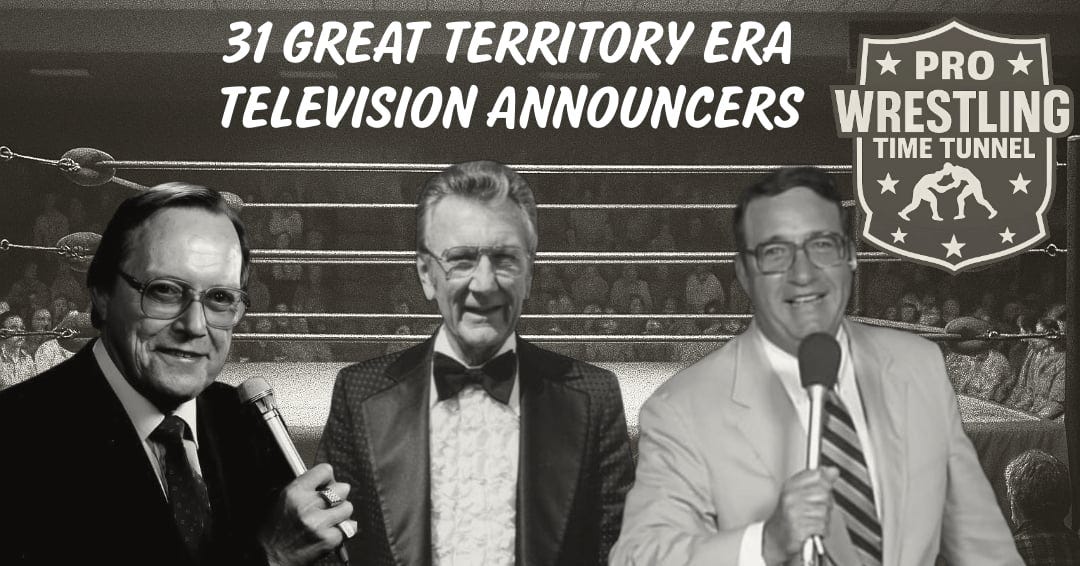
31 Great Territory Era Television Announcers
Profile 1: Larry Matysik, Wrestling At The Chase, St. Louis, Missouri
Profile 2: Sam Menacker, World Wrestling Association, Indianapolis, Indiana
Profile 3: Bob Caudle, Mid-Atlantic Championship Wrestling, Raleigh, North Carolina
Thank You for Reading
I’m Tony Richards, Pro Wrestling Historian, Author and Storyteller. I share pro wrestling historical items in each issue of the Time Tunnel Pro Wrestling History Newsletter. Thanks for reading! If you enjoy my information on select events, matches and insights, please share it with folks you think might like to be a subscriber!
Remember, paid subscribers get access to exclusive and special content such as The Evolution of Pro Wrestling special issues including a multi-part deep dives on wrestling territories, wrestler bios and championship title histories, special audio and video interviews on territory pro wrestling and more available in the Pro Wrestling Time Tunnel for Premium Subscribers.