


Larry Matysik (April 26, 1947 – November 25, 2018) was a prominent figure in professional wrestling, renowned as a commentator, promoter, and author. Best known for his role as the ringside announcer and host of Wrestling at the Chase, a legendary television program broadcast from St. Louis, Missouri, Matysik’s career spanned over five decades and left an indelible mark on the industry.

Matysik’s journey in wrestling began at the age of 16 in 1963, when he was hired by St. Louis promoter Sam Muchnick as a publicist and office manager for the St. Louis Wrestling Club. By 1970, he had transitioned into announcing, becoming the voice of the promotion and earning acclaim alongside legends like Gordon Solie and Lance Russell as one of the top wrestling announcers in the United States. He served as the primary announcer for Wrestling at the Chase until the show’s conclusion in 1983, while also providing occasional commentary for the American Wrestling Association.
Behind the scenes, Matysik co-booked events with Pat O’Connor in the late 1970s, contributing significantly to the promotion’s success.
The Wrestling At The Chase Television Wrestling Program
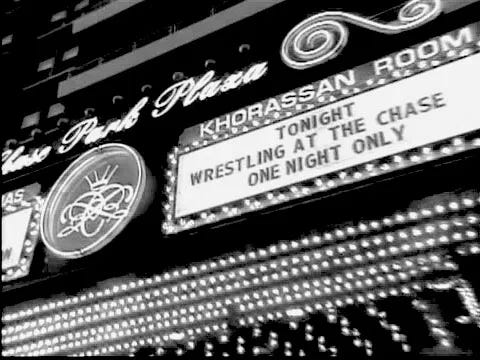
Wrestling at the Chase stands as a cornerstone of professional wrestling history, particularly in the Midwest, where it captivated audiences in St. Louis for over two decades. Airing on KPLR-TV Channel 11, the program ran from May 23, 1959, to September 10, 1983, producing approximately 1,100 episodes. his weekly show transformed the elegant Khorassan Ballroom of the Chase Park Plaza Hotel into a battleground for larger-than-life athletes, blending athleticism, drama, and spectacle in a way that made St. Louis a wrestling powerhouse. Promoted by the St. Louis Wrestling Club under the National Wrestling Alliance (NWA), it not only showcased top talent but also became a cultural phenomenon, drawing massive viewership and fostering generational traditions among families in the region. At its peak, the show consistently ranked among the highest-rated programs in St. Louis, often attracting over 100,000 viewers per episode, trailing only local news and St. Louis Cardinals baseball games.
The inception of Wrestling at the Chase can be traced to a serendipitous conversation in 1958 between Sam Muchnick, the influential promoter and president of the St. Louis Wrestling Club, and Harold Koplar, owner of both KPLR-TV and the Chase Park Plaza Hotel. Muchnick, a former sportswriter who had been promoting wrestling in St. Louis since the 1930s, envisioned bringing the excitement of live matches directly into viewers’ homes. Koplar, seeking compelling local programming for his new independent station, agreed to collaborate. The result was a show that debuted on May 23, 1959, with matches taped live on Saturday nights in the opulent Khorassan Ballroom, which seated about 900 fans and offered free admission to encourage lively crowds.
St. Louis had long been a hotbed for wrestling, thanks to Muchnick’s leadership in the NWA, where he served as president multiple times during the 1950s and 1960s. The city was often called the “professional wrestling capital of the world,” with major events at venues like the Kiel Auditorium drawing thousands. Wrestling at the Chase built on this foundation, evolving from legitimate athletic contests to “athletic theater” that emphasized storytelling and character development. In its early years, the program aired on Saturdays and was repeated on Sunday mornings, quickly becoming “must-see TV” for St. Louis residents.
The show’s format was straightforward yet engaging live matches taped in front of an enthusiastic audience, complete with play-by-play commentary, interviews, and dramatic finishes. Until 1971, tapings occurred in the Khorassan Ballroom, known for its starry light fixtures and upscale ambiance, which provided a unique contrast to the gritty action in the ring. This elegant setting attracted a diverse crowd, from socialites to families, blending high society with blue-collar entertainment. In the early 1970s, production shifted to adjacent KPLR studios, where three episodes were taped at once on Sunday mornings to streamline operations.
KPLR’s production values set a high standard, with clean camera work and references to local landmarks in commentary, making the show feel distinctly St. Louisan. Admission remained free, ensuring packed houses and authentic crowd reactions that enhanced the broadcast. The program’s success lay in its balance of athletic credibility, logical storylines, and honest presentation, principles championed by Muchnick.
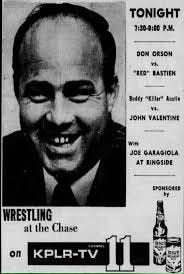
Pictured: Advertisement for Wrestling At The Chase with photo of Joe Garigiola “at Ringside”
Sam Muchnick was the visionary force behind the show, ensuring fair payoffs for talent and meticulous event planning that built trust in the industry. His influence extended beyond wrestling; anecdotes include his role in helping Harry S. Truman win an election through strategic alliances. On the broadcasting side, Joe Garagiola (former hometown St. Louis Cardinal baseball star) providing initial play-by-play commentary from 1959 to 1963, bringing a folksy charm after his a baseball career ended in 1954. Garagiola had grown up as boyhood friends in the predominant Italian neighborhood known as “The Hill” with boyhood best friend and Hall of Fame, Yogi Berra. Every locally owned Italian restaurant on The Hill has autographed photos of Garagiola and Berra. That’s how large of a local celebrity Garagiola was and is.
He was succeeded by Don Cunningham until 1964, then George Abel, who was joined by Larry Matysik in 1972. Ring announcers like Mickey Garagiola (Joe’s brother) added local flavor, with memorable stories such as wrestlers protecting him during a road rage incident.
The ring featured legends who defined the era: Lou Thesz, Gene Kiniski, Harley Race, Ric Flair, “Cowboy” Bob Orton, Dick the Bruiser, Bruiser Brody (also known as King Kong Brody), Ted DiBiase, and Kevin Von Erich. These stars delivered high stakes matches, with St. Louis serving as a proving ground for NWA World Champions. Fans cherished moments like wrestler Jack Brisco interacting with devoted viewers, or humorous tales of stolen beer gifted to engineers.

Pictured: Larry Matysik interviews Fritz Von Erich
During the 1960s and 1970s, Wrestling at the Chase reached its zenith, solidifying St. Louis’s status as an NWA epicenter. The show’s blend of over-the-top entertainment and athletic prowess resonated deeply, becoming a family ritual—grandparents, parents, and children bonding over Saturday night broadcasts and Sunday reruns. Its cultural impact extended to community pride, with events at the Kiel Auditorium drawing large crowds and free tickets ensuring accessibility. As one of the longest-running local programs, it influenced the broader wrestling industry, setting standards for television presentation. Evidence of this industry influence is the impression and impact Larry’s impact and mentorship made on St. Louis area promoter, Herb Simmons, who carries on the tradition of St. Louis wrestling with his promotion, his annual FanFests and the curation & maintenance of the St. Louis Wrestling Hall of Fame.
“Larry was my dearest friend for many years. He taught he taught me so much about the wrestling business. The people he introduced me to, from Sam Muchnick to Bruiser Brody, The Briscos Funks and many others is what help me get started. Without Larry Matysik there would be no promoter Herb Simmons.”
-SICW Promoter Herb Simmons on what Larry Matysik meant to him
Larry Matysik’s Impact On St. Louis Through Televised Wrestling
Alongside contemporaries like Gordon Solie in Florida and Lance Russell in Memphis, Matysik elevated the announcer’s role from mere narration to an art form, providing context that enhanced the drama without spoiling the illusion. Beyond the microphone, Matysik’s influence deepened in the late 1970s when he co-booked events alongside Pat O’Connor, a former NWA World Heavyweight Champion. This period marked the height of St. Louis wrestling’s prosperity, with sold-out crowds and innovative storylines that balanced athletic competition with character-driven narratives.
Video: Larry Matysik interviews Kevin Von Erich who demonstrates the leg scissors
The program’s decline began with Muchnick’s retirement on January 1, 1982. Control shifted to shareholders like Bob Geigel and Verne Gagne, who integrated St. Louis into the Kansas City territory, leading to erratic booking, confusing match finishes, and declining attendance. Larry Matysik, disillusioned, resigned and formed Greater St. Louis Wrestling with Charlie Mancuso, aiming to revive Muchnick’s principles with stars like Bruiser Brody, Randy Savage, and David Von Erich. Operating outside the NWA, this independent promotion achieved financial success by booking high-profile talent and maintaining the territory’s traditions, though it ultimately faltered due to investor disputes. This bold move highlighted Matysik’s commitment to preserving wrestling’s integrity against the encroaching commercialization. This sparked the 1983 “wrestling war,” where the rival promotions battled for talent and venues, weakening both through betrayals and inconsistent draws.
Vince McMahon, expanding his World Wrestling Federation (WWF), watched from afar and capitalized on the chaos. n early 1984, WWF briefly produced episodes from the Chase, featuring Hulk Hogan’s return, but the original show ended in 1983. McMahon’s national vision ultimately dominated, absorbing the market without direct confrontation as the local factions self-destructed. Then, Matysik’s career took another turn from 1984 to 1993, when he joined McMahon’s World Wrestling Federation (WWF), serving as a local agent in St. Louis and bridging the gap between regional loyalty and national ambitions. Even in this role, he remained a critic of the WWF’s more cartoonish style, as evidenced in his later writings.
In his later years, Matysik remained active on the independent wrestling circuit and became a prolific author, penning several books that chronicled wrestling history. His notable works include Wrestling at the Chase: The Inside Story of Sam Muchnick and the Legends of Professional Wrestling (2005), Brody: The Triumph and Tragedy of Wrestling’s Rebel (co-authored, 2007), Drawing Heat the Hard Way: How Wrestling Really Works (2009), From the Golden Era: The St. Louis Wrestling Record Book (2010), and The 50 Greatest Professional Wrestlers of All Time: The Definitive Shoot (2013). He founded the St. Louis Wrestling Hall of Fame and was inducted into it in 2007. Matysik received the Lifetime Achievement Award from Missouri Wrestling Revival in 2010 and the James C. Melby Award from the George Tragos/Lou Thesz Professional Wrestling Hall of Fame in 2014, though health issues prevented him from attending the ceremony.
Matysik battled severe health problems, including spinal stenosis and multiple strokes, entering hospice care on November 24, 2018, before passing away the next day at age 71. His legacy endures through his writings and the respect he commanded in the wrestling community, with industry journalist Dave Meltzer crediting him as his greatest teacher on professional wrestling.
This is the first in my series on 31 Great Territory Era Television Announcers. The second installment is coming soon here at the Pro Wrestling Time Tunnel!
Thank You for Reading
I’m Tony Richards, Pro Wrestling Historian, Author and Storyteller. I share pro wrestling historical items in each issue of the Time Tunnel Pro Wrestling History Newsletter. Thanks for reading! If you enjoy my information on select events, matches and insights, please share it with folks you think might like to be a subscriber!
Remember, paid subscribers get access to exclusive and special content such as some special issues including a multi-part deep dives on wrestling territories, wrestler bios and championship title histories, special audio and video interviews on territory pro wrestling and more available in the Pro Wrestling Time Tunnel for Premium Subscribers.